

Published Sep 30, 2026 | 7:00 AM ⚊ Updated Sep 30, 2026 | 7:00 AM

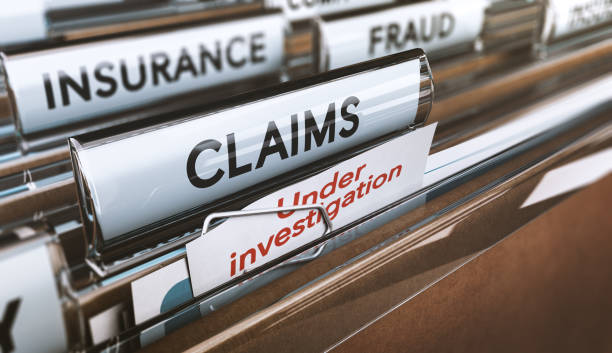
Keralam is setting up a Special Investigation Team to probe suspected fake and fraudulent motor accident insurance claims. (Representative pic/iStock)

Synopsis: Keralam has formed a five-member Special Investigation Team to probe suspected fake motor accident compensation claims, amid concerns over forged accident, medical and insurance records and repeated use of the same vehicles and claimants. The team will use police, transport, medical and insurance databases to detect such fraud and ensure genuine accident victims are not denied rightful compensation.
A compensation claim filed after a road accident is often a lifeline for a family struggling with mounting hospital bills, loss of earnings or the death of a breadwinner.
But growing concerns about claims that may have been fabricated or manipulated have prompted the State to take a closer look at the darker side of motor accident compensation.
Acting on Supreme Court directions, the State is moving to set up a Special Investigation Team (SIT) to probe suspected fake and fraudulent motor accident claims. The exercise is also expected to focus on recurring patterns that could otherwise go unnoticed—including the repeated use of the same vehicle, driving licence, claimant or other common details across multiple cases.
The move follows the Supreme Court’s orders of 12 September 2023, 8 April 2025 and 16 April 2025 in Safiq Ahmad v. ICICI Lombard General Insurance Co. Ltd. & Ors., in SLP(C) No. 1110/2017, and a subsequent direction in August 2026 in SLP(C) No. 5582/2023 filed by Oriental Insurance Co. Ltd.
The Supreme Court had directed State governments to constitute SITs to investigate suspicious or fake motor accident claim cases.
In Keralam, the focus is now on building a mechanism that can connect seemingly unrelated cases and flag common names, vehicles, licences and documentation for detailed verification.
The concern is that such cases thrive where local intermediaries, questionable documentation and delays in cross-verification allow inconsistencies to pass unnoticed. Beyond adding an extra burden on insurers, fraudulent claims can complicate the compensation process for genuine accident victims.
Also Read: Renewing health insurance blindly?
In August, the Supreme Court ordered every State to set up a dedicated SIT to probe suspected fraudulent motor accident insurance claims, after finding indications of fraud on an “enormous” scale, including cases in which the same vehicle was allegedly shown as being involved in multiple accidents.
A Division Bench of Justices Ahsanuddin Amanullah and Prasanna B Varale said the issue had gone far beyond the original dispute over whether a particular vehicle was actually involved in an accident. The proceedings brought to light an organised pattern of allegedly fraudulent claims, prompting the court to examine ways to detect and investigate such practices across the country.
The court said fake claims place an unfair financial burden on insurers and ultimately affect genuine policyholders, as insurance companies must factor such losses into their operations and maintain financial viability.
Under the fresh directions, complaints received from insurance companies regarding suspected fraudulent claims must be forwarded to the State SITs, which have been asked to investigate them expeditiously. States must provide adequate personnel to the teams and disclose the procedure followed for investigating such cases.
The Bench further directed insurers to act where an SIT recommends action or an FIR is registered against their officials. Appropriate departmental proceedings must be initiated without delay, and the companies must inform the court about the action taken in cases referred to the SITs and against officials whose conduct may have facilitated fraud.
The court has also expanded the scope of the proceedings by impleading the Insurance Regulatory and Development Authority of India (IRDAI), the Union Ministry of Finance, the Ministry of Road Transport and Highways and the General Insurance Council as additional respondents. The Court has asked them to file affidavits setting out their responsibilities, how they are being discharged, and the measures needed to tackle fraudulent claims.
The Bench was also presented with proposals to create a common database of insurance claims so insurers can identify repeated involvement of the same vehicle, person, institution, or other entity. It was suggested that the database could be linked with the VAHAN and SARATHI portals to facilitate verification of vehicles and accident-related details.
Integration of the Ministry of Road Transport and Highways’ E-Detailed Accident Report (EDAR) portal with relevant databases and the IRDAI system was also suggested to improve verification of the authenticity of accidents and the vehicles allegedly involved.
Also Read: Why health insurance for women is important
What begins as a minor injury or an old vehicle damaged in an unrelated incident is allegedly being turned into a lucrative motor accident compensation claim in Keralam, with insurance officials and police pointing to an organised network involved in fabricating accident records, medical documents and other related papers.
An officer in the Claims Department of The Oriental Insurance Company Limited said the fraud has taken the form of a well-connected racket involving middlemen, fixers and intermediaries who identify potential claimants and create a false accident trail around them.
In one method, people who suffer minor injuries in non-vehicular incidents are allegedly brought into the network.
They suppress the actual circumstances of the injury and create a fictitious hit-and-run accident.
They then show a vehicle registration number as that of the offending vehicle, using allegedly fabricated mahazars, FIRs, and other police records to support the claim before the Motor Accident Claims Tribunal (MACT).
Another pattern involves injuries suffered outside Keralam or even abroad being presented as the result of an accident within the State, the insurance officer said.
The extent of injuries is also allegedly exaggerated in some cases.
Disability percentages are inflated, or permanent disabilities are claimed where none exist, substantially increasing the compensation sought from insurance companies.
Medical records have emerged as another weak point in the system.
According to the officer, some agents work with small clinics and intermediaries to produce inflated medical bills, treatment records and disability certificates. Investigations in some cases allegedly found forged signatures and duplicate seals bearing the names of doctors, including doctors attached to prominent government medical colleges. The doctors concerned had neither treated nor examined the claimants in connection with the accidents for which the documents were produced before the tribunal.
An advocate practising before a Motor Accident Claims Tribunal said another form of fraud involved what is described as vehicle swapping and staged or “ghost” collisions.
Old or badly maintained vehicles, including two-wheelers, are allegedly used for such claims. A vehicle with pre-existing damage may be deliberately involved in a minor collision or brushed against another vehicle at an isolated location. Instead of reporting the incident to the insurer immediately, the parties allegedly approach the police later and obtain documents supporting an accident narrative. They then present the old damage as resulting from the reported accident, while including exaggerated injuries in the compensation claim.
A police officer at the Museum Police Station in Thiruvananthapuram said cases involving suspected fraudulent motor accident claims had come to light, including allegations of manipulating police and medical documents to obtain compensation.
One such case surfaced after a compensation petition was filed before the MACT in connection with a fatal road accident. The claim sought a considerable amount, after which the tribunal issued notice to the insurance company as a respondent.
The insurer, however, questioned the authenticity of a motor insurance policy produced in the case. Verification of its records showed that the policy document, purportedly issued by the company for another vehicle, had never been issued by it, according to the police.
The insurer subsequently lodged a complaint, leading to the registration of a case over the alleged forgery. Police said the document appeared to have been created to lend legitimacy to a fraudulent compensation claim.
Insurance officials said such cases highlight how forged documents at different stages—from the accident report and vehicle details to medical records and insurance policies—can be combined to create an apparently genuine claim before a tribunal.
Also Read: All Kalangumukkal residents get accidental death insurance cover
The State government has constituted a five-member SIT to detect, investigate and monitor suspected fraudulent and fake motor accident compensation claims across the state.
Additional Director General of Police (Law and Order) will head the SIT formed on 22 September.
The Inspector General of Police (Cyber Operations), Joint Transport Commissioner, Deputy Labour Commissioner and Joint Director of Medical Education are the other members.
The move follows Supreme Court directives on curbing fraudulent motor accident compensation claims and separate representations received by the Home Department from insurance companies.
Bajaj Allianz General Insurance nodal officer Alice John had submitted a representation on 11 June 2025, while ICICI Lombard General Insurance legal manager Anish Sreenivasan made a similar representation on 13 July 2026, seeking an SIT to investigate and curb such claims.
The State Police Chief also forwarded a proposal in May to set up a specialised team to investigate fraudulent claims.
The Transport Commissioner, in recommendations made in October 2025 and again in August, had called for greater use of technology to identify suspicious claims.
The recommendations included strengthening eDAR (Electronic Detailed Accident Report)/IRAD (Integrated Road Accident Database) and e-Courts systems, and introducing alerts to flag repeated use of the same vehicle, driving licence, claimant, and other unusual patterns.
According to Home Secretary Minhaj Alam, the SIT will function as a state-level coordinating and monitoring mechanism for suspected fake claims. It will use E-DAR/iRAD, e-Courts and other available databases, wherever legally permissible, to identify recurring or suspicious patterns.
If prima facie evidence of fraud is found, the SIT will ensure that appropriate criminal investigation is initiated through the jurisdictional police or other competent law-enforcement agency.
The team will also coordinate with insurance companies and the relevant departments to share actionable information, in accordance with applicable laws and data-access protocols.
(Edited by Majnu Babu).



