

Published Oct 18, 2026 | 9:30 AM ⚊ Updated Oct 18, 2026 | 9:30 AM

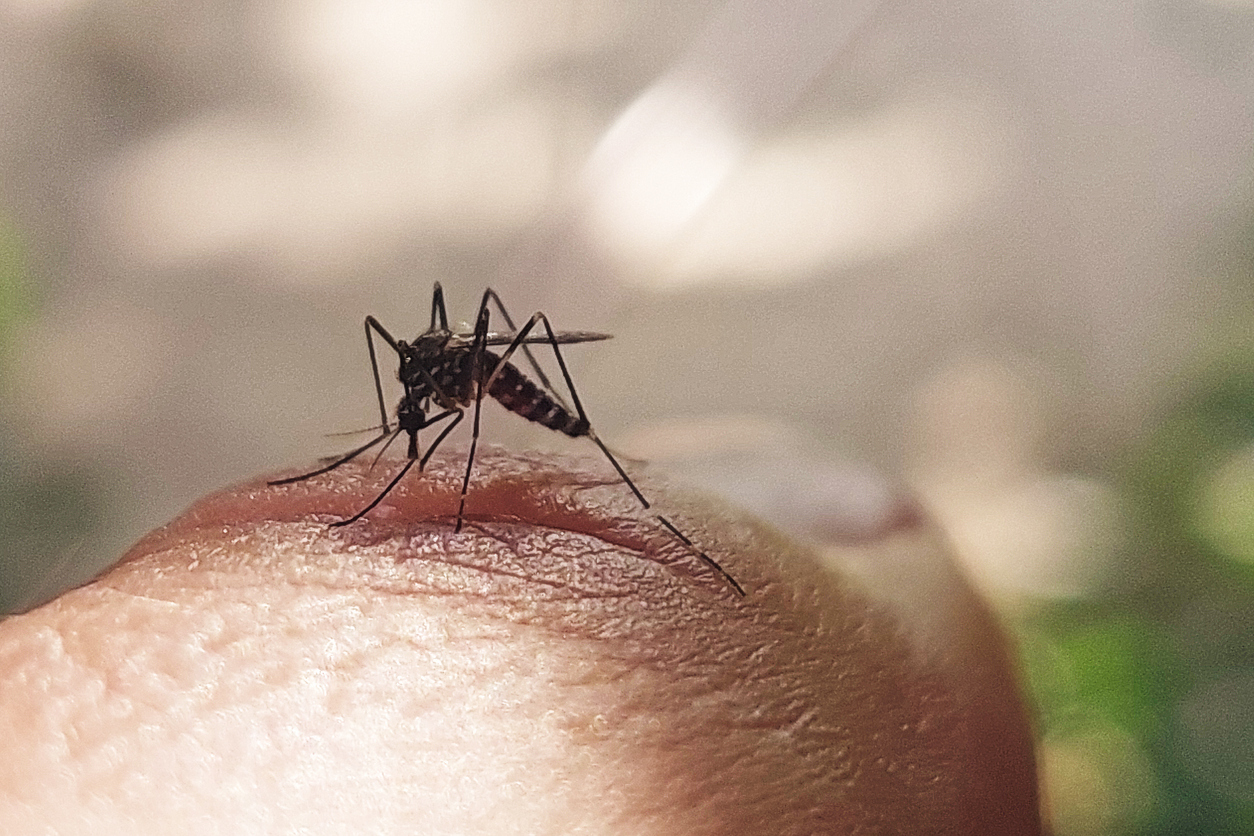
Northeast monsoon brings alternating spells of rain and sunshine that favour the breeding of Aedes mosquitoes.

Synopsis: With dengue continuing to claim lives in Keralam, a new forecasting system seeks to give health authorities something they have long needed: time to act before an outbreak gathers pace. By combining weather patterns with disease surveillance data, the machine learning-based system can flag districts at risk weeks in advance. Its importance grows as climate change and changing monsoon patterns threaten to make dengue harder to contain.
With dengue continuing to pose a public health challenge in Keralam, a new early-warning system developed by the Institute of Advanced Virology (IAV), Thiruvananthapuram, is set to strengthen the state’s fight against the disease.
The timing is significant, as the Northeast monsoon brings alternating spells of rain and sunshine that favour the breeding of Aedes mosquitoes, which transmit the virus.
The state has reported 12,355 confirmed dengue cases and 44 deaths this year, with 751 cases and one death reported in the first 16 days of October.
Coming against this backdrop is the Dengue Early Warning System (DEWS), the machine learning-based system that can forecast the risk of dengue transmission across districts.
The developers said that the projection is made by analysing weather patterns and reported cases, helping health authorities identify vulnerable areas and step up preventive action before infections surge.
The forecasting system developed by the Institute of Advanced Virology
The system, developed by a team led by Dr Abhinand C.S, scientist in the Division of Virus Genomics, Bioinformatics and Statistics at IAV, is designed to identify periods when the risk of dengue transmission is likely to rise.
IAV is an autonomous institution under the Science and Technology Department of the state government. The system is developed and maintained by the IAV as part of its efforts to apply data science and machine learning to public health challenges.
The DEWS’s district-wise forecasts can help officials direct preventive measures to areas that need them most, rather than waiting for a sharp increase in cases to trigger action.
According to officials, DEWS works by combining historical disease surveillance data from the Kerala Health Department and meteorological information from the India Meteorological Department (IMD). Rainfall, temperature, atmospheric humidity and reported dengue cases are among the key variables analysed to assess the likelihood of an outbreak.
The model was developed using daily data covering six years, from March 2020 to February 2026. By examining past outbreaks alongside changes in climatic conditions, it identifies patterns that may signal an increase in transmission risk.
The system generates weekly forecasts for every district in Keralam, including predictions of dengue trends and risk levels several weeks ahead.
The risk is classified into four categories –low, moderate, high and very high– to help identify districts that may require closer monitoring and early intervention.
Also Read: From Keralam to Delhi, women donate more kidneys but receive fewer
Rainfall, temperature and humidity influence the breeding and survival of Aedes mosquitoes, which transmit dengue. But weather alone cannot explain the course of an outbreak.
DEWS therefore analyses climatic conditions along with fluctuations in reported cases to identify periods when the likelihood of transmission may be increasing.
The system also features an interactive, colour-coded map showing the geographical distribution of predicted dengue cases and highlighting districts according to their forecast risk. The map allows officials to identify potential hotspots and compare the risk across districts.
“A preliminary evaluation using Health Department surveillance data from March to July 2026 found a correlation between the transmission trends predicted by the model and the trends in reported cases,” said an official with the IAV.
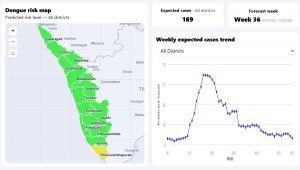
The dengue risk map of DEWS for 1 to 7 November
Researchers, however, have stressed that further testing and continuous evaluation are necessary to establish the system’s reliability across districts, different climatic conditions and varying stages of disease transmission.
The district-level forecasts could help the Health Department intensify mosquito control measures, organise public awareness campaigns, strengthen disease surveillance and prepare healthcare facilities in areas facing a high risk of transmission.
They could also help authorities prioritise the deployment of limited healthcare resources in districts where the threat is greatest. Advance warning of a possible surge would give local health teams more time to act before an outbreak reaches its peak.

DEWS forecast dengue cases from 1 November to 16 January 2027
IAV has emphasised that DEWS is intended to supplement, not replace, existing disease surveillance mechanisms. The institute underscores that its forecasts must be considered alongside the Health Department’s field-level monitoring and expert assessments, with follow-up action essential to translating early warnings into effective prevention.
Initial steps towards such use have already been taken, according to IAV officials.
“The forecasts are intended to support public health planning and should not be treated as official dengue case counts. Data quality, reporting delays and the limitations inherent in predictive models may affect the results,” said the official.
According to the official, while the preliminary findings offer an encouraging indication of the system’s potential, continued validation will be important before its forecasts can be relied upon across different settings.
“The larger aim is to give health authorities an additional tool to recognise emerging risks early and respond before dengue spreads more widely,” the official added.
Also Read: Can a doctor approve your test report without being physically present? NMC clarifies
Keralam could face a sharp rise in dengue cases in the coming decades as climate change alters temperature and rainfall patterns, with the risk potentially increasing by up to 113% by the end of the century, a study has warned.
The study, based on 14 years of dengue and climate data from 2006 to 2019, identifies temperature, humidity, monsoon rainfall and the El Niño–Southern Oscillation (ENSO) as key factors influencing dengue transmission in the state. Projections suggest that dengue incidence could increase by 16%–20% during 2021–2040, with the rise potentially reaching 113% towards the end of the 21st century.
The research was conducted by a team of scientists, including those from the Indian Institute of Tropical Meteorology, the ICMR-National Institute of Translational Virology and AIDS Research, and the School of Public Health under the Kerala University of Health Sciences.
Dengue cases in Keralam closely follow the rainfall cycle, with infections beginning to rise in May and peaking during the southwest monsoon, particularly in June and July. Around 60% of the cases reported in the state occur between late May and September.
The study found that warmer pre-monsoon temperatures, moderate relative humidity and increased monsoon rainfall were associated with higher dengue incidence. El Niño conditions in the Pacific Ocean were also linked to local weather patterns favourable to the spread of the disease.
El Niño-like conditions can alter large-scale atmospheric circulation, leaving Keralam warmer and drier during the pre-monsoon period. La Niña-like conditions tend to have the opposite effect. These links could provide forecasts up to three months in advance, offering health authorities a window to prepare for a possible surge in cases.
The researchers analysed monthly dengue figures from the State Surveillance Unit of the Directorate of Health Services. Data from 2020 to 2022 were excluded because the COVID-19 pandemic disrupted surveillance and reporting.
Keralam’s climate makes the state particularly vulnerable to dengue. The combined influence of the southwest and northeast monsoons, high humidity, the Western Ghats and proximity to the Arabian Sea creates favourable conditions for mosquito breeding across much of the year.
The findings underline the need to integrate climate forecasts into dengue surveillance and public health planning. Advance warnings based on temperature, humidity, rainfall and ENSO patterns could help authorities step up mosquito control and other preventive measures before cases begin to climb, the study says.
(Edited by Fayisa CA)



