

Published Nov 29, 2026 | 4:29 PM ⚊ Updated Nov 29, 2026 | 4:29 PM

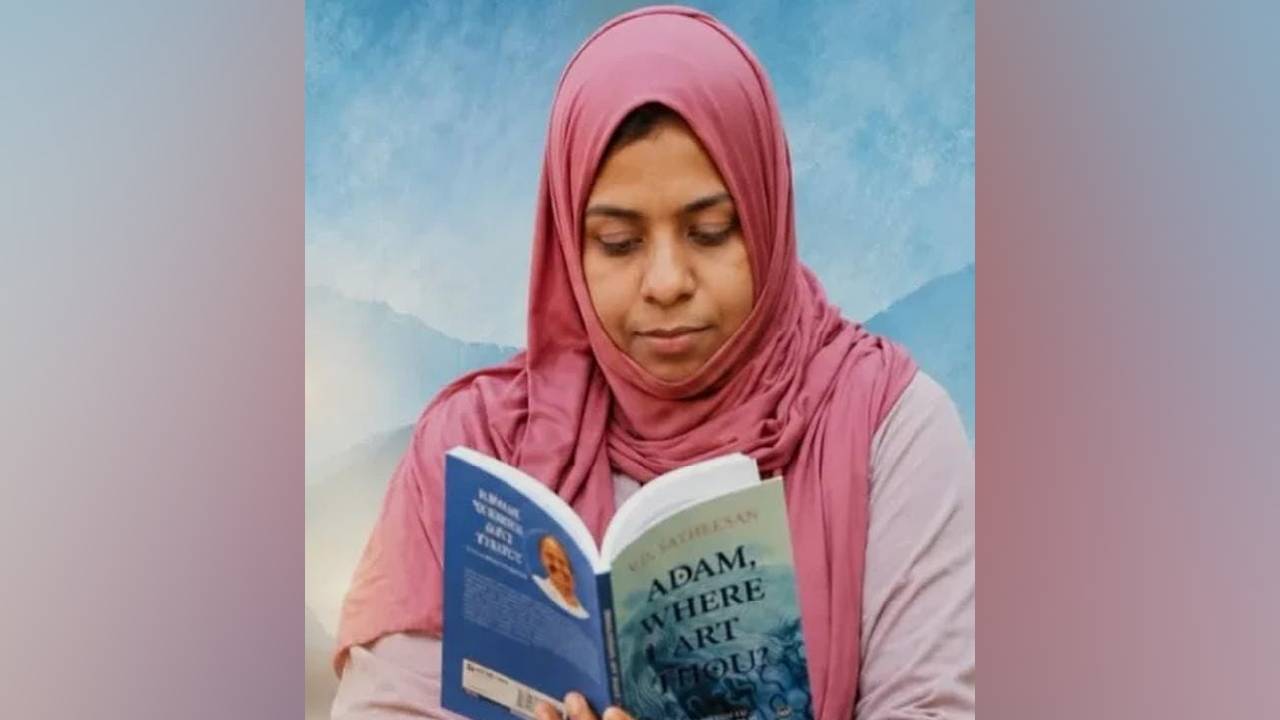
Rauf Rumi.

Rauf Rumi, a Muslim woman from Kannur, has sent a warm message of communal harmony by translating into English the speeches of a Hindu politician based on Biblical teachings and reflections-a rare collaboration that arguably only Keralam can boast of in these trying times.
For Rumi, the translation of Keralam Chief Minister V D Satheesan’s book, Adam, Where Art Thou?, was not merely a literary assignment. It became an opportunity to explore Christian beliefs, engage with Biblical narratives and recognise the common thread of compassion and humanity connecting different faiths.
The English edition, published by DC Books, brings together 32 speeches delivered by Satheesan at programmes organised by Christian groups across Keralam.
Drawing from Biblical stories and the teachings of Jesus Christ, the speeches examine their relevance to contemporary society.
Rumi said she was intrigued by the Malayalam book, Adam Nee Evide Aakunnu?, even before DC Books approached her for its English translation. She found it unusual for a political leader to publish a collection of speeches centred on the Bible.
“I belong to the Islamic faith, which teaches us to respect all religions and their scriptures. This work gave me an opportunity to understand Christian beliefs and Biblical teachings more closely,” she said.
A postgraduate in English literature, Rumi had some familiarity with Biblical references through her academic background and friendships with people from the Christian community.
However, she undertook additional reading and reference work to understand the religious and historical contexts of the speeches and retain their original meaning.
One particular observation in the book’s prelude stayed with her. Satheesan describes himself as an idol-worshipping Hindu who holds the Bible in profound reverence.
For Rumi, this was an expression of religious respect that transcended individual identities.
She was equally moved by Satheesan’s observation in one of his speeches that people who pray are the strength of a society and that prayers offered by different communities carry equal significance.
The translation also prompted her to reflect on the common ground between the Quran and the Bible.
While the two scriptures differ in their narratives and presentation, their emphasis on love for humanity remains a shared value, she said.
Beyond religious teachings, the book introduced her to historical episodes, lesser-known incidents and anecdotes, as well as the contributions of Christian priests to society across community boundaries.
Rumi believes Keralam’s secular social environment has helped people develop an understanding of faiths beyond their own, creating space for such exchanges.
The project also brought her appreciation from the author himself. A few days after the English edition was released, Satheesan called Rumi to tell her that he was happy with the translation and felt that the essence of the Malayalam original had been preserved.
Satheesan had recently referred to this unusual literary collaboration at a church programme in Changanassery, highlighting it as an example of religious inclusiveness in the state.
“I am a Hindu who delivered speeches on the Bible and later compiled them into a book. A Muslim woman translated it into English. Such things are possible in Keralam,” he had said.
The 197-page English edition retains all 32 speeches from the Malayalam original.
A native of Kannur, Rumi holds a postgraduate degree in English language and literature and has qualified for the UGC NET. She has taught at colleges in Keralam and Punjab and is currently on a career break to focus on writing and translation.
Her previous translations include Dhariba Lyndhem’s Name Place Animal Things and Sudha Murty’s Gopi Diaries series for children.
(With inputs from Sreelakshmi Soman. Edited by Fayisa CA)



