

Published Oct 11, 2026 | 3:57 PM ⚊ Updated Oct 11, 2026 | 3:57 PM

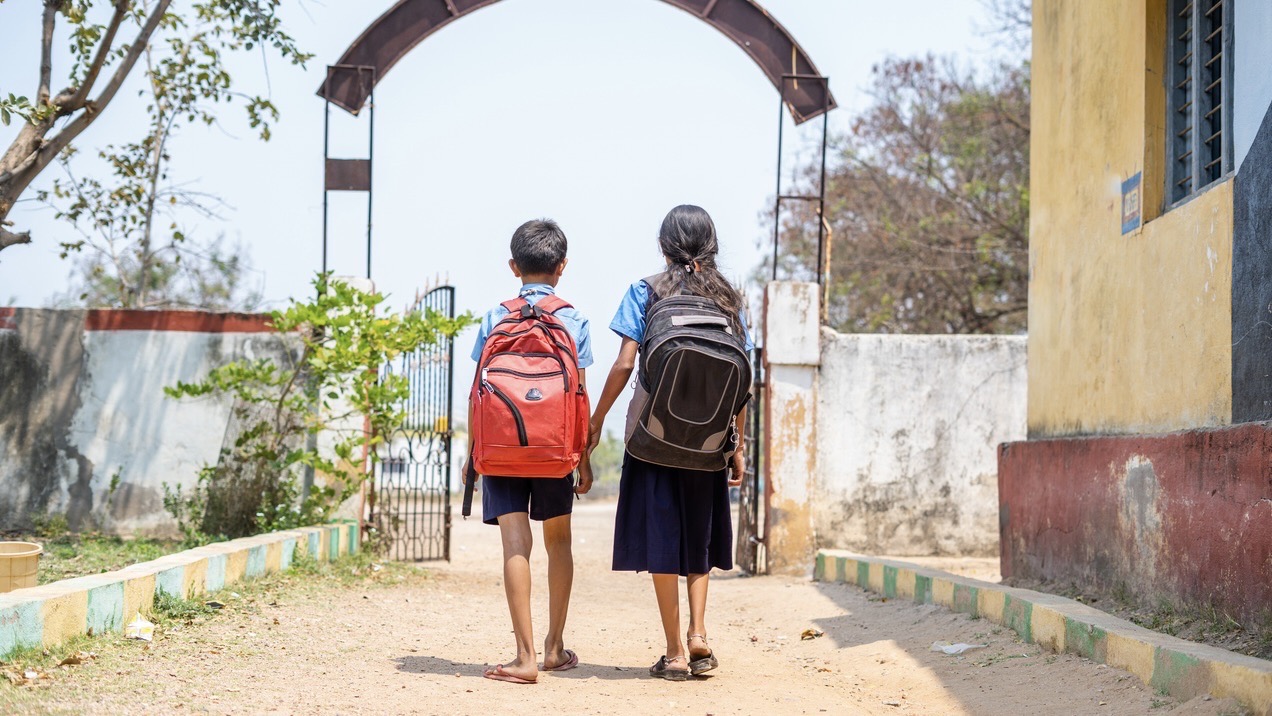
One of the central proposals is to replace large textbooks covering the entire academic year with lighter books designed for specific periods.

Synopsis: In the upcoming session of the Kerala Assembly, beginning on 12 October, a Private Member’s Bill on the issue of heavy schoolbags is likely to come up. The proposal comes amid years of warnings from doctors, court intervention and a SCERT study highlighting the health risks of heavy schoolbags. Though the passage of a Private Member’s Bill into law is rare, the proposal could bring renewed legislative focus to a problem that continues to burden schoolchildren despite repeated policy interventions.
For schoolchildren, the daily struggle of carrying heavy bags could become the subject of a law, if a bill before the Kerala Legislative Assembly gets the required support. A Private Member’s Bill proposed by Kaipamangalam MLA KK Vatsaraj seeks to put a legal limit on schoolbag weight while overhauling the way textbooks and notebooks are designed and used in classrooms.
The Keralam School Students’ Bag Weight Reduction and Education Modernization Bill, 2026, is among the Private Member’s Bills to be considered when the second session of the 16th Kerala Legislative Assembly begins on 12 October.
A Private Member’s Bill is one introduced by a legislator who is not a member of the Cabinet. Although the passage of a Private Member’s Bill into law is rare, its introduction can bring an issue into legislative debate and prompt a response from the government.
The Bill proposes that a schoolbag should weigh no more than 10 percent of a child’s body weight. It calls for schoolbags to be dispensed with entirely for pre-primary children and for the authorities to prescribe separate maximum weight limits for students in each class from I to XII.
One of the central proposals is to replace large textbooks covering the entire academic year with lighter books designed for specific periods. The proposed books, covering all subjects for a month or a defined interval, should contain no more than 80–100 pages.
The Bill argues that carrying textbooks for the entire academic year adds unnecessarily to the weight of schoolbags. Dividing the learning material into smaller, period-based books is intended to ensure that children need to carry only what is required for the immediate learning period.
The proposal extends the same principle to notebooks. It seeks to limit notebooks used by schoolchildren to a maximum of 80–100 pages and prohibit bulky notebooks containing 200 pages or more.
The statement of objects and reasons argues that the use of slimmer notebooks could significantly reduce the load children carry every day. Together with the proposed changes to textbooks, the measure is intended to bring down schoolbag weight substantially.
The Bill also envisages a gradual transition to technology-assisted learning. Tablets and e-textbooks should be introduced in phases in public schools across the state, while digital teaching methods should be adopted as a permanent measure to reduce dependence on printed material.
Schools would also be required to provide lockers or desk-storage facilities. Books, sports equipment and art materials that are not needed every day could be kept at school instead of being carried back and forth.
These proposals are presented as structural changes to the education system rather than temporary measures to address the weight of schoolbags.
The statement accompanying the Bill describes excessive schoolbag weight as a serious problem affecting thousands of schoolchildren. It argues that children carrying heavy loads every day face physical discomfort that can affect their health and growth.
Back pain, shoulder pain and fatigue are among the problems highlighted. The document also flags possible spinal complications, including spinal curvature or scoliosis, and raises concerns about physical ailments that could hinder lung development.
The burden does not end with the walk to school or the journey between classrooms. The Bill draws attention to the difficulties children encounter while boarding and alighting from crowded public transport, including KSRTC buses, with heavy schoolbags.
It also refers to negative interactions with staff and fellow passengers during such journeys, arguing that these experiences can affect children’s mental well-being and the learning environment.
The proposed legislation seeks to address the problem by reducing the physical load while also making the school commute less difficult for children. Its underlying argument is that the weight of schoolbags is not merely a matter of convenience but one that concerns students’ physical and mental health.
The Bill points out that the Union Ministry of Education’s School Bag Policy, 2020, already stipulates that a child’s schoolbag should not weigh more than 10 percent of their body weight. However, it argues that the policy and other directives issued at different stages have not been fully implemented.
According to the statement of objects and reasons, the failure to translate existing instructions into practice makes a legislative intervention necessary. A law, it argues, would provide a more permanent mechanism to ensure that schools adhere to the prescribed standards.
The Bill proposes a monitoring committee in every school under the chairmanship of the headmaster or principal. The committee would periodically check the weight of children’s schoolbags to assess whether they comply with the prescribed limits.
The enforcement mechanism would extend beyond individual schools. Assistant Educational Officers and District Educational Officers would be required to conduct surprise inspections and submit reports to the concerned authority.
The government would also have the power to frame rules necessary to implement the legislation and notify them in the Gazette.
The proposal further calls for the competent authority to categorise students from Classes I to XII and notify the maximum permissible schoolbag weight for each category. This would provide a framework for applying the weight restriction across different stages of schooling.
The proposal seeks to make these changes part of a sustained system, backed by statutory provisions, rather than leaving implementation to circulars and administrative directions alone.
The warning has been around for years, the court has stepped in, and a government study has called for urgent reforms. Yet, for many schoolchildren in Keralam, the daily struggle of carrying heavy schoolbags continues.
The consequences go beyond tired shoulders. Prolonged exposure to excessive loads during the growing years can affect children’s posture and musculoskeletal development, besides causing fatigue, pain and psychological stress, according to a community medicine assistant professor at a government medical college.
International health agencies recommend that a schoolbag should weigh no more than 10 percent of a child’s body weight. However, complaints came repeatedly on children carrying bags weighing 15 percent to 25 percent of their body weight.
Said an assistant professor in the Community Medicine Department of a government medical college,
“Children’s musculoskeletal systems are still developing and are particularly vulnerable to excessive loads. Carrying heavy schoolbags over prolonged periods can lead to poor posture, muscle strain and back pain, with the possibility of long-term musculoskeletal problems. What was once considered uncommon among children – back pain, is now being reported more frequently among school-going populations.
The official further added, “The effects are not limited to physical health. Persistent pain and fatigue can affect children’s concentration, cause irritability and anxiety, and ultimately impact their academic performance and quality of life. Schoolbag weight should ideally be kept within 10 percent of a child’s body weight, and schools must take practical steps to reduce this burden.”
The issue had reached the Kerala High Court as early as 2018, when a doctor approached it through a writ petition seeking directions to the Union and State governments and educational authorities to reduce schoolbag weight.
The petition cited scientific evidence linking heavy bags to fatigue, muscle strain, back pain, changes in the spine’s natural curvature, rounded shoulders, poor posture and reduced attention spans. It also warned of cervical and lumbar pain and the possibility of back problems in later life.
In its counter-affidavit, the Director of Public Instruction referred to an order issued by the Kerala State Human Rights Commission on 5 August 2016, and said circulars had been sent to government and aided schools to ensure that steps were taken to reduce schoolbag weight.
In January 2020, a Division Bench comprising then Chief Justice S Manikumar and Justice Shaji P Chaly underscored the responsibility of governments and educational agencies to ensure that children carried schoolbags with the minimum possible weight. Unnecessary burdens on children, the court observed, could deprive them of their right to life and personal liberty.
Also Read: US Malayali women murder case: Court halts proceedings against Anila Baby over competency concerns
Six years later, a study conducted by the State Council of Educational Research and Training (SCERT), under the General Education Department, again brought the problem into focus. Commissioned at the direction of then General Education Minister V Sivankutty, the study collected information from students, teachers and parents at eight schools in Thiruvananthapuram.
The findings classified schoolbags weighing less than 10 percent of a child’s body weight as safe, those weighing 10 percent to 15 percent as requiring caution, and bags exceeding 15 percent as dangerous. As many as 27.12 percent of the children surveyed considered bag weight a serious problem.
The study found primary-level students largely in the cautionary category, while upper-primary students fell into both cautionary and dangerous ranges. Most high school students were in the high-risk category, whereas higher secondary students were largely in the cautionary range.
Students reported shoulder, neck and back pain, while some parents expressed concern that heavy bags were affecting their children’s posture. The report warned of possible long-term health complications and called for timely intervention.
Among the proposed remedies were limiting daily timetables to three or four subjects, informing students in advance about the books they would need, providing lockers or common storage shelves, promoting textbook sharing and introducing electronic versions of textbooks. Joint notebooks for primary classes and a one-notebook system were also suggested.
The State Curriculum Steering Committee has since approved a draft report outlining measures to reduce schoolbag weight, with the stated objective of protecting children’s physical and mental well-being.
(Edited by Dese Gowda)



