

Published Oct 06, 2026 | 9:30 AM ⚊ Updated Oct 06, 2026 | 9:30 AM

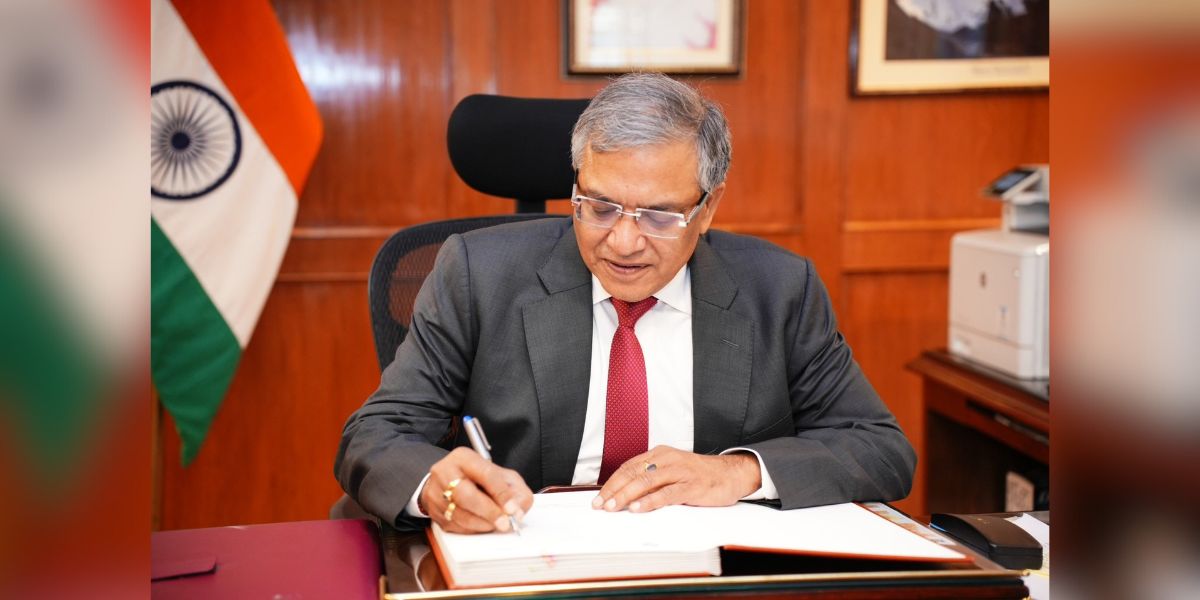
Gyanesh Kumar. (X)

Synopsis: Long before Gyanesh Kumar became Chief Election Commissioner, a Malaysian contractor’s suicide led Keralam journalist G Vinod to pursue a difficult investigation across borders. A fresh Vigilance probe into alleged corruption in a 2006 KSTP road project has brought renewed focus on Vinod’s investigation into the case…
Are ghosts of the past set to visit Gyanesh Kumar?
The Keralam Vigilance and Anti-Corruption Bureau is now set to begin a preliminary inquiry into alleged corruption in a road project dating back to 2006, when the current Chief Election Commissioner was serving as secretary of the state Public Works Department (PWD).
Congress activist Malayinkeezhu Venugopal, a close aide of Home Minister Ramesh Chennithala, filed the complaint. The Home Minister’s Office has now forwarded the complaint to the Vigilance Directorate.
The proposed Vigilance inquiry will look into two cases linked to the Keralam State Transport Project (KSTP), a World Bank-funded road project implemented by PATI-BEL, an Indo-Malaysian joint venture, including allegations against Gyanesh Kumar and other officials who were overseeing the project.
The allegations had surfaced following the suicide of Malaysian engineer Lee See Been, who was the chief project manager of the project at the time.
G Vinod
“Thank you for everything you have done; let me die now. I cannot bear this extreme pressure. I am not going back to Kerala anymore. Working with the officials there is very difficult. I don’t think this project can be completed on time. I am resigning from my job. Thank you for all the help you have extended to me all this while. Forgive me,” 58-year-old Lee had written to then PATI director Rose Lee before his suicide on November 11, 2006.
With the case back in focus, Keralam is also being reminded of an investigation that had once pursued the allegations in detail — that of journalist G Vinod, then a Special Correspondent with Malayala Manorama.
Vinod had carried a series of investigative reports on the alleged irregularities surrounding the road project and continued to follow up on the suicide of Lee See Been.
”Vinod was very passionate about investigative stories and tended to take risks to cover all aspects of a story,” Sindhu Suryakumar, Executive News Editor of Asianet News and Vinodh’s wife, told South First.
Lee See Been was found hanging from an iron bridge at a park in Subang Jaya, Kuala Lumpur, on November 11, 2006. Two suicide notes — the one to Rose Lee and the other to his wife — allegedly named Gyanesh Kumar. Lee’s letter to his wife is said to be with the Malaysian police.
The contents of these letters could be significant to the Vigilance Department’s proposed probe.
PATI-BEL had been awarded a World Bank-funded Keralam State Transport Project (KSTP) contract to construct 127 km of the MC Road at Rs 215 crore. However, the LDF government allegedly failed to complete the land acquisition required for the project, delaying construction.
As a result, bills amounting to around Rs 13 crore remained pending with the Public Works Department without approval. PATI-BEL subsequently alleged that some officials, including Gyanesh Kumar, had demanded bribes.
The Malaysian police, which investigated Lee See Been’s death, reportedly concluded that he had been under severe mental stress.
Vinod sensed a much bigger story behind Lee’s suicide and travelled to Malaysia to investigate the case further.
”Vinod told me about the surveillance he was under. It was also not easy to meet Lee’s immediate family as it was risky,” Sindhu recalled.
Eventually, the investigation appeared as a series in Malayala Manorama.
“It was covered on a big scale. Other news outlets also highlighted it, including Asianet News, as it emerged as a big political story then,” Sindhu said.
“I still remember the road work on the MC Road getting halted and Keralam facing many difficulties then,” she said.
For Mathews Varghese, who was then an editor at Malayala Manorama and is now retired, the story was significant from the beginning.
“Vinod was very passionate about the story. The series in Manorama opened many political discussions in Keralam,” Varghese told South First.
“The overall responsibility for the pages was with me. We were sure that this story had a soul and that it would develop in the future as well,” he said.
He also recalled that Malayala Manorama was the only newspaper to send a reporter to Malaysia to pursue the story, despite the potential diplomatic restrictions surrounding the case.
George Tharakan, a 72-year-old native of Kottayam who followed the series on Malayala Manorama, shared his memories.
”There was a time when we eagerly waited for the newspaper every morning to read the series. Manorama published a series of reports on the issue, but Vinod’s findings felt more personal. He wrote about what Lee’s family had told him, and the allegations against Keralam officials were shocking. Thomas Isaac was the finance minister at the time, while TU Kuruvilla was the PWD Minister. Although Vinod’s series sparked discussions, the probe eventually fizzled out, as there was no follow-up on the issue,” he said.
Isaac recently claimed that Lee See Been’s “suicide note detailed the corruption and mismanagement of PWD officials in Kerala. Gyanesh Kumar was among the primary individuals named. The note also stated that bribes had been demanded. Following this, the vigilance inquiry and transfer took place.”
In 2007, Gyanesh Kumar was shifted on central deputation to New Delhi as a Joint Secretary in the Ministry of Defence under then Union Defence Minister AK Antony.
Vinod died in December 2025, at 54, after more than two decades in journalism. He had joined Malayala Manorama in 2002 after beginning his career at Rashtradeepika and went on to win several journalism awards.
What role Vinod’s reports, preserved in the Malayala Manorama archives, could play in the new Vigilance probe remains to be seen.
”Lee’s soul deserves justice, and his family deserves answers. Perhaps that is also why we are seeing these developments now. His family cannot be left without answers, and those responsible for his death must ultimately be held accountable.” Malayinkeezhu Venugopal told South First.
(Edited by Dese Gowda and R Rajesh Kumar.)



