

Published Aug 04, 2026 | 5:43 PM ⚊ Updated Aug 05, 2026 | 12:54 PM

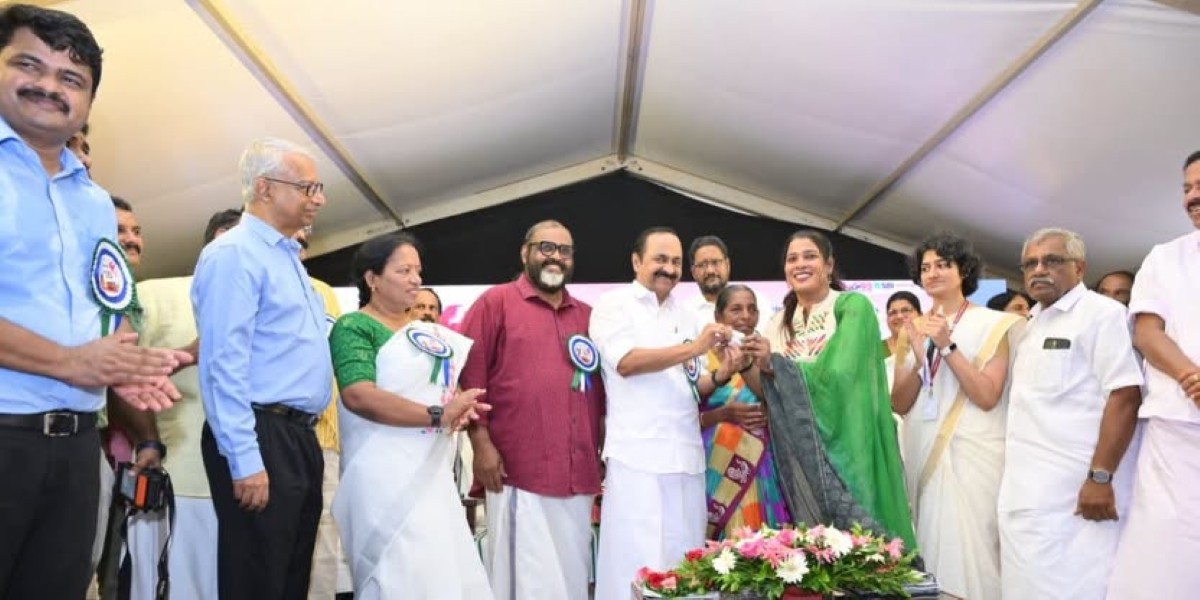
Launch of Priyadarshini Scheme on 15 June

Synopsis: Transport Minister CP John has come under fire over his remarks linking women’s use of the state’s free KSRTC travel scheme with their preference for private schools and government hospitals. While the comments triggered a political controversy, the minister later said they had been misunderstood and insisted he was highlighting the financial struggles faced by many families, not criticising the Priyadarshini scheme.
Transport Minister CP John has found himself at the centre of a political controversy after remarks he made about women availing the state government’s free KSRTC travel scheme triggered sharp criticism.
Speaking at the Kerala Bus Transport Association’s state conference in Palakkad, on Monday, 3 August, the minister questioned what he described as the contrasting choices made by many families in Kerala on public transport, education and healthcare.
His comments, particularly those linking women’s use of the free Priyadarshini bus scheme with their preference for private schools and dependence on government hospitals, drew strong reactions from the Opposition as well as sections of the public.
CPI(M) leader PK Sreemathi was among those who criticised the minister’s remarks.
Also Read: Torrential showers continue to pummel Kerala, IMD predicts more
Priyadarshini Scheme logo
Addressing private bus operators, John said many women who use the government’s free bus service are willing to spend money on private education for their children but continue to rely on government healthcare because they cannot afford private hospitals.
“Acting is not a small thing. A rich person may pretend to be poor, or a poor person may pretend to be rich. But what I fail to understand is why women who say they do not have money for bus travel send their children to private schools when seats remain vacant in government schools,” the minister said.
He went on to say that the same families seek treatment in government hospitals and even stay on hospital verandas because they cannot bear the cost of private healthcare.
According to the minister, the behaviour of people in Kerala in three sectors—public transport, public education and public health—has always intrigued him.
“When a KSRTC bus under the Priyadarshini scheme arrives, women rush towards it. They are not doing so out of affection for me or hostility towards private buses. They do so because women in many households simply do not have money in their hands,” he said.
John also argued that the popularity of the Priyadarshini buses reflected economic realities rather than political preference, saying the scheme’s success was rooted in the financial hardships faced by many women.
At the same event, he told private bus operators that the free travel scheme alone could not be blamed for the problems confronting the private bus industry. If operators were facing genuine difficulties, the government was prepared to discuss and address them, he added.
As criticism mounted, John defended his speech, insisting that his comments had been taken out of context.
He said he stood by what he had stated, but maintained that the intention was entirely different from the interpretation being circulated.
According to the minister, he was in fact making a self-critical observation that political leaders, including himself, had failed to fully understand the aspirations and struggles of working-class families.
He reiterated that free travel for women is a right and that the government remains committed to providing it.
John said families depend on government hospitals because they often lack the money required for treatment in private institutions. At the same time, parents make sacrifices to admit their children to private schools because they believe it offers them better opportunities and a better future.
“That was the point I intended to make,” he said, adding that the government would not retreat “even an inch” from implementing the Priyadarshini scheme.
Trying to downplay the controversy over his remarks, the minister said the episode had taught him to be more cautious while speaking in public.
Maintaining that he had made no inappropriate remarks, the minister said he had realised that every word he uttered was being closely scrutinised.
“I have learned from this controversy that I need to be very careful while giving speeches. I have not made any wrong remarks. From now on, I will speak more carefully,” he said, adding that the incident had been a lesson against speaking “too casually.”
Also Read: Death toll in Kerala rains rises to 15
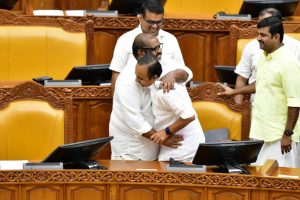
Transport Minister C P John with Chief Minister V D Satheesan
The Priyadarshini scheme was launched on 15 June as one of the UDF government’s Indira Guarantees, with the stated objective of improving women’s mobility, economic participation and social inclusion.
Under the programme, women and transgender persons are entitled to travel free of cost on seven categories of ordinary KSRTC services, irrespective of age, place of residence or income.
The benefit applies to Ordinary, City Ordinary, Limited Stop Ordinary, Fair-Stage Ordinary, Town-to-Town, Point-to-Point and Gramavandi services.
The government introduced the scheme in phases, beginning with ordinary services. Of the 3,125 KSRTC buses operating under the ordinary category in Kerala, the scheme was initially rolled out across these services.
The latest controversy has also drawn attention because it contrasts with the minister’s own earlier public endorsement of the scheme.
Soon after Priyadarshini was launched, John had described it as one of the UDF government’s most people-friendly initiatives and hailed it as a major step towards women’s empowerment.
He had then credited Congress leader Rahul Gandhi’s vision behind the programme, calling Priyadarshini a flagship initiative for empowering women.
“For decades, student travel concession remained a political issue. Women’s mobility was never viewed in the same way. Priyadarshini has changed that perspective,” he had said.
Rejecting criticism over the financial burden of the scheme, John had argued that it should not be assessed merely in terms of profit and loss.
“It is a women’s development project. In that sense, it is profitable to society,” he had said.
Also Read: A wake-up call for faltering Monsoon defences
(Edited by Sumavarsha)



