

Published Apr 08, 2026 | 12:17 AM ⚊ Updated Apr 08, 2026 | 12:17 AM

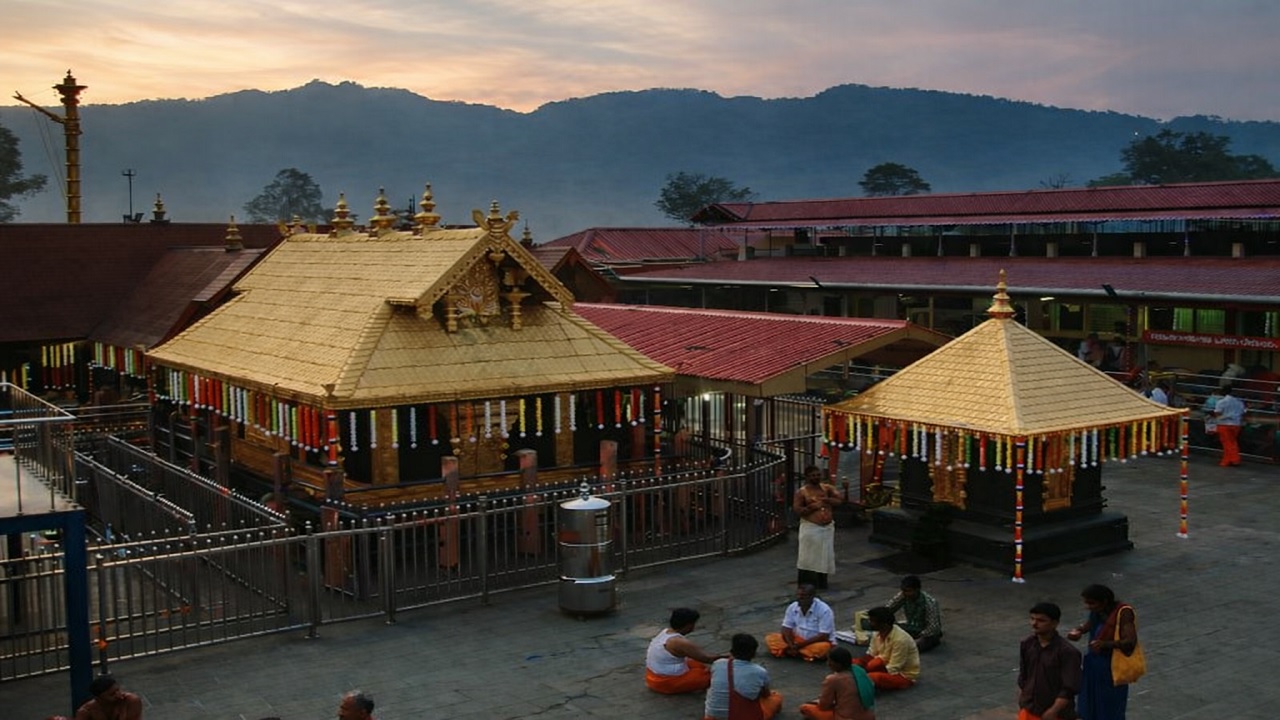
Woman in the age group of 10 and 50 are traditionally not allowed to visit the Sabarimala temple.
Synopsis: A nine-judge Constitutional Bench started hearing the arguments in the Sabarimala issue on Tuesday. The Bench clarified that it will not examine the correctness of the 2018 verdict that allowed women of childbearing age to visit the hill shrine. Instead, it will focus on the seven constitutional questions referred to it in 2019, including the scope of judicial intervention in religious matters.
Supreme Court judge Justice BV Nagarathna on Tuesday, 7 April, noted that women could not be treated as “untouchables” for three days in a month and cease to be so on the fourth day.
Apparently referring to the notion of “impurity” associated with the menstrual cycle, Justice Nagarathna observed while hearing petitions on discriminating against women in religious places, including the Sabarimala Sree Dharmasastha Temple in Kerala.
“Speaking as a woman, there can’t be a three-day untouchability every month, and on the fourth day, there is no untouchability,” Justice Nagarathna observed.
Justice Nagarathna is the lone woman in the nine-judge Constitution Bench hearing the Sabarimala issue — allowing women of childbearing age to visit the hill shrine of the celibate deity, Ayyappa.
She, however, expressed reservations about invoking Article 17 in the Sabarimala matter.
Justise Nagarathna noted that Article 17 was incorporated as a fundamental right in the backdrop of India’s long history of caste-based untouchability.
“Article 17 in the context of Sabarimala, I don’t know how it can be argued”, she said, before reiterating that, speaking as a woman, Article 17 can’t apply for three days and on the fourth day, there is no untouchability.
Her remarks came after Solicitor General Tushar Mehta strongly objected to the reasoning in the 2018 Sabarimala verdict, which had held that excluding women aged 10 to 50 amounted to a form of untouchability prohibited under Article 17.
“One opinion in Sabarimala says Article 17 applies to women- you are treating them as untouchables- I have a very strong objection to it”, Mehta told the Bench headed by Chief Justice Surya Kant.
He argued that India should not be viewed through a Western lens of patriarchy and gender stereotypes, adding, “India is not that patriarchal or gender stereotyped in the way that the West understands.”
Mehta clarified that his argument was not centred on menstruation.
According to him, the restriction at Sabarimala was linked only to age and not to the menstrual status of women. He also argued that temples dedicated to Lord Ayyappa across the world allow women devotees, but Sabarimala is a “sui generis” (of its own kind) temple with a unique custom and tradition.
Earlier in the day, the Supreme Court commenced hearing the contentious issue of allowing women of childbearing age to the Sree Dharmasastha Temple at Sabarimala in Kerala’s Pathanamthitta district.
Besides the Sabarimala issue, the Constitution Bench is also examining petitions related to the Dawoodi Bohra khatna ritual, restrictions on women entering certain mosques and the rights of Parsi women who marry outside the community to enter fire temples.
Besides the Chief Justice and Justice Nagarathna, the Bench also includes justices MM Sundresh, Ahsanuddin Amanullah, Aravind Kumar, Augustine George Masih, Prasanna B Varale, R Mahadevan and Joymalya Bagchi.
Arguing for the Union Government, Solicitor General Mehta said that restricting the entry of a particular gender within a specific age group at a place of worship cannot automatically be treated as discrimination.
According to the Centre, such issues fall within the sphere of religious faith and denominational autonomy, and courts should exercise limited judicial review.
The Centre told the court that the 2018 verdict allowing women of all age groups into Sabarimala was wrongly decided and should be reconsidered.
It objected to the earlier finding that the restriction amounted to untouchability under Article 17, arguing that the bar applied only to women of menstruating age and was linked to the unique character of the deity worshipped at Sabarimala.
It also pointed out that women are not barred from all Ayyappa temples.
The Union government further argued that courts should not decide whether a religious practice is rational, scientific or modern, as that would amount to imposing judicial values on matters of faith.
It said concepts such as constitutional morality are not explicitly mentioned in the Constitution and should not be expanded to override religious practices.
At the same time, the Centre maintained that practices violating public order, morality or health cannot be protected, giving examples such as human sacrifice.
The government also cautioned against creating a rigid definition of “religious denomination” or “essential religious practice”, saying Hinduism is diverse and includes multiple sects, customs, rituals and traditions.
During the hearing, the Bench clarified that it will not examine the correctness of the 2018 Sabarimala verdict.
Instead, it will focus on the seven constitutional questions referred to it in 2019, including the scope of judicial intervention in religious matters.
The original 2018 judgment, delivered by a five-judge Bench in a 4:1 verdict, had struck down the ban on women aged 10 to 50 entering Sabarimala, holding that devotion cannot be subjected to gender-based exclusion.
In 2019, a review Bench referred broader questions on women’s entry into places of worship across religions to a larger Bench, including issues related to mosques, dargahs and Parsi fire temples.
Currently, 67 petitions are before the court.
Senior advocate K Parameswaran has been appointed amicus curiae. Krishan Kumar Singh is the nodal counsel for the review petitioners. Advocate Shivam Singh will assist the amicus curiae.
The review petitioners and those supporting them will be heard from 7 to 9 April. Those opposing the review petitions and supporting women’s entry will be heard from 14 to 16 April. Reply submissions will be taken up on 21 April, and the amicus curiae is expected to complete final arguments by 22 April.
Senior advocate V Giri will represent temple tantri (priest) Kandararu Rajeevaru. Senior advocate Abhishek Manu Singhvi will appear for the Travancore Devaswom Board.
On the other side, senior advocates Indira Jaising, Menaka Guruswamy, Shahdan Farasat, Vijay Hansaria, K Radhakrishnan and Sanjay Hegde are expected to defend the 2018 verdict.
The Kerala government, which had supported the 2018 judgment, has now taken a U-turn and is opposing the entry of women into the temple.
(Edited by Majnu Babu).


