

Published Mar 23, 2026 | 8:00 AM ⚊ Updated Mar 23, 2026 | 8:00 AM

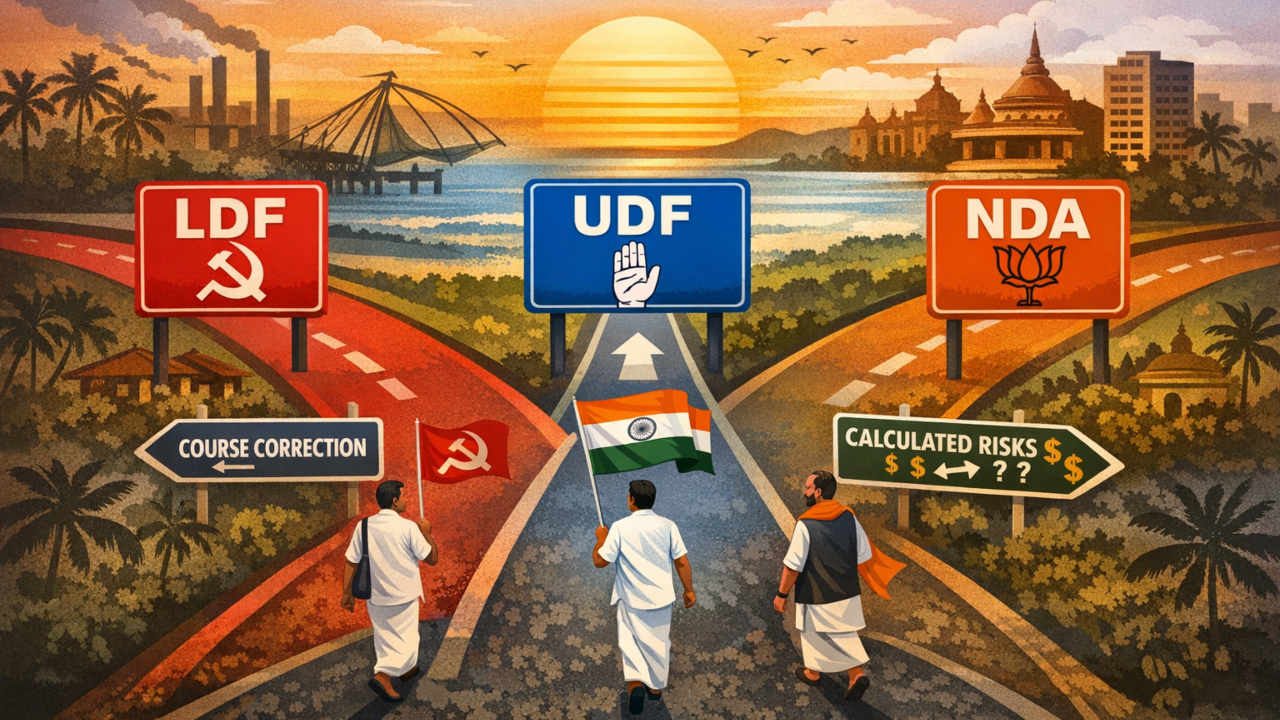
All three fronts are banking on shifts in voter mood and local dynamics. (AI-generated image)
Synopsis: From seasoned ministers and party chiefs to celebrities, technocrats and young newcomers, the 2026 election presents a striking cross-section of candidates — underlining how Kerala’s political battleground is expanding beyond traditional lines even as the stakes remain firmly rooted in power, performance and perception.
With the Kerala Legislative Assembly election 2026 drawing closer, the contest is shaping up as much around personalities as it is around politics.
Across the three fronts, the candidate lists reflect sharply different pitches to voters — from continuity and experience to reinvention and experimentation.
The ruling Left Democratic Front (LDF) is leaning on its established leadership, banking on governance credentials and a largely unchanged lineup to push for a historic third term.
The Congress-led United Democratic Front (UDF), by contrast, has brought in a mix of organisational heavyweights and fresh faces — signalling an aggressive bid to reclaim power.
Meanwhile, the National Democratic Alliance (NDA) is foregrounding diversity and visibility, fielding high-profile entrants such as Union Minister George Kurian and former Mizoram Governor Kummanam Rajasekharan, alongside professionals and first-time candidates.
Besides, there is a visible attempt at generational transition, with senior leaders stepping aside to make way for younger faces, and questions on women representation.
From seasoned ministers and party chiefs to celebrities, technocrats and young newcomers, the 2026 election presents a striking cross-section of candidates — underlining how Kerala’s political battleground is expanding beyond traditional lines even as the stakes remain firmly rooted in power, performance and perception.
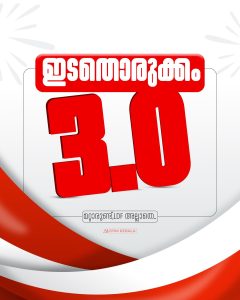
LDF’s third term aspiration poster
With its sights firmly set on an unprecedented third consecutive term, the LDF has rolled out a candidate strategy that blends continuity with calculated adjustments, signalling confidence rather than experimentation as Kerala heads into a high-stakes Assembly election.
Having stormed to power with 91 seats in 2016 and improved its tally to 99 in 2021, the LDF is now aiming to push the bar even higher.
This time, the front has largely chosen to stand by its incumbents, reflecting a clear message: performance and governance remain its central plank.
The Communist Party of India (Marxist) alone has retained 56 sitting MLAs, including 11 ministers, underlining the leadership’s trust in its existing lineup.
The LDF coalition, anchored by the CPI(M) and Communist Party of India, also includes parties such as Kerala Congress (M), Indian Socialist Janata Dal, Nationalist Congress Party, Congress (Secular), Kerala Congress (B), Rashtriya Janata Dal, Janadhipathya Kerala Congress, Indian National League and National Secular Conference, along with independents.
The front has fielded 18 women candidates this time.
Of them, 12 are from the CPI(M), including prominent names like KK Shailaja, R Bindu, Veena George and U Prathibha.
Two among the CPI(M) nominees are independents backed by the party.
The CPI has fielded five women candidates, while Kerala Congress (M) has one in the fray.
The rest of the LDF constituents, however, have not nominated any women, reflecting uneven representation across the alliance.
The CPI has enforced internal discipline by denying tickets to six sitting MLAs who had completed three consecutive terms, signalling adherence to organisational norms even in a competitive election.
At the same time, it has made an aggressive tactical move by fielding ET Taison in Paravur to take on Leader of Opposition VD Satheesan—a contest loaded with political symbolism.
Interestingly, the CPI was also the first party in the state to announce its candidates after the election notification, setting the tone for early campaign mobilisation.
The otherwise disciplined exercise has not been without setbacks.
In a significant embarrassment, CPI’s sitting MLA CC Mukundan switched sides to the BJP after being denied a seat.
Mukundan is now set to contest from Nattika against CPI nominee Geetha Gopi, adding an extra layer of intrigue to the constituency.
Another awkward moment for the ruling front emerged when V Abdurahiman of the National Secular Conference chose not to kick off his campaign from Tanur, the constituency he has represented twice, opting instead to shift to Tirur.
The move raised eyebrows, with the Opposition quick to question whether a sitting MLA and minister was hesitant to seek a fresh mandate from his own turf.
After internal discussions, the alliance moved to contain the fallout.
Abdurahiman will now contest from Tirur, while Mohammad Samir has been fielded in Tanur, marking a last-minute reshuffle to steady the narrative.
Meanwhile, senior leader K Krishnankutty of the ISJD has opted out of the electoral fray, paving the way for V Murugadas to step in as the party’s candidate in Chittur.
Another notable absence is that of the Janadhipathya Kerala Congress, which, as of now, stays out of the contest altogether.
The decision follows the disqualification of its sole legislator, Antony Raju, in a long-pending evidence tampering case, leaving the party without a viable candidate.
With the nomination deadline drawing near, the CPI(M) has finalised its choice from the cultural sphere, fielding Sudheer Karamana as an independent candidate for Thiruvananthapuram constituency.
With this, he becomes the second actor in the LDF lineup, alongside KB Ganesh Kumar of Kerala Congress (B).
Adding a different note to the campaign trail, playback singer and Aroor MLA Daleema Jojo is once again in the fray, blending politics with cultural appeal.
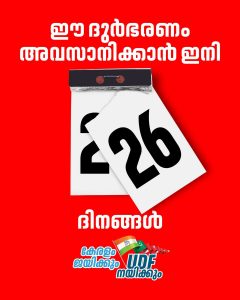
A poster from UDF when the poll date was announced on 15 March. It says the Left rule will end after 26 days – that’s on polling day, 9 April
After a decade in the opposition, the UDF is stepping into the Kerala Assembly election arena with renewed urgency, a reshuffled lineup and a clear intent to reclaim power.
The front, anchored by the Indian National Congress, brings together a diverse coalition including the Indian Union Muslim League, Kerala Congress (Joseph), Kerala Congress (Jacob), Revolutionary Marxist Party of India and the state unit of the All India Trinamool Congress.
The Congress list, finalised after intense internal deliberations, came out in two phases — 55 candidates on 17 March and another 37 on 19 March.
But even before the dust settled, a controversy erupted over the limited representation of women.
Out of 92 Congress tickets, only nine went to women, drawing sharp criticism from party national spokesperson Shama Mohamed, who publicly appealed to Rahul Gandhi to address the imbalance.
Across the UDF, the total number of women candidates stands at 12, with two from IUML and one from RMP.
Despite the criticism, the UDF is banking on a mix of experience and fresh energy.
KPCC president Sunny Joseph contesting from Peravoor is among the headline names.
In a notable organisational push, seven district Congress presidents have also been fielded, signalling the party’s attempt to strengthen its grassroots connect.
There are significant changes in key constituencies.
At Thripunithura, veteran K Babu has stepped away from electoral politics after decades in the fray, making way for newcomer Deepak Joy. Babu’s long stint — winning six out of seven contests between 1991 and 2011 — had made the seat a Congress bastion.
The UDF has also opened its doors to leaders who recently switched sides.
Former BJP leader Sandeep Varrier will contest from Thrikaripur, while leaders like Meenankal Kumar (ex-CPI), A. Suresh (ex-CPI(M)) and P Aisha Potty (ex-CPI(M)) have been given tickets in Nedumangad, Malampuzha and Kottarakkara, respectively.
In a parallel strategy, the front is extending tacit support to rebel candidates who broke away from the CPI(M), including G Sudhakaran in Ambalappuzha, PK Sasi in Ottapalam, and V Kunjikrishnan and TK Govindan in Payyannur and Taliparamba, respectively — moves that could complicate the Left’s electoral arithmetic.
Adding a touch of star appeal, actor and television personality Ramesh Pisharody has been fielded from Palakkad, underlining the Congress’s attempt to broaden its appeal.
The IUML, meanwhile, has made a quiet but notable shift by fielding two women candidates for the first time in its history.
The party has also sprung surprises by dropping several sitting MLAs, including former minister MK Muneer, reportedly on health grounds. In Koduvalli, Youth League leader PK Firoz steps in as the UDF candidate.
Senior leader PK Kunhalikutty has been moved to Malappuram, while KM Shaji will contest from Vengara.
IUML has also fielded 12 newcomers.
Across the front, a broader generational shift is also visible.
In Thodupuzha, veteran PJ Joseph — who represented the constituency ten times over five decades — has stepped aside, paving the way for his son Apu John Joseph to make his electoral debut.
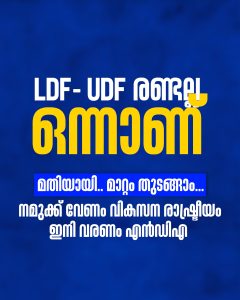
NDA says if development is needed then it must be in power
The National Democratic Alliance (NDA) has unveiled a strikingly diverse and unconventional list of candidates for the upcoming Kerala Assembly elections, blending political experience with fresh faces from varied professional and social backgrounds.
The intention is simple- winning as many seats. The lone victory for NDA came in 2016 in the form of O Rajagopal from Nemom.
The Bharatiya Janata Party (BJP), the principal partner in the NDA, is contesting 97 seats, releasing its candidates in three phases — 47 in the first list, 39 in the second, and 11 in the final round. Notably, the party has fielded 12 women candidates, signalling an attempt to broaden representation.
Among NDA allies, the Bharath Dharma Jana Sena (BDJS) has named one woman candidate, while Twenty20 — the latest entrant to the alliance — has gone a step further with three women candidates in its list.
The NDA slate stands out for its mix of high-profile personalities and unconventional entrants.
Union Minister of State George Kurian, who is contesting from Kanjirappally is among the prominent faces, alongside BJP’s Kerala unit president Rajeev Chandrasekhar.
Film director and former Army officer Major Ravi is also in the fray, adding weight to the party’s campaign.
The list also features a mix of professionals and public figures, including reality show personality Robin Radhakrishnan and noted cardiologist Dr N Prathap Kumar, who heads a private hospital.
Veteran leader Kummanam Rajasekharan, who previously served as Mizoram Governor, is another key name.
Adding to the intrigue are several candidates who have crossed over from rival parties.
Former CPI(M) MLA S Rajendran is contesting from Devikulam, while former KPCC general secretary MJ Job and sitting MLA CC Mukundan, who represented Nattika, are also in the NDA fold.
The Twenty20 list, in particular, reflects a deliberate attempt to project a non-traditional political image.
It includes former Congress leader and ex-Adoor municipality chairman Babu Divakaran, social media influencer and filmmaker Akhil Marar, and healthcare entrepreneur Ravi Kulangara, an M.Tech graduate.
In a late twist, 25-year-old Athira D Nair has emerged as the youngest NDA candidate in the state after replacing actor Veena Nair, who withdrew from the race after finding her name missing from the electoral roll.
Athira, an entrepreneur with a Master’s degree in Computer Science and training in classical music and dance, adds a youthful dimension to the alliance’s campaign.
Twenty20 has also fielded candidates with strong professional credentials.
In Pathanapuram, former Indian Air Force officer Anil Kumar S (Anil Pillai), currently serving as National Vice Chairman of the National Ex-Servicemen Coordination Committee, is contesting. In Muvattupuzha, agricultural activist Sunny Kaduthazhe, Managing Director of the Milwaukee Academy, has been nominated.
However, the alliance faced minor setbacks as actors Lakshmipriya and Veena Nair had to be dropped after discrepancies in the voters’ list came to light.
Actor Anjali Nair remains in the fray, while social media influencer and television personality Promy Kuriakose is another notable entrant.
In a politically symbolic move, Varghese George — son-in-law of former Chief Minister Oommen Chandy — is contesting from Kodungallur as a Twenty20 candidate, further underlining the NDA’s strategy of attracting leaders across political lines.
With its mix of seasoned politicians, technocrats, celebrities, and first-time entrants, the NDA appears to be crafting a broad-based appeal — one that seeks to challenge traditional electoral patterns in Kerala through diversity and surprise.
Another interesting factor with the candidate lineup is that several constituencies are witnessing a replay of the 2021 battle, with the same winners and runners-up locking horns once again.
In as many as 16 seats—including Manjeswaram, Sultan Bathery, Kuttyadi, and Kalamassery—the contest has taken on a renewed intensity.
For sitting MLAs, it’s a test of performance and credibility, while those who narrowly lost last time see a second chance to turn the tables.
With both fronts banking on shifts in voter mood and local dynamics, these repeat contests could well decide whether continuity holds or the electorate opts for change.
(Edited by Majnu Babu).


