

Published Jan 21, 2026 | 6:00 PM ⚊ Updated Jan 21, 2026 | 6:00 PM

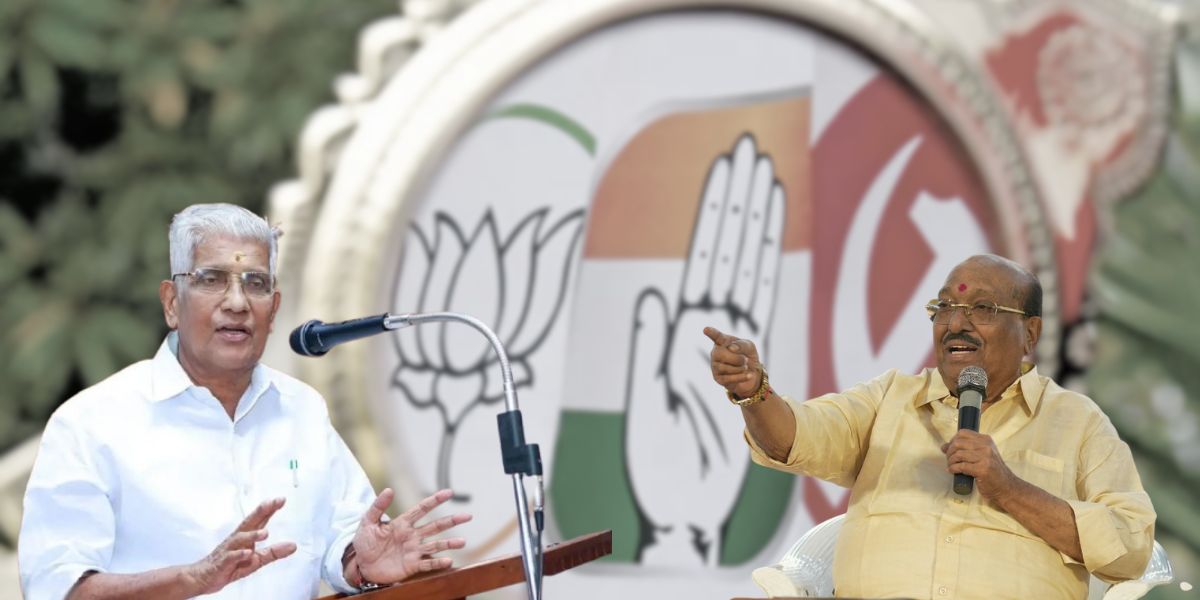
G Sukumaran Nair and Vellappally Natesan.
Synopsis: The sudden bonhomie between the NSS and the SNDP in Kerala injected fresh uncertainty into an already volatile pre-election political landscape in the state. Leaders of both organisations insist that the rapprochement is driven by “the need of the hour” and contemporary “social exigencies”.
The sudden bonhomie between Kerala’s two most influential Hindu social organisations in Kerala — the Nair Service Society (NSS) and the Sree Narayana Dharma Paripalana Yogam (SNDP) — injected fresh uncertainty into an already volatile pre-election political landscape in the state.
After decades of acrimonious rivalry, particularly over caste-based reservation, the announcement that both groups are willing to “set aside differences” has sparked intense speculation: is this the beginning of a lasting social realignment, or a short-term tactical truce driven by electoral anxieties?
At one level, the optics are striking.
The NSS, traditionally representing the upper-caste Nair community, and the SNDP, the principal platform of Ezhavas within the OBC fold, have historically stood on opposite ends of Kerala’s most emotive social debates. Their clashes shaped not only policy positions but also voting behaviour, alliance arithmetic and street mobilisation.
Even brief experiments with unity — such as the 2012 joint memorandum withdrawing reservation-related cases — collapsed under the weight of mutual suspicion and ideological divergence.
This history makes the current thaw all the more intriguing.
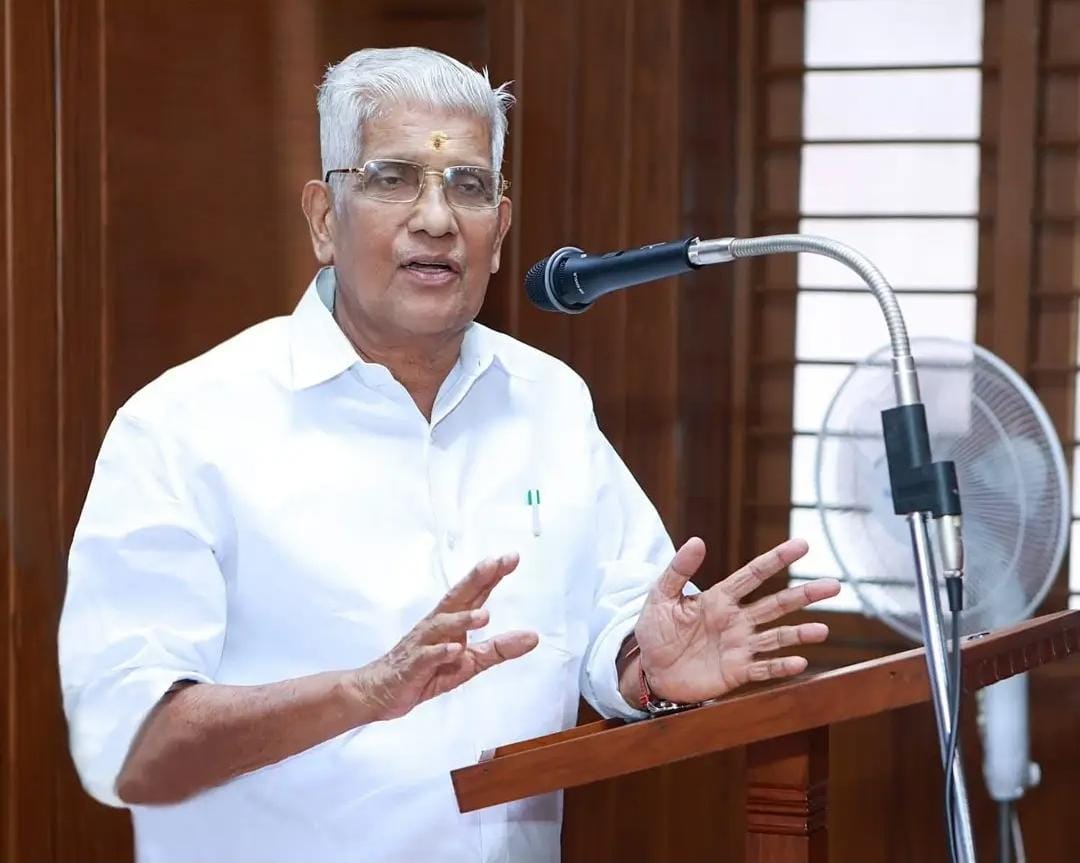
NSS General Secretary G Sukumaran Nair.
Leaders of both organisations insist that the rapprochement is driven by “the need of the hour” and contemporary “social exigencies”.
Yet the timing — just months ahead of a crucial Assembly election — is impossible to separate from politics.
What is particularly notable is that their sharpened rhetoric is no longer aimed at each other but squarely at the Congress-led UDF, and more specifically, Leader of the Opposition in Kerala Assembly VD Satheesan.
Within hours of SNDP Yogam General Secretary Vellappally Natesan declaring that Nair–Ezhava unity was both inevitable and desirable, NSS General Secretary G Sukumaran Nair echoed the sentiment, signalling openness to cooperation if discussions progress.
While both stopped short of announcing a formal alliance, the political message was unmistakable.
Their common adversary, for now, appears to be Satheesan.
On 21 January, the SNDP Yogam Council meeting in Alappuzha marked a decisive shift from signals to substance in the emerging SNDP–NSS rapprochement.
The Council formally cleared the path for closer cooperation with the Nair Service Society, endorsing steps towards Nair–Ezhava unity ahead of the Assembly polls.
Announcing the decision, SNDP general secretary Vellappally Natesan said Thushar Vellappally would lead further talks with NSS leadership, with a meeting with general secretary G. Sukumaran Nair expected soon.
Welcoming the move, NSS general secretary G. Sukumaran Nair said unity was “certain” and that the SNDP would be invited to Perunna for discussions, stressing that any cooperation would be placed before the NSS board and would not dilute its core values.
Both sides described unity as timely and inevitable, stressing harmony beyond electoral calculations.
The intensity of the criticism directed at the Opposition leader is unusual, even by Kerala’s standards of sharp political discourse.
Natesan accused Satheesan of targeting him to curry favour with the Indian Union Muslim League (IUML) and even Jamaat-e-Islami, framing the Congress leader’s stance as part of what he calls “minority appeasement”.
Nair, though more guarded, openly questioned Satheesan’s authority within the Congress and his confrontational style, hinting that such politics could cost the UDF dearly.
The subtext is clear: Both community leaders see Satheesan as an obstacle — either to their influence or to a broader Hindu consolidation they believe is necessary in the present political climate.
This, however, opens a deeper fault line within the Congress itself.
By praising figures such as Ramesh Chennithala, KC Venugopal and even AK Antony as “eligible” chief ministerial candidates while pointedly sidelining Satheesan, the NSS–SNDP leadership has added fuel to simmering tensions within the UDF.
In a state where perceptions of leadership unity matter almost as much as arithmetic, this could prove damaging.
Satheesan’s response to the controversy makes it clear that he views the attacks on him — and the wider debate over NSS-SNDP engagement — through the prism of Kerala’s long-standing secular ethos.
For the Congress leader, the core issue is not personal criticism or community alignments, but what he describes as a deliberate attempt to inject communal polarisation into Kerala’s politics.
He frames Natesan’s remarks and the chief minister’s subsequent actions as part of a strategy that mirrors the Sangh Parivar’s playbook: exploiting religious and caste differences for political gain.
Satheesan repeatedly stresses that his opposition is directed at communalism itself, not at any individual or organisation, underscoring his willingness to engage with all community leaders while drawing a firm line against divisive rhetoric.
At the same time, he positions himself as unflinching, even combative, in confronting what he sees as hate politics — portraying such resistance as both a moral duty and a political necessity, regardless of personal cost.
Meanwhile, senior Congress leader Ramesh Chennithala offered a complementary but more conciliatory note.
While fully endorsing Satheesan’s anti-communal stance as Congress policy, he emphasised that the party’s tradition of inclusiveness, arguing that dialogue and cooperation with bodies like the NSS and SNDP are neither improper nor undesirable.
For Chennithala, unity among social organisations can strengthen Kerala, provided it does not slide into exclusionary politics.
Together, the two leaders articulate a dual Congress approach: Uncompromising against communalism, yet open to engagement across social lines.
SNDP Yogam general secretary Vellappally Natesan and Chief Minister Pinarayi Vijayan
While both organisations maintain that their unity is “equidistant from all political parties”, the immediate political beneficiary appears to be the ruling LDF.
The CPI(M) has long argued that the Congress, especially under Satheesan, is drifting into the orbit of “minority communal forces”.
The NSS–SNDP convergence, coupled with their criticism of the Opposition leader, neatly feeds into this narrative.
Chief Minister Pinarayi Vijayan has already leaned into this space, invoking communal flashpoints like Marad and Thalassery to underline what he describes as the dangers of polarisation.
The symbolism of two major Hindu community bodies appearing receptive to the Left — even implicitly — provides the CPI(M) with a valuable counterweight at a time when it is facing signs of minority disaffection, especially after recent local body election trends.
The Paravur Assembly constituency, where Ezhava–Nair votes are numerically significant and where Satheesan himself has built a stronghold, illustrates the stakes.
The CPI and CPI(M) are keenly watching the seat, aware that even marginal shifts in community equations could tilt outcomes.
Yet, several seasoned observers caution against reading this moment as a fundamental realignment.
Political analyst Joseph C Mathew argued that the unity is unlikely to last or deliver major electoral dividends.
Speaking to South First, he recalled past instances when Vellappally’s rhetoric, particularly against the Muslim community, was decisively countered by leaders of VS Achuthanandan’s stature — a vacuum, he noted, that exists today.
Without such a moral counterweight, the discourse risks becoming shriller but not necessarily more persuasive.
Importantly, Mathew stressed that Kerala’s Hindu electorate has historically resisted overt communal mobilisation.
“The state is still largely secular in its political instincts,” he argued, suggesting that rhetoric alone will not translate into votes.
A similar scepticism is echoed by NM Pearson, who views the current bonhomie as personal rather than political.
In his assessment, the influence of Vellappally and Sukumaran Nair over voting behaviour is often overstated. Their immediate target, he told South First, is Satheesan — not the Congress as a whole, and certainly not a comprehensive social reordering.
BJP state president Rajeev Chandrasekhar with SNDP Yogam general secretary Vellappally Natesan and BDJS president Thushar Vellapally
The BJP’s predicament in Kerala is increasingly defined by what it could not convert rather than what it mobilised.
For years, the party has spoken of forging a broader Hindu consolidation, often invoking the rhetoric of Nair–Ezhava unity.
Yet the recent thaw between the NSS and the SNDP has unfolded outside the BJP’s political orbit — and, at times, in open defiance of it.
NSS General Secretary G Sukumaran Nair’s blunt criticism of the BJP’s “Hindu monopoly” claim, especially on Sabarimala, strikes at the party’s core pitch.
A decade in power at the Centre, he argued, produced neither a legal intervention nor tangible infrastructure commitments for Sabarimala, exposing a credibility gap the BJP has struggled to bridge.
Former BJP state president K Surendran’s response — that no party or organisation can claim a monopoly over Hindus, Nairs or Ezhavas — underlines the BJP’s defensive posture.
His insistence on an issue-based approach also reflects a reality: Community organisations are no longer lining up behind the NDA as once anticipated.
This is most evident in the SNDP–BDJS (Bharath Dharma Jana Sena) space. While BDJS remains formally within the NDA, Natesan’s steady proximity to Chief Minister Pinarayi Vijayan since 2016 has reshaped the ground.
The founder president of BDJS — a political party founded by leaders of SNDP in 2015 — is Natesan’s son, Thushar Vellapally.
Vijayan’s political courtship, culminating symbolically in their shared car ride to the Global Ayyappa Sangamam, sent a message of political proximity that has undercut the BJP’s effort to position itself as the natural beneficiary of Ezhava consolidation.
If the BDJS ultimately tilts towards the LDF, even tactically, during the Assembly elections, it would suggest the BJP not only missed the bus — but misread the route entirely.
What the NSS–SNDP engagement ultimately represents is less a settled alliance and more a moment of flux — a convergence of personal grievances, leadership battles within the Congress, and the Left’s search for broader social legitimacy as it eyes an unprecedented third consecutive term.
Whether this moment matures into a durable political force or dissipates after serving its immediate purpose remains to be seen.
For now, it has succeeded in unsettling the familiar certainties of Kerala politics, reminding all three fronts — the LDF, UDF and NDA — that community dynamics, even when fragile and contradictory, still have the power to reshape the electoral conversation.
In an election likely to be decided as much by perception as by performance, that uncertainty itself may be the NSS and SNDP’s greatest leverage.
(Edited by Muhammed Fazil.)


