

Published Apr 14, 2025 | 8:00 AM ⚊ Updated Apr 14, 2025 | 8:00 AM

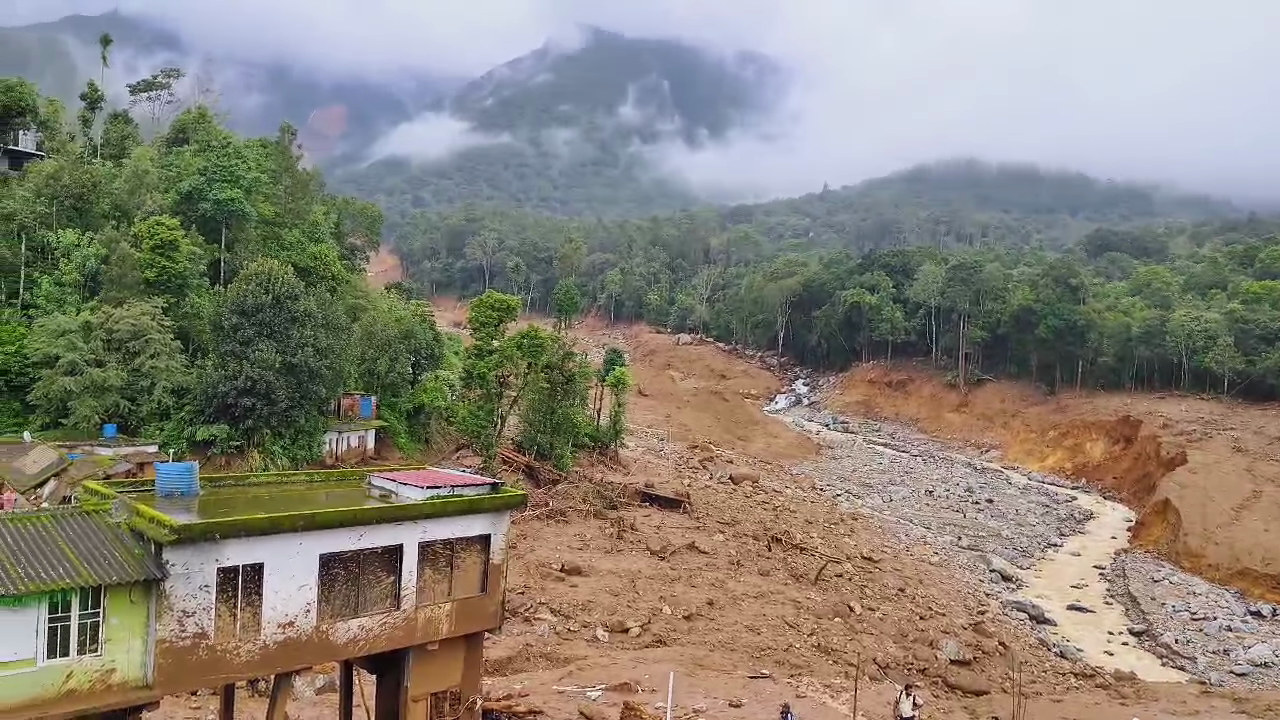
The 2024 Wayanad landslides were among the deadliest disasters in Kerala’s history. (Wikimedia Commons)

Synopsis: In the wake of deadly landslides in 2024 that claimed over 250 lives, Kerala’s Wayanad district is embracing advanced technology – including IoT-based early warning systems and a new Doppler weather radar – to better predict and mitigate disaster risks.
Tucked into the Western Ghats, Kerala’s Wayanad is known for its misty mountains, cascading waterfalls and lush greenery teeming with wildlife.
A popular escape for nature lovers and adventure seekers alike, the district is a picture-perfect retreat. But the postcard charm hides a harsh reality.
Wayanad is one of the most landslide-prone districts in Kerala, itself the most vulnerable state outside the Himalayas, according to the Indian Space Research Organisation’s (ISRO) 2023 Landslide Atlas of India.
Nearly half of Kerala’s land has been mapped as landslide-prone by the Geological Survey of India, with Wayanad’s steep terrain and intense monsoons posing particular risks.
Extreme rainfall events have become more frequent, likely fuelled by climate change. In July 2024, the district was hit by a deluge of 572 mm in just 48 hours.
Since 1950, Wayanad has lost about 62 percent of its green cover. Historical deforestation, monoculture plantations, widespread quarrying, unauthorised construction, and unregulated infrastructure development have further destabilised the district’s fragile ecosystem.
Now, in the aftermath of devastating landslides in 2024 that killed more than 250 people and left many more injured or missing, the state is turning to technology to reduce the risk.
Three major initiatives are being rolled out: a dynamic regional multi-hazard risk management platform, Internet of Things (IoT)-based landslide monitoring and early warning systems, and an X-band Doppler weather radar.
According to the Kerala State Disaster Management Authority (KSDMA), these technologies mark a step forward in disaster preparedness and climate resilience.
The risk management platform and IoT system are being developed by Amrita Vishwa Vidyapeetham, which has been recognised as a World Centre of Excellence in Landslide Risk Reduction by the International Consortium of Landslides.
The India Meteorological Department (IMD) is installing the radar, expected to improve real-time forecasting in the region.
Amrita’s multi-hazard platform, to be implemented over a year, uses remote sensing data, sparse in-situ sensors, and artificial intelligence models to generate hazard assessments on a regional scale.
Its landslide monitoring system, scheduled over three years, will deploy a dense network of intelligent wireless probes and sensors at high-risk sites.
Based on parameters such as digital elevation models (DEM), slope, land use and land cover (LULC), population density, building count, and the potential run-out zones of landslides, several vulnerable sites have been shortlisted and grouped for implementation:
In September 2024, a team of experts from Amrita Wireless Networks and Applications (AWNA) and the KSDMA visited Mundakkai, a landslide-affected site, to assess the feasibility of deploying the Amrita Landslide Early Warning System (A-LEWS).
Maneesha Vinodini Ramesh, Director of AWNA and Provost of Amrita University, who is leading the initiative, underlined the importance of real-time monitoring. In the September 2024 edition of Tharang, Amrita’s quarterly newsletter, Ramesh wrote:
“The increasing frequency of landslide incidents across India makes it imperative to have immediate insights into landslide initiation probabilities and possible impact zones.”
The KSDMA says Amrita’s large flume laboratory, which simulates landslides and analyses their behaviour, also supports the initiative.
The government has now granted approval for Amrita to begin fieldwork at the shortlisted sites for early warning system deployment. This is subject to several key conditions:
To further strengthen disaster preparedness in northern Kerala, an X-band Doppler weather radar will be installed by the IMD at Pazhashi Raja College in Pulpally, Wayanad.
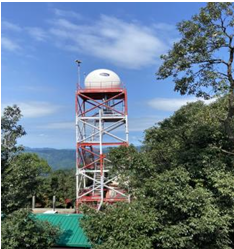
A DWR of IMD
The decision follows a proposal submitted on 4 April by the Member Secretary of the Kerala State Disaster Management Authority (KSDMA), citing the urgent need for advanced weather monitoring infrastructure in the region. The approval was granted on 12 April.
A 30-metre by 30-metre parcel of land within the college campus has been identified as a suitable site for the radar.
The college management has agreed to lease the land under terms outlined in a Memorandum of Understanding (MoU) jointly developed by the KSDMA and the IMD.
Crucially, the installation and operation of the radar will not place any financial burden on the state government or the KSDMA.
The Doppler Weather Radar will significantly improve real-time monitoring of weather events such as wind speeds, heavy rainfall, and thunderstorms. It will also enhance short-term weather forecasts, or nowcasts, and support faster and more effective emergency responses.
The KSDMA has been authorised to sign a tripartite agreement with the IMD and the college to formalise the deployment.
(Edited by Dese Gowda)



