

Published Dec 10, 2025 | 8:00 AM ⚊ Updated Dec 10, 2025 | 8:00 AM

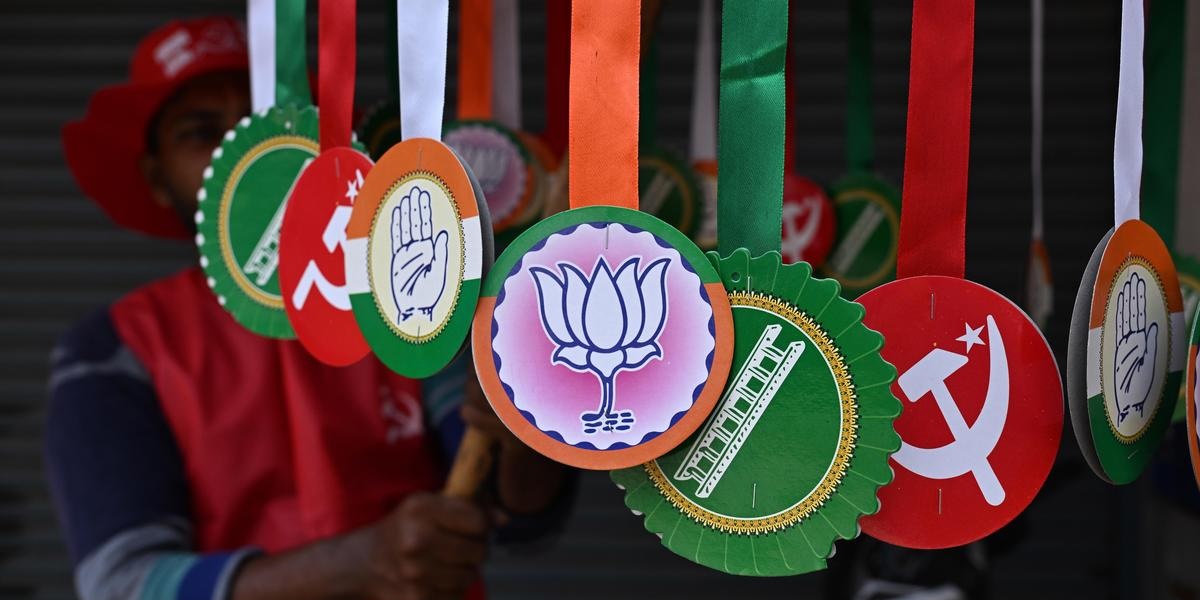
One of the most striking features of this election was that incumbent mayors stayed out of the fray.
Synopsis: Kerala’s first phase of local body polling placed its major corporations at the centre of the political contest, with Thiruvananthapuram, Kollam and Kochi emerging as key indicators of urban voter sentiment. While the capital witnessed a fierce three-way fight with no front confident of the outcome, Kollam is widely expected to continue its status as a Left bastion. Kochi, meanwhile, has seen a sharp contest between the ruling LDF and the opposition UDF.
The first phase of polling for Kerala’s local bodies on Tuesday, 9 December, put the focus squarely on the State’s major urban centres, where councils have become key battlegrounds of political power.
Unlike rural local bodies, corporations now see fierce, high-stakes contests as parties view urban governance as a direct way to shape public perception ahead of the Assembly polls.
The growing political weight of city voters, along with rising awareness of civic issues, has made urban wards strategically important. Control over these bodies lets parties influence daily civic life, from waste management and road maintenance to welfare and housing.
As counting approaches, Thiruvananthapuram, Kollam and Kochi, the three major corporations that went to the polls, are expected to offer clear signals on how Kerala’s urban electorate is leaning and the broader mood ahead of the Assembly elections early next year.
One of the most striking features of this election was that incumbent mayors stayed out of the fray. Arya Rajendran of the Thiruvananthapuram Corporation, Honey Benjamin of the Kollam Corporation and M. Anil Kumar of the Kochi Corporation chose not to contest this time.
The first phase of polling covered seven districts, Thiruvananthapuram, Kollam, Pathanamthitta, Alappuzha, Kottayam, Idukki and Ernakulam, and saw strong public participation.
By 6 pm, voter turnout had crossed 70 percent in Alappuzha, Idukki and Ernakulam, reflecting solid urban and semi-urban engagement.
Thiruvananthapuram recorded a lower turnout of 65.93 percent, the lowest among the phase one districts.
Historical data shows clear patterns. In the 2020 local body elections, Ernakulam had the highest turnout at 81.01 percent, while Pathanamthitta was the lowest at 69.70 percent.
Over the longer term, Ernakulam and Alappuzha have recorded steady growth in voter participation since 2015, pointing to rising urban political awareness. Idukki, however, has seen a decline across the last two election cycles.
The contest for the Thiruvananthapuram Corporation has become the most unpredictable in the State. All three major political fronts, the ruling Left Democratic Front (LDF), the Congress-led United Democratic Front (UDF) and the BJP-led National Democratic Alliance (NDA), view the capital as a prestige battle.
The Corporation, expanded after the 2024 delimitation, now consists of 101 wards, with new divisions such as Kizhakkumbhaagam, Karyavattom and Karumam replacing older areas like PTP Nagar and Sreevaraham.
Key wards such as Pettah, Kowdiar, Chalai, Punnakkamughal, Nemom, Sasthamangalam, Kunnukuzhy, Ambalathara, Karumam, Vanchiyoor and Muttada have seen razor-thin contests.
Heavy election spending is visible across the city, with giant hoardings, posters and campaign material covering major areas. While the official expenditure cap is ₹1.5 lakh per candidate, political insiders say actual spending is far higher.
The LDF has faced complaints about ward restructuring and alleged voter list irregularities, particularly in divisions such as Chalai and Vanchiyoor. Nevertheless, it remains publicly confident, relying on its long-standing control of the Corporation and its record in disaster management, especially during flood relief.
The opposition has highlighted controversies that have affected the Corporation’s image, including administrative leaks and disputes over official recognitions abroad.
The BJP, long stuck around the mid-30s in Corporation strength, has pushed for gains this time. But internal setbacks, recent controversies and the deaths of local leaders such as Thirumala Anil and Anand K Thambu in their strongholds have complicated last-minute mobilisation.
The UDF, weakened by its poor performance in the previous election, has introduced younger candidates, especially former MLA K Sabareenathan, and projected a mayoral nominee in an effort to revive its urban base.
Despite extensive booth-level surveys and data analysis, none of the fronts appears confident about the outcome.
The capital city has traditionally seen strong upper-class and urban voting patterns, often perceived as favourable terrain for the BJP. This is particularly significant as Thiruvananthapuram is regarded as a key base for state BJP president Rajeev Chandrasekhar.
In the immediate post-poll reactions, UDF leader Sabarinathan claimed his front was set to win a clear majority, predicting around 51 seats and the return of the UDF to power.
BJP leader Suresh Gopi also asserted that the Corporation would be captured by his party. UDF senior leader K. Muraleedharan was at the forefront of drawing up campaign and post-poll strategies in the capital.
Since its formation, Kollam Corporation has been a firm stronghold of the Left, with uninterrupted LDF control for the past 25 years.
The City Corporation comprises 55 wards. The BJP, which failed to win any seat in 2015, made a breakthrough in 2020 by securing six seats in the corporation and two panchayats, equalling the Congress tally of councillors in the city.
The LDF, which has controlled the corporation since its formation in 2000, recorded its best-ever performance by winning 39 seats in the last election. The BJP also finished runner-up in several panchayats across Kollam district, reflecting its growing footprint.
However, party leaders privately concede that replicating the dramatic surge seen in Thiruvananthapuram, from single-digit representation to more than 30 seats in successive elections, remains an uphill task in Kollam. Despite ambitious targets, there is acknowledgement within party circles that matching that kind of breakthrough here would be extremely difficult.
This time, the CPI(M) has taken a bold approach by replacing all sitting councillors and bringing in a new slate of candidates while keeping key leaders within the wider alliance. The move is seen as an effort to refresh the party’s image without weakening organisational strength.
The main opposition, the UDF, has treated Kollam as a test of its revival. It has fielded high-profile candidates and reworked its alliance structure but remains financially and organisationally weaker than the Left.
Persistent civic complaints, particularly about waste management and stalled infrastructure projects, have become central issues in the campaign.
Despite criticism, the Left leadership has projected continuity and stability, arguing that repeated electoral victories reflect public approval of its governance record.
Kochi, Kerala’s commercial and port city, played a pioneering role in municipal governance and remains a key political prize today.
The Municipal Corporation is divided into 74 administrative wards following the 2025 delimitation, with new and renamed divisions including Vaduthala West, Panampilly Nagar, Kathrikadavu and Ayyappankkavu.
Kochi’s development narrative dominated the campaign, with projects such as the Metro and Water Metro repeatedly highlighted by Chief Minister Pinarayi Vijayan in public interactions, projecting the city as one of the most advanced urban centres in the State.
In 2020, the LDF emerged as the single largest bloc without a simple majority in the city, securing 34 seats in the 74-member council, while the UDF won 31, the BJP won five, and five independents were elected.
Polling then dipped to 62.04 per cent, compared to 69.62 per cent five years earlier. Leaders such as Opposition Leader V. D. Satheesan and MP Hibi Eden continued to exert strong influence in the city.
Minority votes, especially from the Latin Catholic community and the Muslim population, remained a decisive factor. Issues such as Waqf land disputes and the arrest of nuns in Chhattisgarh surfaced in public discourse in the run-up to polling, even though they were not officially projected as central campaign themes by any front.
This time, it has seen a direct contest between the LDF and UDF, with the BJP seeking selective expansion. Campaign debates have centred on development, infrastructure delays and administrative transparency.
The LDF leadership has accused the UDF and BJP of working together in select divisions, alleging tactical arrangements to defeat Left candidates.
The opposition has criticised the ruling front for stalled “mega projects” and persistent civic failures, including waste disposal and urban planning issues.
The city has become a high-intensity contest where political messaging, organisational strength and last-minute mobilisation are likely to decide the outcome.
(Edited by Dese Gowda)


