


Published Jan 25, 2026 | 9:00 AM ⚊ Updated Feb 05, 2026 | 9:58 AM

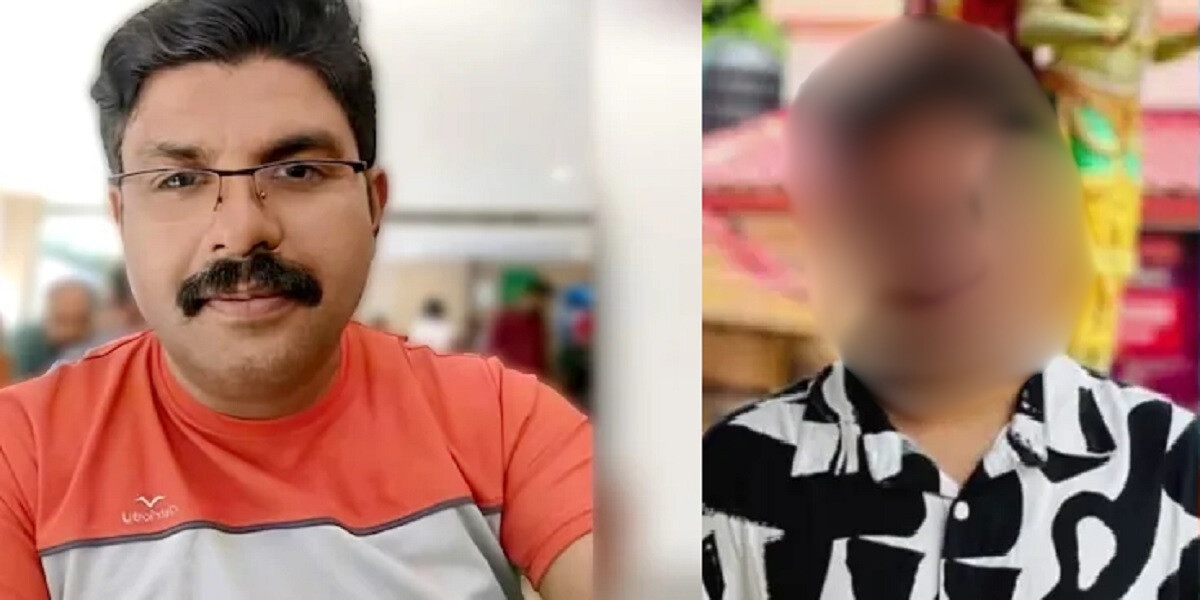
Deepak and the young techie's suicides sparked very different kinds of public outrage in Kerala.
Synopsis: Kerala is witnessing a debate that has taken a disturbing men vs women turn following the death by suicide of Deepak, a sales manager. The man took the extreme step after a woman posted a video identifying him and accusing him of indecent behaviour towards her on a bus. The police, after watching the video, said there was no prima facie evidence to support the woman’s allegation.
Is Kerala witnessing a spontaneous outburst of suppressed rage against women?
A recent incident and the subsequent developments have raised such a doubt in the state that often takes pride in its matrilineal past.
Before going into the current situation, another incident is worth mentioning. On 9 October 2025, a 26-year-old techie from Kottayam died by suicide at a lodge in Thampanoor, Thiruvananthapuram’s bustling transport hub.
A pre-scheduled Instagram video explained the trauma he had been undergoing. The youth identified a man only by his initials, “NM”, and held him responsible for his death.
The techie said “NM”, later identified as Nitheesh Muraleedharan, had sexually abused him at an RSS camp years ago. The abuse had reportedly left a scar in the youth’s mind, which became unbearable and pushed him over the edge.
Social media discussed the incident briefly and then fell silent. The techie, the alleged perpetrator and even the suicide were all soon forgotten.
Social media erupted again on 18 January, following the news of another death by suicide.
Deepak U, 42, who had become a familiar face barely three days before his death, took the extreme step after a woman, Shimjitha Musthafa, accused him of deliberately grazing her body on a crowded public bus.
The woman had posted a video to supplement her charge, which showed Deepak, a resident of Govindapuram in Kozhikode. Three days after the woman had uploaded the video, the man died by suicide in his house.
The social media reaction was instant. Users scrutinised the video, and many could not find evidence for the allegation Shimjitha had levelled against him. A torrent of posts appeared on social media blaming Shimjitha for Deepak’s death. Some posts supported her.
Soon, Deepak’s house started getting visitors.
More than 250 kilometres away at Vanchimala in Kottayam, the house of the techie who had died by suicide in Thiruvananthapuram, was shrouded in silence.
His mother was not expecting any calls or visitors. No one has been enquiring after her for the past few months, she told South First.
A loneliness, which grew heavier after sunset, has gripped her. She seemed reluctant to speak.
”We didn’t file a case. We don’t have an advocate. It is being handled by the Ponkunnam police now. I don’t know the status of the probe,” she said in a hurry.
Meanwhile, Deepak’s friends and relatives, especially his parents, are determined to punish those responsible accountable for his death.
A case has been registered under Section 108 (Abetment of suicide) of the Bharatiya Nyaya Sanhita based on a complaint filed by Deepak’s mother, Kanyaka. Shimjitha, who had gone into hiding after Deepak’s death, was arrested from a relative’s house on 21 January.
In the remand report submitted to the Judicial First-Class Magistrate Court, Kunnamangalam, the police pointed an accusing hand at Shimjitha. The Kozhikode Medical College police opposed Shimjitha’s bail plea as well.
Police argued that granting her bail could ”send a wrong message to society” and warned that her release might lead to similar incidents, potentially resulting in more suicides. The report also raised concerns that the accused could influence witnesses or obstruct the investigation, if released.
Investigators said Shimjitha had recorded around seven videos on a private bus on 16 January, portraying Deepak in an ”objectionable and unacceptable manner” and circulated them on social media platforms including Facebook and Instagram.
Investigators noted that CCTV footage from the bus did not show anything unusual, and statements from the bus staff confirmed that no complaint of sexual harassment or assault was made during the journey. The visuals showed both individuals getting down from the bus normally.
The court remanded Shimjitha in judicial custody for 14 days.
The preliminary inquiry concluded that Shimjitha, a post-graduate and a former Arikkode panchayat member, was fully aware of the legal implications and the potential consequences of circulating such videos, including public humiliation and mental distress that could lead to suicide.
Police said the videos were deleted only after the issue snowballed into a controversy.
Deepak’s death sparked a statewide debate over social media vigilantism and virality. The issue went beyond the state borders, as social media posts, mostly trolls targeting women, showed.
Police told South First that the investigation is still at an early stage.
They plan to recover deleted social media accounts, conduct a detailed forensic and cyber examination of the seized mobile phone, and record statements from additional witnesses.
Meanwhile, a day after her arrest, Shimjitha, through her brother, lodged a complaint with the Payyannur police alleging sexual harassment during a bus journey.
The emailed complaint reportedly did not name any accused. Police said further action will depend on the outcome of ongoing forensic examinations.
In October 2025, a case was registered against Nithish Muraleedharan based on the techie’s video, which has been considered as a dying declaration. In the video, the youth had named Nithish Muraleedharan as one of the persons who allegedly sexually abused him at an RSS camp.
Official sources said the case was registered under provisions related to unnatural sexual offences, including Section 377 of the Indian Penal Code.
As part of revisiting the techie’s suicide, South First contacted two police stations—Ponkunnam in Kottayam district and Thampanoor in Thiruvananthapuram district.
”We are investigating the sexual abuse case. Other related cases are being inquired into by the Thampanoor police. The probe is ongoing, and we have not reached any conclusion yet” Ponkunnam Circle Inspector Indraraj told South First.
Bipin, an officer at the Thampanoor police station, said that an unnatural death case had earlier been registered under Section 194 of the Bharatiya Nyaya Sanhita (BNSS) and has since been closed.
”The remaining aspects of the case are being handled by the Ponkunnam police” he said.
However, officers at the two police stations did not clearly explain the status of the investigation or the case.
According to local residents in Ponkunnam, Nithish is still in hiding.
Dr Suja Susan George, an activist from Kochi, told South First that the police response reflected a lack of uniform sensitivity.
”Look at how the police treat cases that deserve equal seriousness. In another recent case, a woman was arrested swiftly, and every detail was shared with the media. But in the techie’s case, there has been no information for a long time. No one knows what is happening with the probe” she said.
All Kerala Men’s Association president Ajith Kumar alleged that Shimjitha’s video was merely content creation aimed at gaining social media reach. Questioning why she had not approached the police, he asked whether men’s privacy mattered at all.
He told South First that such public shaming was destroying men’s lives and dignity and announced that his group would visit Deepak’s parents on 28 January to assess their financial needs.
However, no comparable mobilisation was seen in the techie’s case, where allegations of long-term sexual abuse preceded his death.
Ajith Kumar later said he could not then intervene due to ill health.
Susan George described the outrage over Deepak’s suicide as a ”fearful situation” arguing that it reflected suppressed rage against women rather than genuine empathy for the dead.
She said journalists rushed to verdicts, turning the woman into a target.
She noted that women increasingly record videos to prove abuse because legal processes are slow, insensitive and often hostile to survivors. The contrast, she said, exposed Kerala as a patriarchal society where grief quickly turns into an attack on women, not solidarity with the dead.
(Edited by Majnu Babu).


