

Published Sep 06, 2026 | 10:50 AM ⚊ Updated Sep 06, 2026 | 11:03 AM

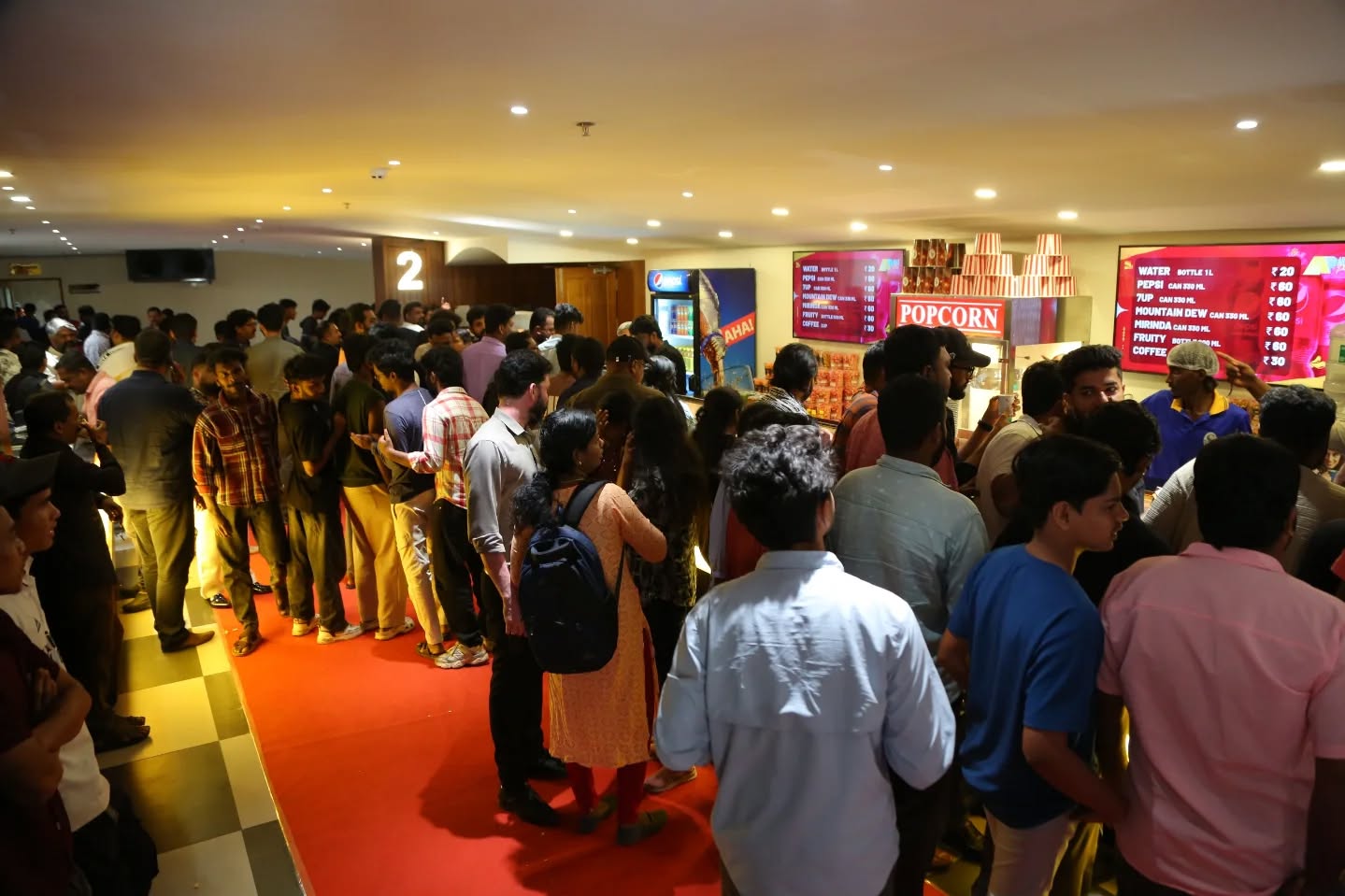
Moviegoers queue up at the popcorn counter during the interval, eager to grab a quick bite before the show resumes. courtesy - Ariesplex SL Cinemas

Synopsis: A movie with family is becoming increasingly expensive, with steep prices for food and beverages and restrictions on bringing essentials such as water from outside drawing fresh criticism in Keralam. The debate also highlights two Supreme Court observations: recognising theatres’ discretion over entry conditions while warning that excessive pricing could ultimately drive audiences away from cinemas.
A family trip to a cinema was once a fairly simple affair — buy the tickets, watch the film and perhaps pick up a snack on the way home.
The modern multiplex has changed that equation.
Plush seats, premium screens, sophisticated sound systems, food counters and other amenities have turned a movie theatre into an entertainment destination. Still, they have also made the final bill a growing concern for audiences.
The debate over the cost of a cinema outing has now returned to the spotlight in the state, with Thiruvananthapuram Corporation Mayor V V Rajesh questioning the steep prices of food and beverages sold in theatres. He also raised concerns over restrictions on carrying food and water from outside.
The Mayor’s intervention comes against the backdrop of a wider question: how far can theatre operators go in determining the terms of entry and the prices of products sold on their premises?
That question has already reached the Supreme Court — and the court’s observations in 2023 and 2025 offer two important sides of the picture.
Also Read: Karnataka’s Rs 200 movie ticket cap challenged by Hombale Films, multiplexes
Rajesh raised the issue, particularly the price difference between food sold outside and the same available in theatres.
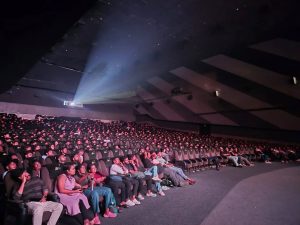
Moviegoers soaking in the big-screen experience at a multiplex courtesy – Ariesplex SL Cinemas
“Food items are being sold at very high prices inside theatres. Popcorn that costs ₹25-30 outside is being sold for ₹250-300 inside,” he said.
His criticism was couched in deliberately sharp terms. Entering a cinema, he said, can feel like entering “a magical world” where even a cup of tea can cost enough to make one feel the need to take a loan.
For families, the additional expense can be significant. The Mayor said parents often end up spending at least ₹1,000 on snacks when they take their children to a movie.
The complaint is not confined to popcorn and soft drinks. The Mayor also questioned the practice of preventing movie-goers from bringing food and drinking water purchased outside the theatre.
His argument is straightforward: if audiences are not permitted to carry basic items from outside, they should not effectively be left with no option but to buy them inside at substantially higher prices.
Rajesh acknowledged that the Thiruvananthapuram Corporation does not have the power to fix the prices of food products sold inside theatres. But he said that did not mean bar representatives should stay silent on an issue affecting the public.
The corporation plans to meet with theatre owners in its jurisdiction. Parking, cleanliness, security and waste management are among the issues expected to be discussed. Since theatres require licences from the corporation, the Mayor said the public’s concerns could also be taken up in the discussions.
Also Read: Iconic Apsara Theatre in Kozhikode rings down the curtain
Rajesh also referred to a complaint from a family that had gone to a mall theatre in the capital.
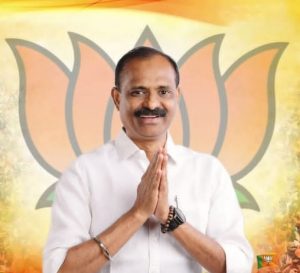
Thiruvananthapuram Municipal Corporation Mayor VV Rajesh.
According to the details he cited, the family paid ₹6,048.94 online for seven tickets. When they reached the theatre, however, they allegedly found that the seats allotted to them corresponded to tickets priced at ₹230.
When they questioned the discrepancy, the family was reportedly told that a company operated the theatre and could make its own decisions. The family eventually had to watch the film from the front seats.
Rajesh said he had taken up the issue based on the information available to him. He also said a prominent film producer had recently contacted him regarding the broader question of pricing in theatres.
The producer, according to the Mayor, had pointed out the mismatch between ticket prices and the cost of refreshments — a viewer could pay around ₹200 for a ticket and then be expected to spend around ₹500 on popcorn.
“The people are the ones who sustain the film industry,” Rajesh said, arguing that the industry and theatre operators should arrive at a reasonable understanding before the matter reaches the stage of administrative or legal intervention.
He said he was opposed to what he described as an exploitative approach towards audiences.
Also Read: Tickets for Pawan Kalyan’s OG sold at inflated prices
The debate over outside food and theatre pricing is not new.
In January 2023, the Supreme Court delivered a significant judgment in KC Cinema v. State of Jammu and Kashmir, arising from a dispute over restrictions imposed by cinema halls on food and beverages brought from outside.
A Bench comprising then Chief Justice D Y Chandrachud and Justice P S Narasimha observed that running a cinema theatre is a legitimate business and falls within the protection of the fundamental right to carry on a trade or business under Article 19(1)(g) of the Constitution.
The court made it clear that theatre owners can decide what may or may not be brought into their premises, subject to statutory regulations governing the business.
The court noted that a person enters a cinema hall voluntarily and, by choosing to do so, agrees to abide by the conditions attached to entry. Whether outside food or beverages should be allowed, therefore, was held to be a matter that the theatre owner could determine as part of the commercial operation of the premises.
At the same time, the court did not place cinema halls beyond regulation.
It specifically noted that the business remains subject to rules framed by the government and that the conditions imposed by owners cannot be contrary to public interest, safety or welfare.
Also Read: Netizens express ire against PVR-Inox Passport for excluding South India
The Supreme Court returned to the issue of cinema pricing in 2025 in a case involving the Multiplex Association of India and the Karnataka State Film Chamber of Commerce, bringing the broader question of affordability into focus.
The dispute before the court related to measures governing cinema ticket prices in Karnataka. During the hearing, a Bench of Justices Vikram Nath and Sandeep Mehta also took note of another aspect of the multiplex experience — the prices charged for food and beverages inside theatres.
The figures cited before the Bench drew particular attention. A bottle of water, the court was told, could cost ₹100, while a cup of coffee could be priced as high as ₹700.
The Bench questioned whether such pricing could, in the long run, prove counterproductive for the cinema industry itself. If the cost of an outing to a theatre keeps rising, the court observed, audiences may eventually choose to stay away. The larger concern was that prices should remain at a level that allows people to continue visiting cinemas; otherwise, theatres could find themselves with increasingly fewer patrons.
These observations came from the multiplex association’s challenge regarding Karnataka’s cinema ticket-pricing framework.
“A theatre owner may have considerable discretion in determining how the business is run and in prescribing conditions for entry. But that freedom also raises the question of whether there is a point at which the cumulative cost of watching a film becomes so high that affordability itself becomes an issue,” said an official with the state Civil Supplies and Consumer Affairs Department.
The official further added: “In that sense, the court’s observations put the price of a cinema visit in a wider perspective. The question is not merely what a theatre can charge, but whether the overall cost of the experience remains reasonable enough for audiences to keep coming through its doors.”
“Ultimately, there needs to be a wider consensus on the pricing of food and beverages as well as cinema tickets, keeping in mind both the interests of audiences and the viability of theatres. If necessary, an amendment to the Kerala Cinemas (Regulation) Rules, 1988 could also be considered. However, any such change would require a decision at the government level after examining the legal, regulatory and economic aspects involved,” another official with the department said.
Also Read: Chennai’s food delivery bill burns bigger holes
That is precisely where the current debate in Keralam becomes interesting.
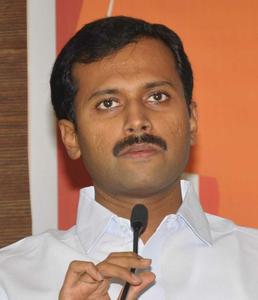
Minister for Consumer Affairs Anoop Jacob.
Minister Anoop Jacob, who handles consumer affairs and legal metrology portfolios, has said the government’s ability to directly control the prices of popcorn, bottled water and other products sold in theatres is limited.
The department is examining whether theatres are displaying price lists and whether products are actually being sold at the prices displayed.
For packaged products, authorities can also check the quantity and the maximum retail price printed on the package. If a product is sold above its declared Maximum Retail Price (MRP), it can invite action under the applicable rules.
However, amid the raging debate, Minister Jacob assured that the state government would explore steps in consultation with the Law Department. He said the Supreme Court verdict limits government intervention, but assured that maximum action would be taken at the departmental level. The minister also stated that the issue was not confined to Keralam and amounted to a violation of consumer rights.
The Legal Metrology Department, meanwhile, has clarified that it lacked the power to fix the prices of packaged or unpackaged food products. Its role includes ensuring consumers receive the quantity they paid for.
Water presents a more sensitive question.
Jacob has opposed restrictions on carrying drinking water into theatres, particularly when people need specific drinking water for health-related reasons. He argued that people should be permitted to carry water from outside rather than being forced to purchase expensive bottled water inside.
But this position has to be viewed alongside the Supreme Court’s 2023 ruling.
The court did not establish a general right for every movie-goer to carry outside food or beverages into a cinema. On the contrary, it expressly recognised the theatre owner’s authority to impose such a condition of entry, subject to law and public interest.
Read together, the two interventions of 2023 and 2025 present a more nuanced picture.
In 2023, the Supreme Court recognised the theatre owner’s right to control the conditions of entry, including restrictions on outside food and beverages. In 2025, it questioned whether excessively high prices could drive audiences away.
At the same time, on 5 September, a joint team led by the Ernakulam District Supply Officer, Legal Metrology Deputy Controller and Food Safety Officer carried out raids at multiplex theatres in Ernakulam following complaints of overpricing at theatre cafes.
Officials found popcorn and soft drinks being sold at nearly five times their market prices.
Notices were issued to theatre managements, with strict directions to revise prices, while a case was registered against a cafe for failing to display the price list as prescribed.
The team also found drinking water placed in concealed locations despite being required to be provided free of charge. Further inspections of multiplexes are planned in the coming days.
(Edited by Majnu Babu).



