

Published Aug 20, 2026 | 8:12 AM ⚊ Updated Aug 20, 2026 | 8:12 AM

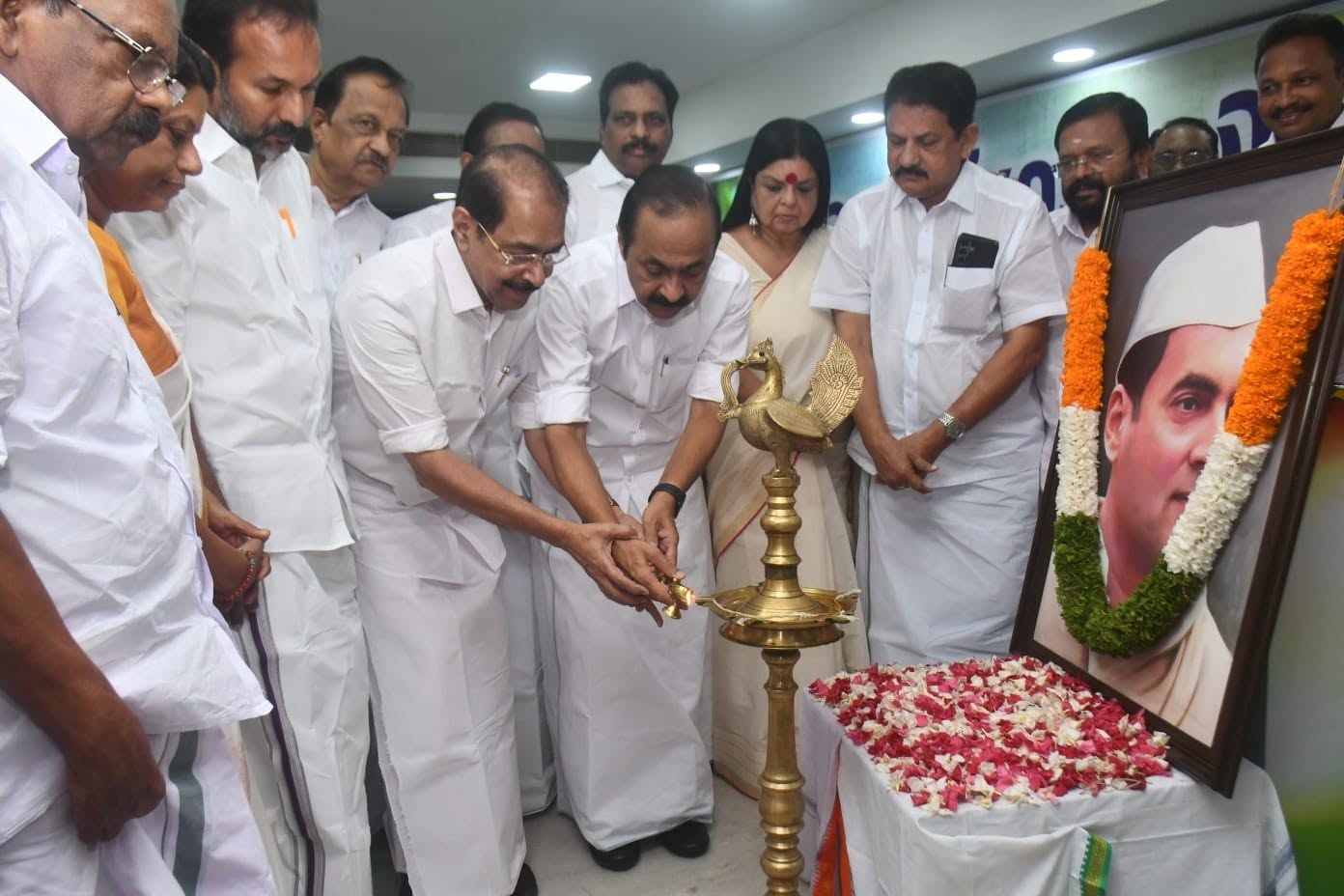
Chief Minister V D Satheesan with current KPCC president Sunny Joseph

Synopsis: The Congress is facing an organisational vacuum at the very moment its new government needs a strong political support system. With Sunny Joseph yet to be replaced as KPCC president and several senior office-bearers now occupying ministerial or national positions, the party’s organisational machinery remains unsettled. Plenty of options lie before the party, but little consensus.
Three months after the United Democratic Front returned to power in Keralam, the Congress still has not managed to put in place the organisational leadership a ruling party normally needs to support its government.
The government headed by VD Satheesan is functioning, ministers are in office, and the administration has begun settling into its new role.
But the Congress organisation remains in transition.
Sunny Joseph, who continues to hold the KPCC president’s post, has already made it clear that he is willing to step aside after being inducted into the Cabinet. Yet a successor has not been appointed.
The delay has turned what was initially expected to be a routine organisational change into a test of the Congress’s ability to manage its competing factions, generational aspirations and community equations.
Joseph had conveyed his willingness to relinquish the post to the high command, citing the difficulty of simultaneously handling ministerial and organisational responsibilities.
The same problem has affected the KPCC’s working presidency.
AP Anilkumar and PC Vishnunadh are now ministers, while Shafi Parambil, the remaining working president, is a Lok Sabha member.
The result is an organisation in which several of the people formally responsible for running it are either in government or have responsibilities elsewhere.
Senior leaders had stressed the need for regular consultation so that government decisions could be politically communicated through the organisation. But that mechanism has not acquired the momentum expected of it.
That matters because Keralam’s Congress tradition has never treated the party organisation as merely an election-time apparatus.
Government policies and major decisions have traditionally been discussed within the party, explained to workers and then taken to the electorate through the organisational network. Three months into the new administration, that familiar chain remains weak.
Also Read: Kerala University VC Mohanan Kunnummal triggers fresh row
Several calculations are now shaping the contest for the KPCC presidency.
The top three Congress leaders during the CWC meeting at New Delhi on 19 August
Kodikunnil Suresh has made the strongest case for Dalit representation.
The eight-time Lok Sabha member and Congress Working Committee special invitee brings parliamentary experience and a long organisational history. His argument is straightforward: the state unit of Congress should have a prominent Dalit leader at its head. His candidature is also understood to have support from Congress president Mallikarjun Kharge, who himself is a Dalit.
Benny Behanan is another veteran in contention.
His long association with the organisation and his ability to maintain links across different sections of the Congress make him attractive to those who favour continuity and accommodation rather than another round of factional confrontation.
The younger option is represented most prominently by Shafi Parambil and Mathew Kuzhalnadan.
Both offer the possibility of presenting the Congress as a more energetic, campaign-oriented organisation after its electoral success.
Parambil’s case has an additional dimension.
He represents Vadakara in the Lok Sabha, a constituency in Malabar with a substantial Muslim electorate. Supporters of his candidature argue that placing a relatively young leader from the minority community at the head of the organisation could help the Congress consolidate both its youth appeal and its minority support.
Kuzhalnadan, meanwhile, has built his political identity through an aggressive opposition to the previous LDF government. His public attacks on the Pinarayi Vijayan government and its controversial decisions made him one of the more recognisable younger Congress voices in the state. He too is seen as part of the generational shift being discussed within the party. Recent reports have placed both leaders among the serious contenders.
The list does not end there.
Anto Antony, Joseph Vazhakkan, Adoor Prakash and VS Shivakumar, among others, remain part of the wider discussion.
The question of whether the president should be a sitting MP or MLA has itself become part of the argument, with some leaders insisting that the organisation needs a full-time chief rather than another leader dividing time between elected office and party headquarters.
Also Read: 13-year-old granddaughter allegedly plots grandfather’s murder
The most revealing aspect of the delay is that there is no shortage of names. Instead, there is a shortage of agreement.
Chief Minister V D Satheesan during the CWC meeting at New Delhi on 19 August
The high command appears to be moving towards a consultation process similar to the one used before choosing Satheesan as Chief Minister.
Keralam leaders are expected to put forward their general preferences first rather than openly turning the initial discussions into a contest between individual camps. The Congress Working Committee meeting in Delhi on Wednesday, attended by Satheesan and Home Minister Ramesh Chennithala, provides another opportunity for the issue to move forward.
But the longer the decision takes, the more difficult the appointment becomes.
The old Congress fault lines have not disappeared with the UDF victory.
They have merely been pushed into the background by the success of the election campaign.
Factional loyalties remain relevant, while the leadership’s community composition continues to influence almost every major organisational decision. The IUML, too, has its own expectations from the new dispensation, making the Congress’s balancing act within the UDF more complicated.
There is another complication.
Several senior Congress office-bearers are now part of the government or hold national-level responsibilities.
Chennithala and Joseph are ministers; Anilkumar and Vishnunadh have moved into the Cabinet; other leaders have overlapping organisational assignments.
Seven DCC presidents have also become MLAs, leaving the district organisation in a state of impending reorganisation.
The contrast between the Secretariat and Indira Bhavan is therefore becoming politically significant.
The government has the machinery of the state behind it. The party is still waiting for its own machinery to be rebuilt.
For Satheesan, the KPCC appointment is not something that can be left indefinitely to the Congress high command.
A president who enjoys authority among the factions, can work closely with the government and has enough organisational presence to reconnect with the grassroots could become an asset to the new administration.
A disputed appointment could have the opposite effect.
Also Read: Kerala Police move from tracking crime to predicting it
Leaders point out that the new KPCC president will have to work closely with the Chief Minister, not merely as the head of the party organisation but as a political counterweight and partner in shaping decisions that do not undermine the Congress or put the government on the defensive.
That, however, is easier said than done.
The Congress has a long and often chequered history of disagreements between the Chief Minister and the party president spilling beyond the confines of internal meetings.
Once differences become public, the party’s carefully maintained discipline can quickly give way to the familiar spectacle of leaders washing their dirty linen in public.
Keralam has seen this before.
The friction between K Muraleedharan and AK Antony during the latter’s tenure as Chief Minister remains one of the more striking examples of how a rift between the government and the organisation can unsettle the entire party.
The later differences between VM Sudheeran, as KPCC president, and Oommen Chandy followed a similar pattern, with disagreements over policy and political strategy repeatedly becoming matters of public debate.
This history makes the present appointment particularly sensitive.
Satheesan has already established himself as a Chief Minister who is unlikely to allow the party organisation to dictate every political move from outside the government. So far, the indications are that where he believes a decision is necessary, he is prepared to take the initiative rather than wait indefinitely for consensus within the party.
For the Congress high command, therefore, the challenge is to find a president strong enough to assert the party’s interests, but pragmatic enough to work with Satheesan without turning every disagreement into a confrontation.
A president who merely endorses the government would leave the organisation weak; one who constantly challenges it could reopen the factional battles the Congress has spent years trying to contain.
The choice will ultimately determine whether the KPCC becomes a political support system for the new government—or another centre of power within the party.
“The UDF has returned to power after a decade, allowing the Congress to rebuild itself as the principal political force in Keralam. But electoral victory alone does not sustain a government. It requires a functioning party, active district units, communication with workers and a leadership structure capable of carrying the government’s politics beyond the Secretariat,” A senior party leader from Thiruvananthapuram said.
Three months into office, that structure is still taking shape.
The question confronting the Congress is no longer simply who should succeed Joseph.
It is whether the party can complete its own transition quickly enough to prevent an organisational vacuum from becoming a political weakness for the government it has just brought to power.
A DCC functionary from Kollam summed up the dilemma before the party, “Every name carries a message — Dalit representation, minority representation, youth leadership or factional balance. The difficulty is finding a candidate who satisfies enough of those requirements without creating a new problem.”
The leader further added, “The high command is not short of choices. It is short of consensus. That is the real reason the KPCC appointment is taking so long.”
(Edited by Majnu Babu).



