


Published Jan 13, 2026 | 9:00 AM ⚊ Updated Jan 13, 2026 | 9:00 AM

Nemom's electoral arithmetic is heavily shaped by its social composition. Credit: iStock
Synopsis: With just months to go before the Kerala Assembly elections, the ruling LDF is banking on a relatively conservative campaign to return to power for a third term, while the UDF and the BJP have each launched aggressive bids. The Congress, having started early, is relying on anti-incumbency to end a decade of Left rule, while the BJP, after making steady inroads in the state over the past decade, is planning an ambitious push to emerge as a key power broker.
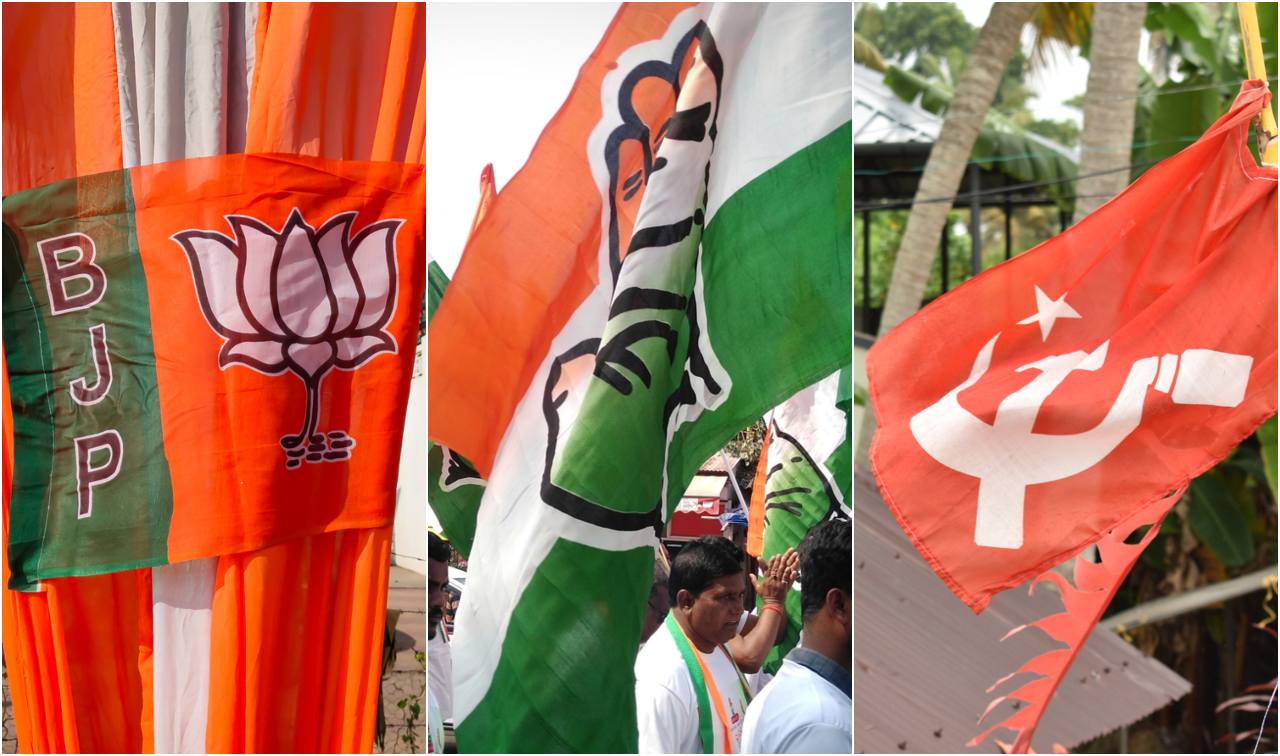
In Kerala, the three principal contenders for the 2026 Assembly polls are gearing up for what is shaping up to be a closely fought battle, with the potential to upend the state’s politics after a decade of uninterrupted Left rule.
The ruling CPI(M)-led Left Democratic Front (LDF) is projecting confidence of securing a straight third term with its “Mission 110”, hammering home a narrative of governance and development.
The opposition United Democratic Front (UDF), led by the Congress, is drawing confidence from its recent local body successes, reading them as a clear signal of anti-incumbency and an opportunity to mount a disciplined bid to reclaim power.
The Bharatiya Janata Party (BJP), which has steadily built confidence, vote share and political footholds in the state, is mounting an aggressive campaign of its own, aimed at breaking the LDF–UDF duopoly and forming a government for the first time.
Beyond the competing rhetoric, the election may well become a referendum on the nature of Kerala’s politics going forward.
The LDF has set itself an ambitious target of 110 seats, 11 more than it won five years ago, in the 140-member Assembly.
After a three-hour Cabinet meeting on 7 January, Chief Minister Pinarayi Vijayan held a special strategy session. It was here that he reportedly conveyed this “Mission 110”.
Vijayan is said to have argued that the Left’s setbacks in the recent local body elections would not recur if the coalition more effectively took its record in governance and development to voters.
The CPI(M)’s election pitch is said to centre on the “New Kerala” vision. It seeks to highlight the government’s decade-long efforts to expand infrastructure, steady welfare delivery and ensure economic stability, amid alleged fiscal constraints imposed by the Centre.
Ministers P Rajeev and others have said the “Mission 110” figure was derived from constituency-level assessments, and stressed that the government’s failure to effectively communicate its achievements would now be corrected through door-to-door outreach.
Ministers have since been instructed to focus on 110 Assembly constituencies, particularly those where the Left underperformed at the grassroots level.
A 50-day action plan, constituency-wise coordination by ministers, targeted outreach in backward regions and an aggressive social media campaign are key features of the strategy.
Public Works Minister PA Muhammad Riyaz dismissed talk of anti-incumbency, asserting that the LDF will not only retain its existing seats but also reclaim constituencies lost by narrow margins.
Claiming a clean sweep of all 13 seats in Kozhikode district, Riyaz stressed that “public interaction, not opinion polls,” would decide outcomes, adding that direct engagement with farmers, traders and youth is central to the strategy.
The CPI(M) has also adopted a combative posture against the Congress and the BJP, accusing them of tacit cooperation in the local body polls and of fomenting communal polarisation. While internal tensions within the Left have surfaced after the local polls, CPI(M) leaders maintain that corrective steps are under way.
With statewide rallies, protests against alleged “economic strangulation” and renewed minority outreach, the party is betting that development, secular politics and organisational mobilisation will once again tilt Kerala in its favour in 2026.
Its commanding performance in December’s local body elections has infused new energy into the Congress-led UDF.
The coalition emerged as the single largest force across local self-government institutions, a result Congress leaders have described as the party’s strongest mandate since the Panchayat Raj system began in 1995.
The Congress began an aggressive campaign much earlier than its rivals, as South First previously reported. Its goals are simple: to not repeat the missteps that cost it the last two elections.
From early candidate scouting and leadership camps to sharpening narratives and widening its political reach, the Congress is building momentum with rare urgency.
In the first week of January, the party conducted a two-day Lakshya Leadership Summit in Wayanad, focusing on ensuring unity, accountability, campaign discipline and key issues ranging from price rise to corruption.
The Congress has also decided to break from tradition by finalising candidates early, with youth and women likely to be given prominence.
Senior leaders within the Congress argue that the local body results are not a temporary swing but a clear expression of public resentment against the Pinarayi Vijayan government.
Leader of Opposition VD Satheesan has repeatedly said that this anger will surface more decisively in the Assembly elections, asserting that the UDF will rack up a seat tally close to 100, rather than see a third LDF term.
Being a dark horse in the race has not stopped the BJP from projecting itself as a legitimate alternative to the ruling LDF and the Opposition UDF.
Riding on a steady rise in vote share, from 10.8 percent in 2014 to over 19 percent in the 2024 Lok Sabha polls, bolstered by its recent local body performance, including gains in the Thiruvananthapuram Corporation, wins across 30 grama panchayats and multiple municipalities, and Suresh Gopi’s victory in the Thrissur seat, the saffron party is building a rhetoric of a seismic change on the horizon in the state.
The results have given the party confidence to suggest it is no longer limited to urban Kerala, but has been making its presence felt in rural and semi-urban areas of the state, which were once considered inaccessible to it.
The party has also accused the LDF and the UDF of being a “fixed match”, where corruption and complacency are the norm while Kerala’s development potential is crippled. The BJP is preparing to open what it calls a “new chapter” in Kerala politics.
During his visit to the state on 11 January, Union Home Minister Amit Shah sent a clear signal to party cadres and leaders that forming a BJP-led NDA government in Kerala is no longer aspirational, but achievable.
Addressing the party’s elected representatives’ conference, Shah described the recent local body victories as “just a milestone”.
He then made a striking assertion that “irrelevant” communism and a “declining” Congress have created fertile ground for the saffron party to emerge.
“We are not far from 30 percent, not far from 40 percent,” he said.
Prime Minister Narendra Modi is also expected to visit the state soon as the campaign season heats up. Its campaign for the elections is straightforward: translate its growing vote share into legislative power.
Development, security and protection of faith, as set out by Amit Shah recently, would be the key mainstays of the campaign.
With “Vikasita Keralam” as its central slogan, the BJP promises to replicate Prime Minister Narendra Modi’s development model in the state through a “double-engine” government.
But amid the external rhetoric, internally the party is said to be more pragmatic about its prospects, targeting anywhere between five and 15 seats, with senior leaders confident that crossing the 25 to 30 percent vote threshold could make the BJP a decisive political force.
(Edited by Dese Gowda)


