

Published May 14, 2026 | 7:49 AM ⚊ Updated May 14, 2026 | 11:20 AM

Congress.

Synopsis: The delay in the Congress choosing the chief minister for Kerala has caused significant damage to the party. The setback is not limited to the state leadership alone; the AICC has also come under close scrutiny in Kerala, even from ordinary voters who had placed their trust in the Congress at the ballot box.
4 May marked the day when the people of Kerala handed the Congress-led UDF a decisive mandate to govern the state after a decade. However, the party finalised its chief minister only after 10 days. Multiple rounds of discussions took place, both in the state capital and in the national capital.
On Wednesday, 13 May, Congress spokesperson and Rajya Sabha MP Jairam Ramesh has now stated that the name of the chief minister will be announced on 14 May afternoon.
However, the delay in naming the chief minister has already caused significant damage to the Congress — damage that may be difficult to recover within the five-year term.
The setback is not limited to the state leadership alone; the All India Congress Committee (AICC) has also come under close scrutiny in Kerala. This questioning is not coming from political rivals or internal party workers, but from ordinary voters who had placed their trust in the Congress at the ballot box.
Also Read: Congress high command picks KC Venugopal as Kerala chief minister
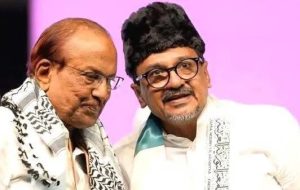
IUML holds emergency meeting at Panakkad amid Kerala CM selection delay.
“Team UDF” was the USP of the winning alliance in Kerala, a narrative strongly introduced by VD Satheesan.
Over the past five years, key allies of the UDF, including the Indian Union Muslim League (IUML), Kerala Congress (Joseph), RSP, RMP, and the recently joined CMP, worked in coordination with a shared objective- winning the Assembly election, driven by the understanding that it was now or never.
In recent years, while visible cracks emerged within the LDF, particularly between the CPI and CPI(M) over issues such as PM SHRI and administrative matters, the UDF largely maintained internal cohesion. Compared to the LDF, dissenting voices within the UDF remained relatively muted during the run-up to the election.
However, after the results, tensions began to surface within UDF. While allies initially stood together and backed Satheesan in the chief minister race, friction emerged when certain Congress leaders raised questions over the IUML’s perceived intervention in the selection process.
Congress leaders, including Mathew Kuzhalnadan, publicly asserted that the decision rested solely with the Congress and that allies should not comment on it.
This triggered unease within the IUML leadership, eventually leading to a crucial meeting on Wednesday.
“We held a meeting as we are upset over the persistent delay in selecting the CM for the state. Our leaders are also facing questions from the public, and we have to respond to them. After the CM announcement, we will take a stance on the decision,” IUML leader PK Kunhalikkutty told South First.
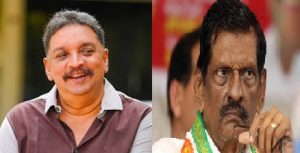
Shibu Baby John and PJ Joseph
RSP leader Shibu Baby John also expressed dissatisfaction over the delay, while the Kerala Congress (Joseph) faction raised similar concerns.
The Joseph group has informed the AICC that the chief minister should be chosen from among elected MLAs and also raised concerns about the by-election prospects if KC Venugopal is selected as the chief minister.
According to senior leaders in the state, all allies are increasingly worried about the loss of political goodwill of the UDF. As of now, the cracks within the UDF are becoming more visible and political observers suggest this could further complicate upcoming discussions on ministerial allocations and power-sharing within the alliance.
Senior psephologist G Gopakumar observed that the delay in announcing the chief minister has exposed the party’s weak organisation, mob culture and lack of strong leadership.
He warned that the confusion could help both the CPI(M) and BJP regain political space despite their recent setbacks. According to him, the UDF victory was not purely because of Congress’s efficiency, but because Kerala voters wanted to defeat the CPI(M).
“People in Kerala have clear political judgement and strong discretionary power,” he told South First.
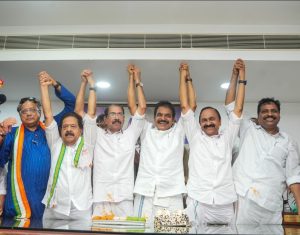
Congress leaders at the KPCC office following the victory in the Assembly elections on 4 May
Gopakumar argued that Satheesan successfully encashed the anti-Left sentiment, rebuilt the coalition and united minorities — Church groups, NSS, SNDP and independent voters. He added that Satheesan’s political judgement and reading of the numbers were clear from the beginning.
He also reminded that Congress has faced major collapses before, including the 2004 Lok Sabha election and the 1967 Assembly election, when the party was reduced to just nine seats. “So how can they relax after winning 63 seats and create such a delay?” he asked.
The psephologist further warned that if Venugopal becomes the chief minister, rebellion inside the party could accelerate Congress’s decline in Kerala.
He said the AICC may have finally understood the public sentiment, and that itself could be the reason behind the delay.
Speaking to South First, Dr D Dhanuraj from Centre for Public Policy Research in Kochi said that if the DMK-AIADMK dominance in Tamil Nadu can weaken, a similar shift can happen in Kerala too, although no major party, especially Congress in the state, is preparing for such a scenario.
He said Kerala does not need a popular figure like Vijay or TVK for change, as the BJP is already building a strong grassroots base.
“The BJP’s influence cannot be judged only by its three seats. The number could rise in the next election. If key seats were not given to allies like Twenty20, the BJP could have won more,” he said.
Dhanuraj added that the BJP’s current MLAs have stronger parliamentary experience than many others in Kerala politics and could bring major projects and strategies to the state. He also said Kerala still has space for new political forces, similar to TVK’s emergence in Tamil Nadu.
According to him, a section of the Hindu vote base in the CPI(M) could shift towards the BJP, similar to what happened in West Bengal, and the CPI(M) may struggle without strong leadership.
He further said that Satheesan is currently the only leader in Kerala capable of containing the BJP’s growth in Kerala to some extent. “Everyone except Kerala’s major fronts understands the political change the state may witness in the future,” he told South First.
Also Read: Kerala CM race enters final hours as Congress camps await formal announcement
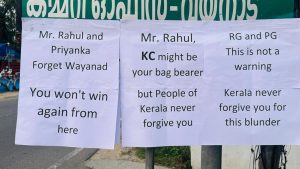
Posters targeting Rahul Gandhi and Priyanka Gandhi Vadra emerge as Kerala CM race intensifies.
According to Dhanuraj, the AICC failed to read Kerala’s political mood. “If the CM race was between Ramesh Chennithala and VD Satheesan, people may have accepted the delay. But bringing KC Venugopal into the race looked like mocking the people’s mandate,” he said.
Benny Francis, a Congress worker from Ernakulam, said younger voters are mocking the party as they are unfamiliar with Congress’s conventional power struggles. He noted that most social media fights and trolls over the chief minister race are coming from people below 40, who are more active online.
Dhanuraj added that Indian politics has entered a phase where people expect speedy change and no longer follow traditional political loyalties.
He said the AICC failed to read the ground reality in several states, and in Kerala, too, could not anticipate such a massive 102-seat victory. Referring to Himanta Biswa Sarma, he argued that governance and delivery now matter more than communal narratives. He also pointed to Vijay’s rise in Tamil Nadu as proof that voting patterns are changing rapidly.
“People no longer need freebies or grand manifestos. They are ready to experiment and also ready to throw out governments if expectations fail,” he said.
Meanwhile, Vineesh, a voter from Wayanad, said the posters against Rahul Gandhi and Priyanka Gandhi Vadra in Wayanad are a warning sign.
“Every time they came to Kerala, people gave them huge mandates and victories. Still, they failed to deliver what Kerala deserves, and this delay feels like an insult,” he said, adding that Congress may no longer be able to consider Kerala a “safe place” in future elections.
He also said Congress now believes people will soon forget this chaos. But that is a misreading. “People did not forget ASHA workers’ protests, medical negligence cases, leaders’ arrogance, or how policies weakened governance/party. That collective anger became one of the biggest reasons behind CPI(M)’s massive defeat, and the same warning now stands before Congress too.”
“Voters may forgive mistakes, but they rarely forget an insult,” he said.
(Edited by Muhammed Fazil.)



