

Published Jan 31, 2026 | 12:00 PM ⚊ Updated Jan 31, 2026 | 12:00 PM

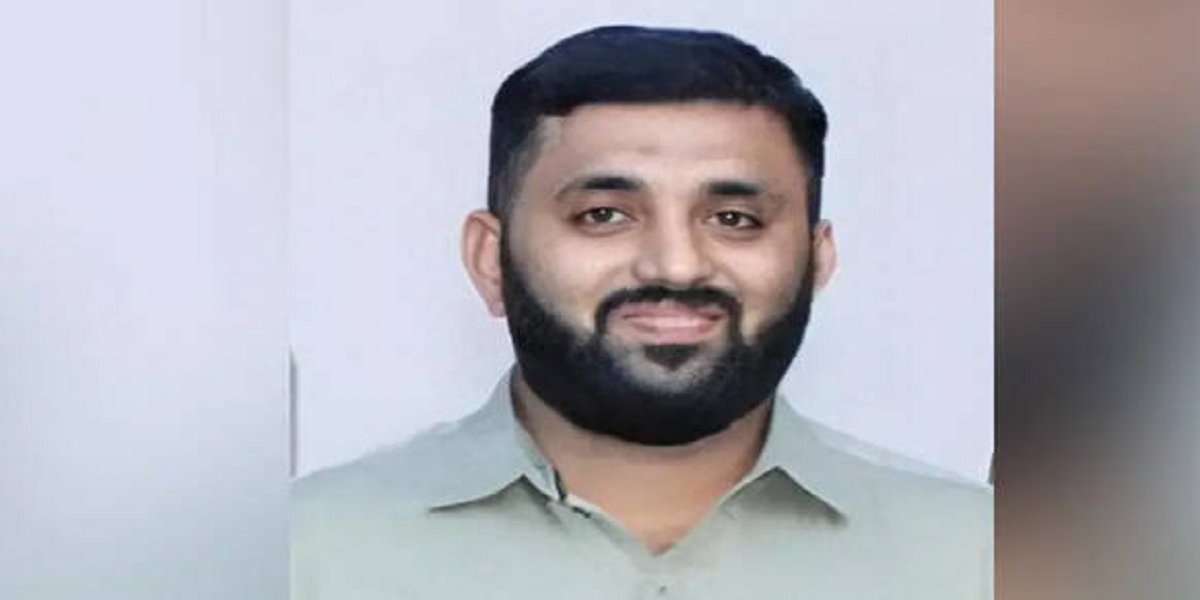
Bismeer
Synopsis: The death of Bismeer has sparked yet another round of outpouring rage in Kerala. While his relatives blamed the health centre for the delayed treatment and his death, the doctors and government gave a contradictory version. However, the incident points to the fact that the state’s healthcare system is not healthy as it is being touted.
“I can’t breathe” became the slogan of the Black Lives Matter movement in the US, after an Afro-American man, Eric Garner, repeatedly whispered the phrase while being in a police stranglehold in New York in 2014.
The same phrase has been used by people — more than 70 according to a New York Times estimate — dying in police custody. The phrase shook the world, including Kerala, after the death of George Perry Floyd Jr., who was asphyxiated to death by the police in Minneapolis, Minnesota, in 2020.
Kerala, too, has heard similar phrases, in police custody and elsewhere. However, such feeble, cracking voices soon fall silent, and the triggering incidents are forgotten.
The latest came from the Community Health Centre (CHC) — part of Kerala’s famed decentralised healthcare system — at Vilappilsala, Thiruvananthapuram, on 19 January. “Please, save me,” 37-year-old Bismeer gasped minutes before his voice fell silent, and he stopped breathing.
His family said official apathy killed Bismeer. The healthcare fraternity and the government categorically denied the allegation. The Opposition raised the matter in the state Assembly, forcing Health Minister Veena George to make a statement that absolved the CHC authorities of any wrongdoing.
“They did all that could be done,” she told the Assembly on Wednesday, 28 January.
George’s statement did not silence the critics. Allegations, many without concrete evidence, flew thick and fast. Pro-government voices countered the allegations with the minister’s statement.
Amidst the din of allegations and countercharges, the chilling truth remains: Bismeer will not return. He died young, leaving behind a wife who knows little about the vagaries of the world, and two little children.
Television journalist-turned-politician Veena George’s tenure as the health minister has not been as glorious as that of her predecessor, KK Shailaja.
A string of deaths, alleged to be results of medical apathy and even a hospital building collapse, marred her tenure.
In July 2025, even Chief Minister Pinarayi Vijayan had to defend her — and his government, saying isolated incidents in Kerala’s healthcare system were being used to malign a robust sector.
His statement came on the heels of a senior doctor taking to social media, lamenting the shortage of surgical equipment in the Government Medical College Hospital, Thiruvananthapuram.
Incidentally, George had once blamed the “system” for the maladies ailing the healthcare sector.
Jasmine is still in shock over the unexpected demise of her husband, Bismeer. His final words — of a desperate man seeking help to live — reverberate silently in her ears.
“Please, save me,” she had heard the familiar voice.
Despite the shock, Jasmine is determined to fight for justice. Speaking to South First, she said a delay of just “a few minutes” cost her husband his life.
”How long does it take to lose a life? The hospital is now talking about a delay of a few minutes. Those few minutes took my husband away from me,” she said.
She explained that when Bismeer complained of severe chest pain, she rushed him on her scooter to the Vilappilsala CHC, the nearest medical facility.
”When we reached, the hospital gate was locked. The staff did not respond immediately. They did not give oxygen or perform CPR. The doctor appeared more panicked than we — then how can they act swiftly?” she asked.
Jasmine alleged that despite Bismeer showing clear symptoms of a heart attack, the hospital staff advised steam inhalation and failed to provide even basic primary treatment.
”He had heart problems since the age of 13,” she said before a pause. “He was the sole breadwinner of our family. He worked tirelessly in a bakery and also as a Swiggy delivery agent to support us. We could not save him. Negligence killed him” she said.
CCTV footage from the hospital showed no staff member near a breathless Bismeer for several minutes. Jasmine was seen trying frantically to get help.
The hospital authorities blamed stray dogs for the golden minutes that lapsed outside the closed gate. The gate was closed at night due to the threat posed by the strays.
”There is no security staff in this hospital. Considering the safety of other patients, including women, we shut the gate at night,” Dr L Rama, the CHC superintendent, told reporters after Bismeer’s death.
“The patient was given emergency care and was referred to the Medical College Hospital due to the severity of his condition. The procedure to appoint security staff is currently underway,” she added.
The public response to the incident was instant, creating a sense of deja vu — the same emotional outburst of anger seen after each tragedy.
The Opposition took up the issue. On Wednesday, 28 January, the Kerala Assembly witnessed a heated debate over the incident.
Congress MLA PC Vishnunath’s adjournment motion led to nearly two-and-a-half hours of discussion. Health Minister George defended the doctors, saying the patient received prompt treatment and a full picture would emerge after the post-mortem. She also cautioned against targeting the healthcare staff.
Opposition leader VD Satheeshan criticised her, claiming no previous health minister had ordered so many inquiries, yet failed to follow up on their findings.
Youth Congress Nemom president Shajeer told South First that the organisation would stage a protest in front of George’s office on Friday, 30 January.
”How can a system remain silent on such a serious lapse? This exposes how poorly PHCs are functioning. Mere PR cannot hide dark realities,” he said.
Meanwhile, the Kerala Government Medical Officers Association (KGMOA) rejected allegations of medical negligence, calling them baseless.
KGMOA added that the CHC functions with severe staff shortages and limited infrastructure and warned against misleading the public and intimidating healthcare workers.
Stray dogs, a closed gate, a delay of a few minutes, a death, and unanswered questions.
Aneesh TA, a Vilappilsala resident, South First, spoke to confirmed the stray dog menace at the CHC.
”Poor waste disposal system near the hospital attracts stray dogs. Patients who come to the CHC have to brave the dogs while entering or leaving the centre. There is no security here, which makes the situation even worse” he said.
Data obtained through an RTI application revealed that the Thiruvananthapuram district recorded the second-highest number of deaths due to stray dog attacks since 2016, with 16 fatalities. Across Kerala, 118 people have lost their lives following dog bites over the last decade.
On 28 January, the Supreme Court strongly criticised states for failing to implement effective measures such as sterilisation programmes, dog shelters, and removal of strays from educational institutions and public campuses.
”They are building castles in the air,” remarked a bench comprising justices Vikram Nath, Sandeep Mehta and NV Anjaria.
The court specially noted issues in Kerala and Goa, where stray dogs have been found on beaches — a situation the amicus curiae warned could affect tourism. The amicus curiae recommended that states strengthen their infrastructure and enforcement.
The apex court will hear the matter again on 5 February.
Vilappilsala had been a hotspot for a people’s movement against a waste plant.
In 2000, the government established a centralised waste processing plant on 12 acres, acquired in 1995.
A private company initially managed the plant, designed to process 157 tonnes of waste daily and produce fertiliser from biodegradable waste.
However, the city generated around 300 tonnes of waste daily, overwhelming the plant’s capacity. The company eventually withdrew due to disagreements with the city corporation, leaving the site uncontrolled.
The unmanaged dumping created severe health hazards, including skin and respiratory diseases. The leachate altered the soil fertility, besides polluting nearby water sources.
The villagers responded. They formed a people’s committee in January 2011 and staged protests. Despite repeated complaints, the government ignored their demands, and some protesters were falsely charged by police.
By September 2011, the committee escalated protests, blocking garbage trucks from entering the village. This caused city-wide waste problems, prompting the corporation to seek a court order to reopen the site.
Defying prohibitory orders, hundreds of residents and activists stopped machinery and garbage movement. The sustained public opposition ultimately brought the government to its knees. The plant was shut down.
Manju Kumari, a former member of the panchayat, told South First that though the site was shut down, the waste has not been completely cleared.
“The government promised to set up an educational institution there. However, no action followed, and the waste is still lying there,” she said.
Kerala is steadily upgrading its Primary Health Centres into Family Health Centres to improve outpatient treatment, diagnostic facilities and medicine supply, while also adding specialised clinics.
The programme, launched in 2017, aimed to transform 886 PHCs by August 2023 — 630 had been converted.
These centres now function with longer outpatient hours and are expected to operate 24×7 with emergency and inpatient services.
Health activist and psychiatrist Dr CJ John told South First that excessive workload — not staff shortage — is the core problem in the government healthcare sector.
”No one talks about the human limits of medical professionals. From morning to evening, a single doctor is handling so many patients. How can we ignore the threat posed by the stray dogs that they face? How can we blindly blame them without considering their own safety?” he asked.
He also pointed out that with advanced facilities now available, even upper-class patients are increasingly depending on government hospitals.
”A nominal fee can be charged from them, and the funds can be used to improve infrastructure and strengthen PHCs. Of course, the priorities of a PHC are different, but there must be a strong network, emergency intervention facilities, and adequate staff to meet people’s needs” he said.
Raising concerns about preparedness, he questioned why medical professionals are not given proper training to handle emergencies and why the government does not conduct mock drills in hospitals.
”If a patient needs to be stabilised and transferred within four or five minutes, how effectively can that be done? None of this is happening. Mere suspension of staff will not address the real issue. What is needed is collective action and solutions that address the root causes” he added.
Abhilash, a local politician from Vilappilsala, told South First that medical negligence is frequent at the Vilappilsala CHC.
“The day after Bismeer’s death, another patient with a serious leg injury was sent back because there was no surgical suture. This CHC mainly functions as a referral centre to the Medical College and General Hospital, despite receiving around 200 patients daily,” he said.
He alleged that most doctors posted there are young and lack experience in handling emergencies.
At night, patients must first call the attendant, who informs the nurse, who, in turn, alerts the doctor. While doctors’ rest is understandable, he said delays during emergencies are unacceptable.
The hospital has only two doctors—one for day duty and one for night duty. He said the lady doctor on duty when Bismeer arrived responded late.
Bismeer did not survive to tell the tale, but raised a question even in his death. Did multiple systems fail that fateful night?
(Edited by Majnu Babu).


