

Published Apr 16, 2026 | 10:44 AM ⚊ Updated Apr 16, 2026 | 10:44 AM


Representative Image. (iStock)

Synopsis: What began as an “unnatural death” inquiry of a first-year BDS student in Kerala’s Kannur has spiralled into a complex probe involving allegations of ragging, caste-based harassment, faculty misconduct and pressure linked to a loan app. As students, family members and authorities put forward conflicting accounts, the case has come to reflect deeper concerns about power, silence and discrimination within campuses that are often seen as progressive spaces.
Six days have passed since 22-year-old RL Nithin Raj, a first-year BDS student at Anjarakandy Dental College in Kannur, Kerala, fell from a campus building and died, but the questions that followed refuse to settle.
What began, on 10 April, as an “unnatural death” — a young student found grievously injured between the administrative block and library around 1.30 pm, rushed to hospital and declared dead hours later — has since taken on a far more unsettling dimension. Early lines of inquiry touched on alleged harassment linked to a loan app.
However, in the days after, grief turned into accusation.
The family spoke of sustained pressure. Classmates pointed to something deeper. Fragments of audio and testimony began to circulate, hinting at humiliation that went beyond finances.
In a state that prides itself on near-universal literacy, high enrolment in higher education, and a long tradition of politically conscious campuses, the death has cut through familiar self-assurances.
Kerala’s colleges often speak the language of equality — of anti-caste politics, social justice, and student rights — yet this incident has forced a closer look at what lies beneath that language.
Was this simply a case of personal distress exacerbated by external pressure, or does it expose fault lines that institutions have long learned to mask? Allegations of caste-based discrimination, of subtle and overt exclusions tied to colour and class, now sit uneasily alongside the state’s progressive image.
The absence of clear witnesses, the questions around the sequence of events, and the shift in the narrative have only deepened the unease.
Also Read: Kerala Police confirms possible link to loan app
Six days after the death, the case has grown into a layered investigation, with allegations of ragging, caste abuse, teacher harassment and a possible loan app angle pulling the probe in different directions.
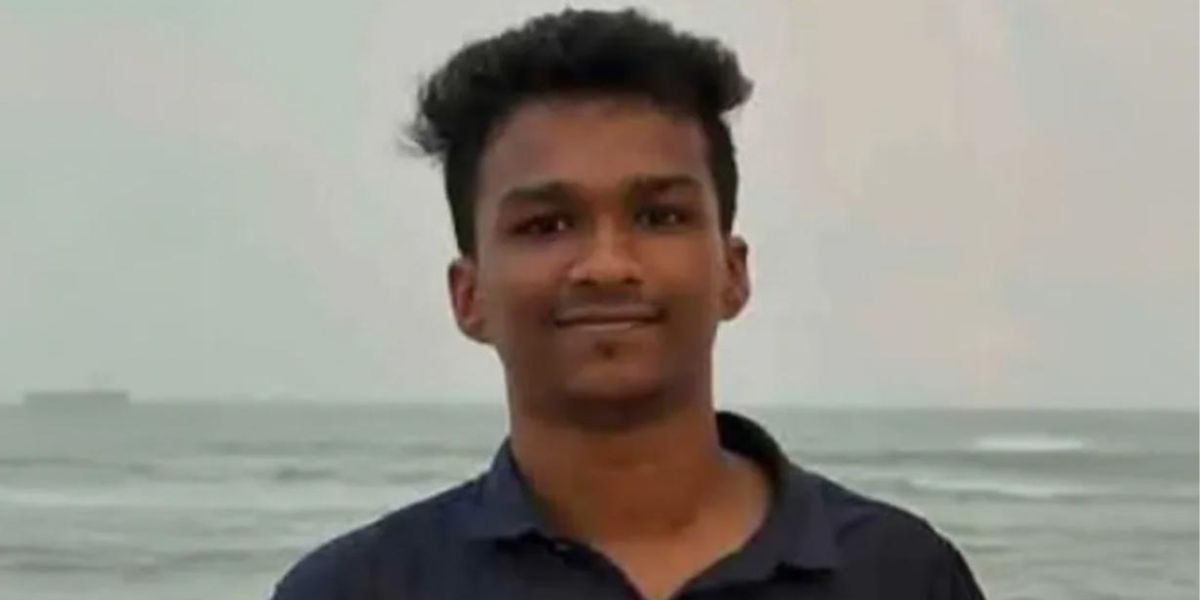
RL Nithin Raj.
Nithin, a native of Uzhamalackal in the Thiruvananthapuram district, was found critically injured on 10 April on a gravel patch between the administrative block and hospital premises of Ancharakandi Dental College.
He was rushed to the casualty ward but died at around 3.35 pm. Police initially registered a case of unnatural death.
Within two days, following a complaint from his father, Rajan, more serious charges were invoked, including abetment to suicide and provisions under the SC/ST (Prevention of Atrocities) Act.
A special investigation team led by Kannur Assistant Commissioner of Police (ACP) Hariprasad is now handling the case.
College authorities have maintained that Nithin had not filed any formal complaints. An internal committee was set up, and the management said it would cooperate with investigators.
A day after the incident, two teachers — Dr MK Ram and KT Sangeetha Nambiar — were suspended following complaints linked to the case.
The family, however, has consistently rejected the suggestion of suicide. They allege that Nithin had been subjected to sustained ragging, humiliation and caste-based abuse.
His father accused Dental Anatomy Head Dr Ram of verbally insulting the student in class and maintaining a hostile attitude despite his academic performance. According to the family, the harassment had taken a visible psychological toll.
His mother said she was first told that her son had suffered an accidental fall and was in the ICU. When attempts to contact him failed, suspicion grew.
The family insists he had been in regular touch and was expected home the same day.
Details around the day of Nithin’s death remain under scrutiny.
Those close to him said he appeared normal until late morning. At some point, he received a phone call and was later summoned to the office. What happened during that interaction is still unclear, but students believe it may hold crucial answers.
As these allegations gathered traction, investigators began examining another angle.
Preliminary findings indicated that Nithin had taken a loan through an online mobile application during December–January.
Police said he had been receiving repeated calls from loan agents after repayment was delayed. The agency had also contacted a teacher at the college, triggering a separate complaint.
Kannur Cyber Police registered a case based on a complaint from assistant professor Latha Sasidharan, who alleged she received threatening calls and WhatsApp messages demanding repayment of the student’s loan. Charges of intentional insult, extortion and cheating through digital impersonation have been invoked.
Kannur City Police Commissioner Nidhin Raj P said it remains unclear how the loan agency accessed the teacher’s contact details. Investigators are examining whether it was shared by the borrower or extracted through app permissions. Forensic analysis of the phone is expected to provide clarity.
Police sources confirmed that certain chats recovered from the student’s phone contained threatening messages linked to the loan app. Officials said this line of inquiry is being pursued to assess whether it contributed to mental distress.
However, the family is not convinced.
Rajan said the loan had been taken for his wife’s medical treatment and was known to the family. Repayment had already begun, he said, questioning why neither the college nor the teacher had informed them if threats had escalated.
He dismissed the loan app angle as a diversion. According to him, the focus should remain on what happened within the campus.
“There is an attempt to shift attention,” he said, alleging that narratives are being created to dilute the seriousness of harassment claims.
He reiterated that his son’s death was not a suicide but a murder, and has called on fellow students to come forward with information about the events leading up to the incident.
Audio clips attributed to Nithin, though yet to be confirmed by the police, were said to have been circulated among his friends days before his death. The recordings, now widely shared, offer a troubling glimpse into the final days of Nithin.
In the recordings, which began circulating days after the incident, Nithin speaks of repeated humiliation and distress linked to his interactions with faculty. He recounts being insulted in front of others, including comments directed at his mother, and describes an atmosphere that left him emotionally shaken.
At one point, he refers to a confrontation inside a staff room where a teacher allegedly called him an “idiot” and threatened him with physical harm. Nithin says he responded defiantly, but the exchange appears to have left a deep impact.
Another clip suggests he was anxious about his academic future.
He can be heard wondering whether he might be removed from the course following a dispute with a faculty member.
Yet, even in that moment, he insists on his determination to continue his studies and become a doctor, brushing aside what others might say.
Amid the distress, he also mentions a faculty member who stood by him, recalling words of support that encouraged him to hold his ground. He does not name the individual.
Nithin’s family has alleged that sustained harassment by members of the faculty pushed him to the brink.
They have also raised concerns of caste-based discrimination and serious ragging by senior students, claiming that earlier complaints did not receive due attention. Seeking clarity on what transpired, they are now preparing to file fresh complaints against the college leadership with both Kannur and Thiruvananthapuram police.
Also Read: KC Venugopal eyeing Kerala CM chair?
For the first few days after the death of Nithin, there was only hesitation. Classmates stayed guarded, conversations remained private, and fear hung over the campus. That quiet did not last.
As students began to speak, one account led to another.
What has now surfaced is a series of allegations that go far beyond a single incident, raising uncomfortable questions about the atmosphere inside a college that prides itself on academic excellence and social progress.
On 13 April, the issue took a sharper turn.
A final-year student, Nayana Nishikant, publicly accused Dr Ram of sustained verbal abuse and intimidation.
According to her, the conduct was not occasional but routine — targeting students over caste, skin colour, and physical appearance. She also alleged that complaints came at a cost. After she filed one earlier, she faced suspension.
“We kept quiet because we were scared,” she said. “There were threats about failing us and controlling evaluations.”
Her claims were echoed by others.
Students described a system where academic processes themselves became tools of pressure. Answer sheets allegedly went missing, viva exams were delayed or withheld, and internal marks were manipulated. Several spoke about physical intimidation — being hit, pulled by the ears, or publicly humiliated in class.
Some said even parents were not spared.
Meetings, they claimed, often turned into spaces where concerns were dismissed, and families were spoken to harshly. Complaints, they added, were discouraged long before they could reach any authority.
What has troubled many is that these allegations are not new.
Students and parents had reportedly raised similar concerns in the past, leading to a two-month suspension for the faculty member. But those who spoke now insist that little changed after his return. The same patterns, they say, resumed — only this time, the consequences have been far more serious.
The protests gathered momentum after Nithin’s death, which many students believe cannot be viewed in isolation. They point to repeated harassment and humiliation as part of the context that must be examined. A case has now been registered against Dr Ram and Dr Sangeetha Nambiar, though no direct accusations have been made against the latter.
Classes have been boycotted by final-year students, who are demanding a detailed and impartial investigation, along with strict action against those found responsible.
Accounts from Nithin’s classmates add another layer. Some visited his home and later spoke to the media, standing by the complaints he had raised earlier. They described classroom scenes where students were singled out, made to read their answers aloud, and then ridiculed in front of others.
“Everything he said is true,” one of them remarked. “Many of us stayed silent because we thought it was safer that way.”
Fear, several students said, shaped everyday decisions. Attendance — critical for exam eligibility — became a pressure point. Filing a complaint could mean losing it. Seniors, they claimed, often warned juniors to comply rather than resist.
There are also accounts of a culture where silence was enforced collectively.
If a student was insulted, others were expected to laugh along. Not doing so risked being marked out as the next target. Being labelled as “problematic” could affect practical exams, progression, and ultimately, their future.
A house surgeon described the situation as something most students had quietly accepted over time.
“Everyone has faced it in some form,” the student said. “People just try to get through their course.”
Students alleged that the faculty member often spoke openly about complaints against him, projecting confidence that no action would follow. That perception, they said, discouraged many from coming forward.
Developments in the death of Nithin continue to gather momentum, even as anger simmers on campus and beyond. With the accused still untraceable, demands for accountability are growing sharper by the day.
Kerala University of Health Sciences Vice-Chancellor Mohanan Kunnummal met Governor Rajendra Vishwanath Arlekar on 14 April and handed over a preliminary report on the incident.
At Lok Bhavan, it’s learnt, the Governor has made his expectations clear.
It’s said that he urged the university to move decisively against those responsible, stressing that internal action need not be delayed pending the outcome of the police investigation. Sources indicated that he called for firm measures to ensure such incidents are not repeated.
The Vice-Chancellor’s report reportedly included findings from his visit to Nithin’s family, along with details gathered by the university’s inquiry team so far. The committee is scheduled to record statements from students at the college as part of its ongoing probe.
The university’s investigation committee is set to visit the college to begin collecting evidence, with student testimonies expected to form a crucial part of the inquiry. The panel is being led by Governing Council member Ajith Neelakantan.
Meanwhile, the police search for the two accused doctors — Dr Ram and Dr Sangeetha — has yet to yield results. Both are believed to be absconding, with indications that they are exploring legal options, including anticipatory bail.
Their continued absence has intensified protests on campus, where students have made it clear they will not call off their agitation until arrests are made. Many are also insisting on the immediate removal of Dr Ram from the institution.
Also Read: Ceremony of unity in Kerala now mired in doubt, probe
The incident has also drawn a strong political response.
On the occasion of Ambedkar Jayanti, on 14 April, Chief Minister Pinarayi Vijayan spoke about the case, placing it in the larger context of caste discrimination in educational institutions.
Describing Nithin’s death as deeply distressing, the chief minister said such an incident has no place in a state that prides itself on social progress.
“Those who drove a young student to such a fate have committed a grave injustice,” he said, expressing solidarity with the bereaved family.
He also pointed to a worrying pattern of discrimination surfacing in campuses across the country, noting that it stands in direct contradiction to the values enshrined in the Constitution. Referring to the long-pending Rohith Vemula Act, Vijayan criticised the Union government for failing to enact legislation aimed at addressing caste discrimination in higher education. The proposed law gained attention after the 2016 death of research scholar Rohith Vemula at the University of Hyderabad.
According to the chief minister, existing guidelines issued by the University Grants Commission (UGC) have run into legal obstacles and remain stalled following intervention by the Supreme Court.
Calling for collective resolve, Vijayan urged society to stand against divisive tendencies and reaffirm its commitment to equality. He invoked the legacy of Dr BR Ambedkar, saying his vision should continue to guide efforts toward building a more just and inclusive nation.
The Indian Medical Association (IMA) also voiced grave concern over the death, calling it a painful loss that raises uncomfortable questions about campus culture.
In a statement, state president Dr MN Menon and secretary Dr Roy R Chandran underlined that institutions cannot remain confined to academics alone; they must also safeguard students’ dignity and mental health. They warned against any form of humiliation or psychological pressure, insisting such conduct has no place in professional education.
The association has pressed for changes that go beyond routine measures — regular mental health assessments, accessible counselling, and grievance systems that function independently of college managements. It also stressed the need for teachers to be trained in handling students with sensitivity, and for structured mentorship to flag distress early.
Parallel demands have come from the Save University Campaign Committee, which has sought the formation of rapid-response panels to deal with faculty-related harassment. The appeal follows allegations surrounding the death, with students accusing a senior faculty member of repeated body shaming and derogatory remarks.
The committee argues that existing complaint mechanisms fail when the accused hold academic power, leaving students hesitant to speak out. It has proposed panels with legal experts, psychologists and community representatives, mandated to act within 24 hours. Calling the issue systemic, it urged the Governor’s intervention, even as both groups demand a transparent investigation into the circumstances leading to the student’s death.
Nithin’s journey to a dental college seat was built on persistence against odds.
The son of a painting labourer and a mother who had to step away from MGNREGA work due to serious health issues, those who knew him recall a quiet, focused student who carried his ambitions with discipline.
His death has unsettled more than just a campus. It reopened uncomfortable questions about a system that prides itself on progress.
Kerala’s claims of social advancement and educational access now sit uneasily beside accounts from students, the anguish of a family, and disturbing details that continue to surface.
What emerges is not an isolated tragedy but a deeper unease — about whether spaces of higher learning are as equal as they appear, or whether barriers of caste and class still shape who belongs, and how.
The death indeed has become a moment of reckoning, one that resists closure and demands answers that go well beyond the circumstances of a single fall.
(Edited by Muhammed Fazil.)



