


Published Mar 04, 2026 | 8:00 AM ⚊ Updated Mar 04, 2026 | 8:00 AM

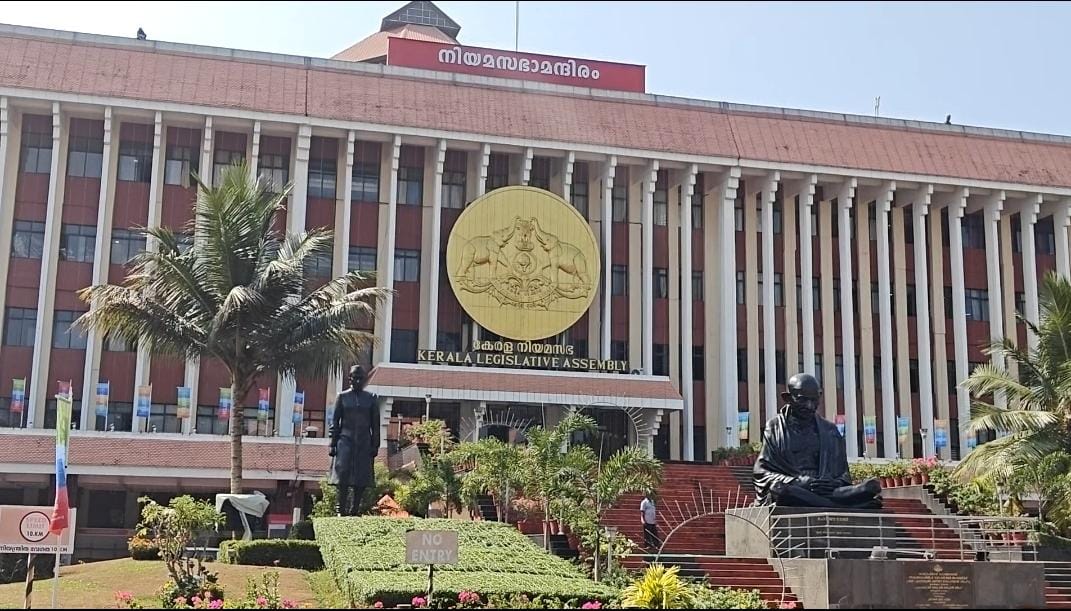
Many of those queries were met with silence, vague assurances, or replies that skirted the core concerns.
Synopsis: From the early sittings of the 15th Kerala Legislative Assembly to the most recent 16th session, the sharpest queries directed at the Home and Health departments have lingered without clear, substantive responses, leaving gaps instead of definitive answers.
Two powerful government departments — Home and Health — came under opposition fire in the final session of the 15th Kerala Assembly that concluded on 24 February.
The criticism was not over the controversies surrounding these two departments, but over the answers that never came.
From allegations of police excesses to repeated charges of medical negligence and lapses in patient care, questions have echoed inside the Assembly hall session after session.
Many of those queries were met with silence, vague assurances, or replies that skirted the core concerns.
Ironically, even as Chief Minister Pinarayi Vijayan speaks of a zero-tolerance policy against police high-handedness, and the Health Minister asserts that strict action follows every instance of medical negligence, the Assembly record tells a more complex story.
From the early sittings of the 15th Kerala Legislative Assembly to the most recent 16th session, the sharpest queries directed at these two departments have lingered without clear, substantive responses, leaving gaps instead of definitive answers.
When actor Mohanlal sat across Vijayan in a conversation aired on 26 February, the Chief Minister went down memory lane.
He spoke of the brutality he had endured during the Emergency, of how power can turn oppressive, and of how his government, with him holding the Home portfolio, has adopted a zero-tolerance policy against police excesses.
Across multiple sessions since 2021, Opposition members have raised a steady stream of pointed questions on police conduct, custodial abuse, missing children, terror recruitment claims, gold smuggling and the criminal antecedents of police officers.
The pattern that emerges from a session-by-session reading of Assembly records is not merely political sparring, but a recurring official response: data not available, information not compiled, details being collected, and most importantly, left unanswered.
Across recent Assembly sessions, responses to custodial violence drew the sharpest scrutiny. What legislators repeatedly sought were clear numbers, timelines and accountability trails. What they most often received were variations of the same line — that consolidated data was not readily available or was still being compiled.
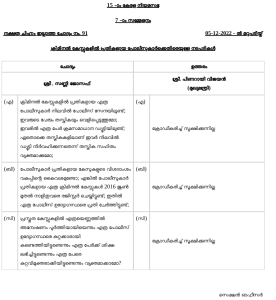
A response by CM in 2022 saying ‘compiled data is not kept’ on criminals in the police force
In September 2025, during the 14th session, a cluster of questions centred on custodial abuse and torture came up for discussion.
Najeeb Kanthapuram sought district- and year-wise data on custodial abuses from 1 January 2016 to 31 August 2025, along with the number of accused officers and the legal action taken against them.
He also raised the specific case of an alleged custodial assault at Kunnamkulam Police Station, demanding details of the officers involved, departmental proceedings initiated, the composition of the internal probe team, access to CCTV footage and measures proposed to prevent recurrence.
CR Mahesh, Anwar Sadat, Kurukoli Moideen and Anoop Jacob posed parallel questions in the same session — seeking clarity on arrest guidelines, complaints received, internal investigations conducted, the number of officers punished for custodial torture since 2016, compensation paid to victims’ families, custodial deaths under the present government, and whether data on police excesses had been systematically compiled at all.
Dr Mathew Kuzhalnadan asked how many incidents of arrest or custody since 2016 had resulted in action against police personnel and what preventive mechanisms were in place. K Babu (Tripunithura) sought clarification on RTI applications seeking CCTV footage of alleged custodial assault and whether such footage had been treated as confidential.
In several replies, the official position was that comprehensive figures in the requested format were not available, had not been consolidated, or were being compiled. Even when comparisons were sought — custodial deaths during 2011–2016, 2016–2021 and 2021–2025 — the response indicated that data was still being compiled.
In the concluding session of the Assembly, questions on the number of police officers with criminal antecedents dismissed or reinstated since 2016, how many faced criminal charges, and how many had been convicted or acquitted, were met with a similar stand: such consolidated data was not being maintained.
For a government that has repeatedly asserted zero tolerance towards police excess, the Assembly record suggested a different difficulty — the absence of structured, readily retrievable data on custodial abuse, disciplinary proceedings and criminal liability within the force.
Well before the custodial abuse queries, a pattern had begun to take shape — members pressing for granular information on sensitive administrative and security issues, and answers that stopped short of full disclosure.
The first session after the 2021 Assembly elections set that tone.
On 6 July 2021, N Shamsudeen asked whether service rules had been framed and implemented for Camp Followers in the Kerala Police, and whether earlier strict instructions were being violated by assigning them to the residences of senior and retired officers.
The issue went to the heart of administrative propriety and the use of personnel. The replies did not substantially clarify the position.
On 4 August 2021, during the second session, Dr MK Muneer and other members sought answers on a serious claim attributed to a former State Police Chief — that Kerala had become a recruiting ground for terrorist organisations.
They asked whether a report had been submitted and whether it would be made public. The documentation sought was not placed in the public domain in full.
By the fifth session, the focus shifted to missing children.
Manjalamkuzhi Ali sought year- and district-wise data under both the previous and present governments, with separate figures for girls and boys, and asked whether investigations were ever closed without resolution. The replies did not provide comprehensive district-level tabulations in the manner requested.
In the 12th session in October 2024, Kurukoli Moideen raised detailed questions on gold smuggling between May 2016 and September 2024: the number of cases district-wise, the quantity seized, gold released to claimants, confiscations ordered by the government, court-directed releases and whether any police officers were implicated.
The attempt was to track the journey from seizure to final disposition. Detailed district-wise break-ups were not fully furnished in the Assembly.
Another department that has repeatedly come under the scanner is the Health Department — battered by a series of alleged medical negligence cases, some of them fresh, others resurfacing from the past, each raising uncomfortable questions about accountability.
From June 2024 to January 2026, the Kerala Assembly records showed a steady stream of pointed questions cutting across party lines — all seeking clarity on medical errors, deaths, compensation and action taken.
In the 11th Session (June 2024), senior MLA Thiruvanchoor Radhakrishnan sought detailed data on complaints of medical errors in government hospitals, including medical colleges, since the previous government’s tenure — the number of deaths, punitive steps taken, and compensation paid to victims and families. He also demanded similar figures concerning private hospitals. That question remains unanswered.
The same session saw questions over three alleged malpractice-related deaths at Alappuzha Medical College Hospital.
MLA H Salam asked whether investigations had been conducted into complaints by the relatives of Shibina, Umeba and Soumya’s newborn baby, and whether any report was available. He further flagged allegations of attempts to intimidate patients and shift them to private hospitals, only to be left unanswered.
By September 2025, the issue had hardly receded.
Babu again pressed for consolidated figures: total medical errors reported, number of deaths, punitive actions initiated, compensation disbursed, and whether investigation reports would be made public.
In a separate question, CR Mahesh raised concerns over an alleged malpractice incident at Alappuzha Beach Women and Children Hospital, seeking clarity on findings, action against the responsible staff, compensation for the family, and preventive safeguards.
Both questions were not answered.
In January 2026, the spotlight shifted to Haripad Government Hospital after two of five dialysis patients died within days.
Queries were raised over possible lapses in treatment protocols, infection control, water quality and sterilisation standards.
Around the same time, MLAs sought answers over a respiratory distress patient who allegedly died without receiving treatment at Vilappil Hospital, demanding to know the corrective steps that had been initiated.
Despite the mounting questions, the minister left these unanswered.
Yet, the persistent repetition of similar questions across sessions tells its own story.
The question is, if action has indeed been firm and transparent, why do legislators continue to seek the same data — number of errors, deaths, punishment and compensation — session after session? Why are detailed investigation reports not readily available in the public domain? And why does the demand for compensation figures remain unanswered, or at least unclear enough to invite repeated scrutiny?
The Health Department may insist it has acted. But the lingering silence on specifics — particularly on accountability and compensation — raises many questions.
Meanwhile, leaving questions unanswered is clearly not an issue confined to the Home and Health Departments.
The scale of the backlog was laid bare on the Assembly floor itself.
During the 15th Kerala Legislative Assembly, Speaker AN Shamseer revealed that thousands of unstarred questions — queries that require written replies from the government — remain pending.
Out of 62,882 questions included in the list of unstarred questions so far, as many as 2,992 are still awaiting answers.
The numbers are significant.
Unstarred questions allow MLAs to seek data, demand explanations and place official facts on record.
It is pointed out that when responses are delayed, it effectively stalls that scrutiny.
Assembly officials say the replies will be updated once they are received from the departments concerned.
But until those answers arrive, nearly three thousand questions — spanning multiple departments — continue to sit in limbo, adding to concerns about transparency and accountability within the system.
(Edited by Majnu Babu).


