

Published Apr 07, 2026 | 10:05 AM ⚊ Updated Apr 07, 2026 | 10:05 AM

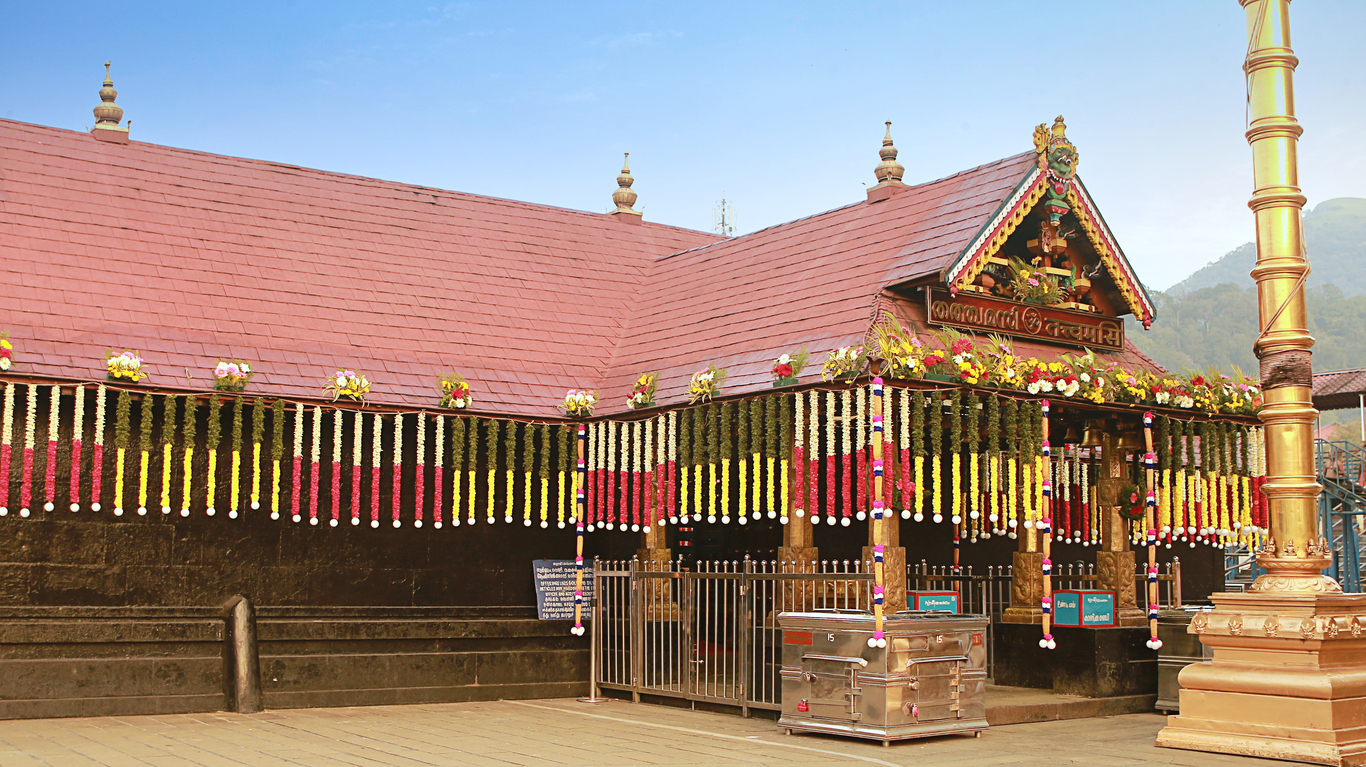
Sabarimala temple. (iStock)
Synopsis: The legal battle over the entry of women into the Sabarimala Temple in Kerala will begin in the Supreme Court on 7 April. A nine-member Constitution Bench led by Chief Justice Surya Kant is hearing 67 petitions linked to religious freedom, customs and constitutional rights.
The eight-day legal battle over the entry of women into the Sabarimala Temple in Kerala will begin in the Supreme Court on Tuesday, 7 April. A nine-member Constitution Bench led by Chief Justice Surya Kant is hearing 67 petitions linked to religious freedom, customs and constitutional rights.
Along with the Sabarimala issue, the bench is also examining matters such as the Dawoodi Bohra khatna ritual, restrictions on women entering certain mosques and the rights of Parsi women who marry outside the community to enter fire temples.
Earlier, the Supreme Court had directed the state government and other stakeholders to submit their stand on the matter by 14 March.
The hearing will continue till 22 April, with arguments from those opposing the entry of young women, including the Travancore Devaswom Board and the Pandalam Royal Family, scheduled from 7 April to 9 April.
Those supporting the 2018 verdict allowing women of all ages to enter will be heard from 14 April to 16 April, followed by rebuttals on 21 April and final submissions by amicus curiae K Parameshwar on 22 April.
In a significant shift, the Kerala government has asked to be included among those opposing the entry of young women. Through its lawyer, Nishe Rajen Shonker, the state informed the court that its arguments would be presented between 7 April and 9 April.
Represented by senior advocate Jaideep Gupta, the government is expected to argue that Article 25 of the Constitution protects essential religious customs, rituals and forms of worship.
It has also maintained that any final decision should be taken only after consulting religious scholars and social reformers.
On 2 March, the Travancore Devaswom Board (TDB) decided to oppose the 2018 verdict permitting the entry of women of all ages to the Sree Dharma Shasta Temple in Sabarimala. TDB President K Jayakumar had announced that the board would formally inform the Supreme Court of its decision by 14 March.
On 28 September 2018, the Supreme Court struck down a 1991 Kerala High Court verdict that upheld the centuries-old practice of prohibiting women of menstruating age from entering the Sabarimala temple.
Despite violent protests and political backlash, the CPI(M)-led LDF government facilitated the entry of two women, Bindu Ammini and Kanakadurga, into the hill shrine, invoking constitutional rights and gender equality.
The backlash was immediate, with purification rituals held by priests and the BJP-led Opposition branding it as an assault on faith. Soon after, the LDF shifted to a cautious posture.
(With inputs from Sreelakshmi Soman.)


