

Published Jan 14, 2026 | 7:20 PM ⚊ Updated Jan 14, 2026 | 7:20 PM

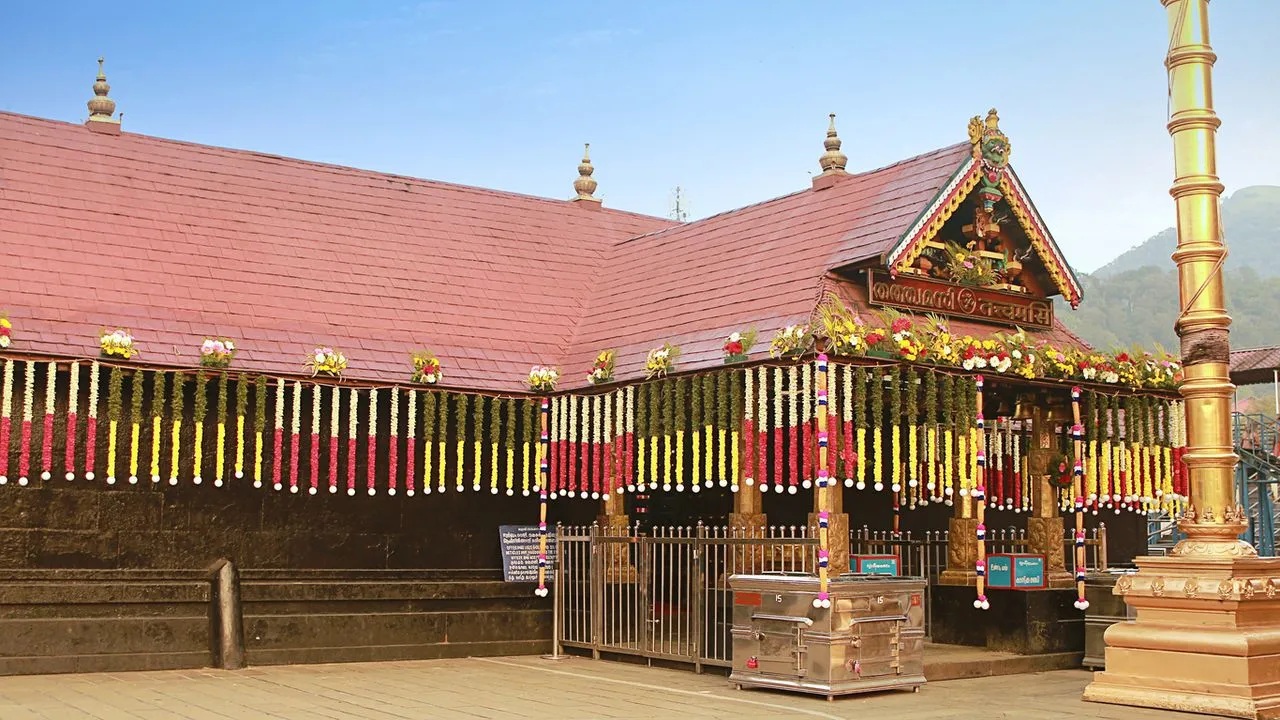
The Sree Dharma Sastha Temple at Sabarimala is caught in controversies. (iStock)
Synopsis: A Special Commissioner’s report, placed before the Devaswom Bench on Tuesday, 13 January, has laid bare large-scale criminal misappropriation of revenue from the sale of “Adiya Sishtam Ghee”, forcing the court to order a high-level vigilance probe.
Barely weeks after allegations of gold siphoning at the Sabarimala hill shrine sent shockwaves through the state, the Kerala High Court has uncovered what it describes as a far more disturbing pattern of systemic fraud—this time involving one of the hill shrine’s most sacred offerings – “Adiya Sishtam Ghee”.
A Special Commissioner’s report, placed before the Devaswom Bench on Tuesday, 13 January, has laid bare large-scale criminal misappropriation of revenue from the sale of “Adiya Sishtam Ghee”, forcing the court to order a high-level vigilance probe.
Adiya Sishtam Ghee is not just another item sold at Sabarimala.
It is a ritual offering purchased by lakhs of devotees who believe it carries spiritual significance.
Each 100 ml packet is sold for ₹100, and the proceeds are meant to go directly into the coffers of the Travancore Devaswom Board (TDB), which manages the shrine.
What the High Court found, however, was that this faith-driven transaction had been reduced to a mechanism for siphoning public money—quietly, systematically and on a scale that has stunned even a court accustomed to dealing with temple administration controversies.
The controversy surfaced when the Sabarimala Special Commissioner’s report came up for admission before the Division Bench comprising Justice Raja Vijayaraghavan V and Justice KV Jayakumar.
The report was based on a vigilance inspection conducted following information received from the Temple Special Officer on 14 December 2025.
During the inspection, Devaswom Vigilance officers discovered that the sale proceeds from 16,628 packets of Adiya Sishtam Ghee sold at the Maramath Building counter had not been remitted to the Board’s account.
That finding, it later emerged, was only the tip of the iceberg.
The packing of Adiya Sishtam Ghee is entrusted to a private contractor, paid a meagre 20 paise per packet.
Crucially, the contractor does not supply the ghee or infrastructure.
The Devaswom Board itself provides the ghee, packing machines, materials and even a 700-litre steel storage tank.
The contractor’s sole responsibility is to ensure that each packet contains exactly 100 ml of ghee.
These packets are then handed over to temple officials, who sell them at designated counters.
The entire system, on paper, is simple—and should be easy to monitor. In reality, the report reveals, it became fertile ground for manipulation.
The report stated that between 17 November and 26 December 2025, the contractor packed 3,52,050 packets of ghee.
Of these, 89,300 packets were sold through the Maramath Building counter alone.
After accounting for 143 damaged packets and just 28 packets left in stock, revenue from 89,129 packets ought to have been remitted.
Instead, money was deposited only for 75,450 packets.
The difference—13,679 packets—translated into a direct loss of ₹13.67 lakh in just over a month.
The court said the scale and speed of the short remittance made it impossible to treat the lapse as a clerical error.
The picture grew grimmer when the court examined what happened next.
On 27 December 2025, when a Temple Special Officer took charge, the recorded stock stood at 32,040 packets.
Over the next few days, the contractor supplied another 22,200 packets, taking the total to 54,240.
From this stock, 25,690 packets were issued for sale.
By simple arithmetic, 28,550 packets should have remained.
But when physical verification was conducted on 2 January 2026, only 5,985 packets were found.
A staggering 22,565 packets—worth ₹22.65 lakh—had vanished.
According to the bench, this was not negligence but prima facie evidence of criminal misappropriation, falsification of records and cognisable offences under the Bharatiya Nyaya Sanhita, 2023, as well as the Prevention of Corruption Act.
The Special Commissioner’s report also flagged glaring procedural lapses.
When officials were relieved and replaced at counters, no proper stock-taking was done. Closing balances were not recorded as prescribed. Records were maintained in unauthorised books, with irregular entries.
The court was blunt in its assessment: these were not innocent omissions but failures that “create an environment conducive to diversion of funds” and make accountability nearly impossible.
Specific allegations were levelled against an employee, Sunil Kumar Potty, who worked during multiple phases of the pilgrimage season.
The report accused him of failing to issue receipts to devotees and of withholding ₹68,200 collected between November 24 and 30, 2025.
The amount was remitted only after directions were issued, 17 days later.
The Travancore Devaswom Board told the court that the employee has been suspended and that guidelines have been issued to prevent recurrence.
The bench was unimpressed.
Perhaps the most damning part of the order is the court’s observation that misappropriation of nearly ₹35 lakh in less than two months could not have happened without the knowledge, acquiescence or wilful blindness of officials “at the higher rungs of the administrative hierarchy.”
The judges underlined the fiduciary duty of senior officers to protect temple revenue, warning that failure to implement even basic safeguards amounted to a grave dereliction of duty.
“If this is the scale of siphoning from just one item over a short period,” the court remarked, “it is difficult to imagine the magnitude of misappropriation over a longer period and across other revenue streams.”
Taking suo motu cognisance, the bench impleaded the Director of the Vigilance and Anti-Corruption Bureau (VACB) as an additional respondent.
It directed that a crime be registered immediately and a team of “upright and competent officers” be constituted.
The investigation will be conducted under the direct supervision of the High Court, with a progress report to be filed within one month.
No details are to be shared with the media without the court’s permission.
At the same time, in a set of pointed observations that together read like a judicial warning shot, two different benches of the Kerala High Court have underlined the systemic failures plaguing the administration of Devaswom properties, particularly at Sabarimala.
The Devaswom Division Bench, while examining the Adiya Sishtam Ghee misappropriation, reiterated its long-pending demand for a tamper-proof, end-to-end software system to track temple revenues and expenditure.
Transparency and accountability, the Bench stressed, are no longer matters of policy choice but statutory duties.
The scandal, it noted, was not merely about missing ghee packets or unremitted cash, but about an ecosystem that allowed religious faith and public trust to be exploited repeatedly.
Complementing this, a single bench of Justice A Badharudeen, while hearing bail pleas in the Sabarimala gold siphoning case on 12 January, went a step further by questioning the adequacy of the existing Devaswom Manual itself.
Observing that internal guidelines and manuals can at best invite disciplinary action, the court suggested that the state seriously consider enacting a dedicated law — tentatively titled the Kerala State Devaswom Property Protection and Preservation Act.
Such a statute, with clear penal provisions, the judge said, was essential to curb the recurring misappropriation of temple assets and to fulfil the state’s duty to protect Devaswom properties in the interest of devotees.
(Edited by Majnu Babu).


