

Published Jun 15, 2026 | 8:57 PM ⚊ Updated Jun 15, 2026 | 8:57 PM

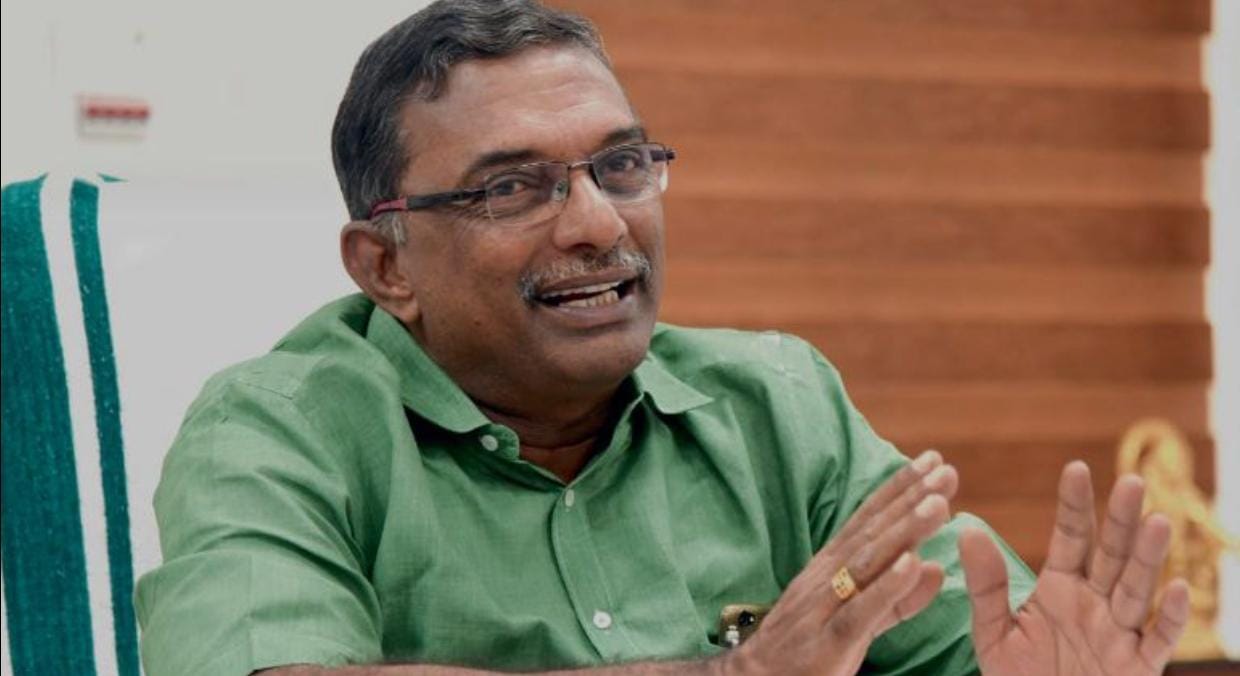
A Padmakumar

Synopsis: The CPI(M) has finally suspended senior leader and former president of the Travancore Devaswom Board president A Padmakumar. The suspension came as the party has been under pressure over the Sabarimala gold-missing cases, and growing backlash within the party made continued inaction politically untenable. The move comes amid fears of further embarrassment for the party, with investigations tightening and speculation rising over Padmakumar’s forthcoming autobiography and its potential political revelations.
After months of mounting pressure and internal debate, the CPI(M) has finally moved against a senior leader and former president of the Travancore Devaswom Board (TDB) and a member of the party’s Pathanamthitta district committee, A Padmakumar, an accused in the Sabarimala gold missing cases.
The Pathanamthitta district committee, which met on 15 June, decided to suspend Padmakumar, a former MLA, from the party’s primary membership and issue him a notice seeking a detailed explanation.
Though the action marked the party’s first formal disciplinary step against Padmakumar, the leadership has not fixed any time period for the suspension.
The delay in acting against Padmakumar had triggered criticism within party circles, especially as the controversy surrounding the missing gold from Sabarimala continued to intensify over the past several months.
Padmakumar is the 11th accused in the case related to the alleged disappearance of gold from the Dwarapalaka (guardian) idols and the eighth accused in the case concerning missing gold from the sreekovil (Sanctum sanctorum) doorframe.
Significantly, ahead of the Assembly elections in March, the CPI(M) had quietly sidelined him from party activities and election-related work.
Defending the party’s approach, senior CPI(M) leader and state secretariat member TM Thomas Isaac said disciplinary action within the party follows a defined procedure and cannot be taken in haste.
He maintained that the party would not hesitate to initiate even the strongest measures, including expulsion, if warranted, but only after due process.
Isaac also indicated that any further action against Padmakumar would depend on the findings of the Special Investigation Team (SIT) probing the Sabarimala gold loss cases.
Incidentally, it has been reported that Padmakumar had told his close associates that he would disclose more Sabarimala-related information that could prove detrimental to the CPI(M).
Also Read: TDB ex-chief Padmakumar held in Sabarimala theft case
Party insiders said the decision, long delayed despite growing pressure from within the organisation, came after the state leadership concluded that the controversy had seriously hurt the LDF’s image during the 2026 Assembly election campaign.
Padmakumar, a former MLA from Aranmula and a senior CPI(M) leader in Pathanamthitta with over five decades of association with the party, had emerged as one of the key political figures linked to the case after his arrest on 20 November 2025.
The court-monitored SIT, constituted following sharp observations by the Kerala High Court, alleged that Padmakumar had prior knowledge of the irregularities and that lapses during his tenure formed part of a larger conspiracy surrounding the disappearance of gold linked to Sabarimala temple ornaments.
Investigators traced the roots of the controversy back to 2019, during Padmakumar’s tenure as TDB president, when proposals were reportedly initiated to remove gold-clad copper plates from temple artefacts for electroplating and repair work.
The materials were allegedly handed over to individuals, including the prime accused, Unnikrishnan Potty. Subsequent scrutiny revealed a major discrepancy of nearly 4.5 kilograms of gold between the quantity recorded during removal and the amount returned after replating.
The issue exploded into public attention in September 2025 after the Sabarimala Special Commissioner informed the high court that gold cladding from temple structures had been removed without mandatory intimation or proper documentation.
Describing parts of the episode as an “organised plunder,” the high court ordered a detailed SIT probe in October 2025 and criticised TDB for serious lapses in record keeping and chain-of-custody procedures.
Multiple FIRs followed, leading to several arrests involving temple-linked officials and intermediaries.
Although investigators maintained that the physical transfer of materials may have taken place later, the SIT argued that crucial administrative decisions and procedural approvals originated during Padmakumar’s tenure as TDB president.
The Enforcement Directorate later entered the picture with a parallel money-laundering investigation, conducting raids and freezing assets connected to the accused.
The scandal soon snowballed into a major political controversy, with both the BJP and the Congress accusing the LDF government of attempting to shield those responsible and demanding a CBI probe.
Within the CPI(M), however, the handling of Padmakumar’s case triggered intense debate.
Even after his arrest, the leadership initially refrained from taking harsh organisational action.
In November 2025, CPI(M) state secretary MV Govindan reportedly informed the Pathanamthitta district committee that disciplinary measures would be considered only after the filing of the chargesheet.
That cautious approach drew criticism from sections of the cadre, many of whom argued that retaining Padmakumar in the district committee was damaging the party’s credibility at a politically sensitive time.
Sources within the party said the delay was also influenced by fears of internal fallout. There were allegations that Padmakumar had warned senior leaders that he could reveal sensitive details related to the politically explosive Sabarimala women’s entry issue if strict action was initiated against him.
As Assembly elections approached, the party gradually began distancing itself from the veteran leader.
By March 2026, he had been quietly kept away from organisational activities and election-related responsibilities. Show-cause notices were later issued to Padmakumar and others connected to the controversy, while his access to internal district-level discussions was reportedly curtailed, including removal from key WhatsApp groups.
Despite those measures, criticism against the party’s delay in acting against him continued to intensify.
Padmakumar’s suspension is now being viewed within political circles as an attempt by the CPI(M) leadership to contain further damage from a controversy that had increasingly become an embarrassment for the ruling front.
Also Read: Unnikrishnan Potty in SIT custody
The party’s disciplinary action against Padmakumar has taken a sharper political turn amid growing buzz around his forthcoming autobiography, reportedly based on personal diaries documenting key phases of his political journey, tenure at the TDB, and several controversial episodes.
The party is closely watching the development, with speculation mounting that the book could contain sensitive revelations capable of triggering fresh discomfort within the party.
Discussions have intensified, particularly over the possibility of references to internal decision-making, factional equations, and the politically explosive 2019 Sabarimala women’s entry issue.
The autobiography, expected to be released soon, is being viewed by many as both a political response to his marginalisation and a potential source of embarrassment for the leadership at a time when the party is already engaged in post-election introspection.
Amid the speculation, Isaac sought to downplay concerns over the proposed publication.
Reacting to reports surrounding the autobiography, he said the party has no reason to fear such writings and asserted that every citizen in the country has the democratic right to write an autobiography.
At the same time, Isaac clarified that the party’s next course of action against Padmakumar would depend on the findings of the SIT chargesheet. He said the current action is based on suspicion and pending inquiry, adding that further measures, including the possibility of expulsion, would be considered only after examining the investigation outcome.
Isaac also acknowledged that there had been a strong opinion within the party favouring stricter action against Padmakumar at an earlier stage. However, he maintained that the party follows its own organisational procedures and disciplinary mechanisms before arriving at major decisions.
For many within the party, the action may have come late, but the leadership appears to have finally accepted that the political cost of inaction had become too high to ignore.
(Edited by Majnu Babu).



