

Published Dec 21, 2025 | 9:39 PM ⚊ Updated Dec 21, 2025 | 9:39 PM

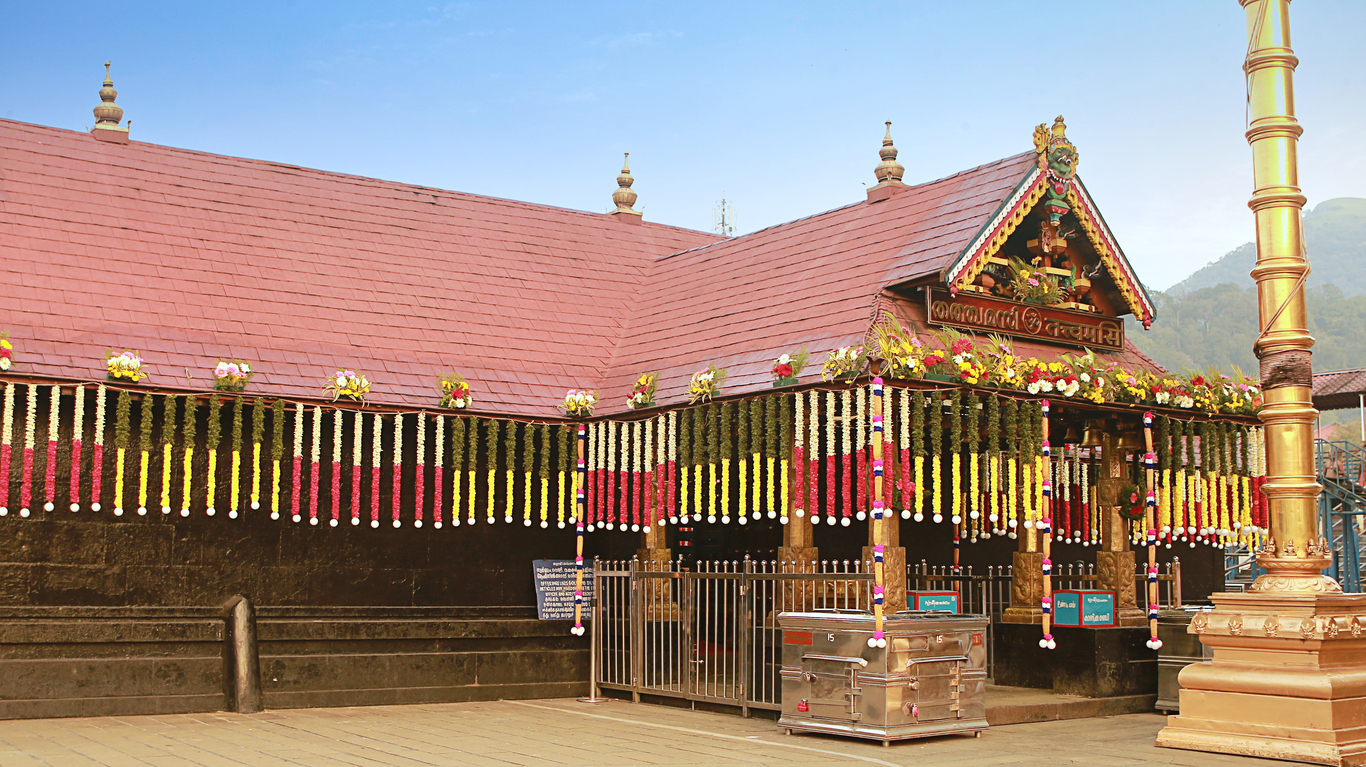
Sabarimala temple. Credit: iStock
Synopsis: The SIT probing the alleged theft and misappropriation of gold from the Sabarimala temple has told the Kerala High Court that two newly arrested accused, a Chennai-based businessman and a Ballari jeweller, bear responsibility equal to that of the prime accused, Unnikrishnan Potty. The arrests come amid sharp criticism from the High Court over serious lapses in the investigation and as the Enforcement Directorate has been cleared to examine possible money laundering linked to the case.
The Special Investigation Team (SIT) probing the theft and misappropriation of gold from the Sabarimala temple has told the Kerala High Court that two newly arrested accused, Chennai-based businessman Pankaj Bhandari and Ballari jeweller Govardhanan, bear responsibility equal to that of the prime accused, Unnikrishnan Potty.
In its remand report submitted before the vigilance court, the SIT stated that both men played “active and conscious roles” in the offence and that their involvement, initially disclosed by Potty during interrogation, was later corroborated by material evidence collected during the probe.
The arrests came amid mounting judicial pressure, including sharp criticism from the Kerala High Court over “serious laxity” in the investigation, and at a time when the Enforcement Directorate (ED) has been cleared to initiate a parallel probe into possible money laundering aspects of the case.
Pankaj Bhandari, CEO of Chennai-based firm Smart Creations, and Govardhanan, who runs Rodham Jewellery in Ballari, Karnataka, were arrested after appearing before the SIT at the Crime Branch headquarters in Thiruvananthapuram. Investigators alleged that both attempted to suppress crucial information during questioning.
Gold suspected to be part of the missing Sabarimala consignment, including 470 grams seized from Govardhanan’s jewellery shop, has also been recovered.
Both accused were taken into custody on Friday and produced before the court.
The SIT’s remand report states that Unnikrishnan Potty, a former official associated with the Travancore Devaswom Board (TDB) and the prime accused in the case, revealed during custodial interrogation that the gold plates allegedly stolen from Sabarimala were processed at Smart Creations in Chennai.
It further notes that gold extracted from the Dwarapalaka sculptures and other temple components was converted into tradable form at Smart Creations, following which it was sold to Govardhanan through an intermediary identified as Kalpesh.
The SIT has claimed that Bhandari facilitated the processing of the gold and derived financial benefits from the transaction.
Investigators told the court that the disclosures made by Potty were not mere statements but were “subsequently supported by corroborative evidence”, including recoveries, financial leads and witness testimonies.
A search conducted at Govardhanan’s jewellery shop in Ballari led to the seizure of gold suspected to be part of the stolen Sabarimala consignment.
While earlier estimates suggested the recovery of more than 800 grams, the remand report specifically refers to 470 grams seized from the shop that investigators believe is directly linked to the case.
The SIT also accused both Bhandari and Govardhanan of attempting to withhold and distort information during questioning, necessitating their custodial interrogation to trace the remaining missing gold plates and identify other beneficiaries in the alleged racket.
This is the first time that accused from outside Kerala have been arrested in the Sabarimala gold theft case, marking a significant expansion of the probe beyond the State.
The latest arrests came against the backdrop of stern observations by the Kerala High Court, which recently dismissed the bail pleas of three former TDB officials, former administrative officer Murari Babu, former board president N. Vasu and former Thiruvabharanam Commissioner K.S. Baiju.
Justice A. Badharudeen, while rejecting their pleas, came down heavily on the SIT for failing to arrest several “prominent persons” despite material on record suggesting their involvement.
The court termed the delay and inaction as serious laxity and warned that it cast a “shadow of doubt” over the investigation.
In a significant observation, the High Court noted that the alleged misappropriation stemmed from a decision taken by the Devaswom Board to describe gold-clad items as copper-plated. It held that all board members involved in that decision, including Padmakumar, K.P. Shankardas and N. Vijayakumar, were “criminally liable” as the decision itself formed the “starting point of misappropriation”.
The court also questioned why Shankardas and Vijayakumar had not been named as accused and directed the investigating officer to address the lapse.
Parallelly, the ED has been cleared to register a case and initiate an investigation into possible money laundering angles linked to the alleged theft. Acting on an order issued by the Kollam vigilance court, the SIT has been directed to hand over all case-related material, including the FIR, remand reports and other relevant documents, to the central agency.
The court accepted the ED’s argument that access to these documents was essential to track financial transactions and determine whether the alleged crime involved proceeds of crime under the Prevention of Money Laundering Act (PMLA).
The SIT had opposed the request, contending that an ED probe would result in a parallel investigation and hamper ongoing efforts, but the court rejected these submissions.
The ED has argued that the scale of the alleged gold smuggling operation squarely falls within its jurisdiction and that it is legally obligated to examine possible laundering of proceeds and attach properties if required.
The case has also acquired fresh political dimensions following the intervention of senior Congress leader Ramesh Chennithala, who appeared before the SIT and recorded his statement at the Crime Branch headquarters in Thiruvananthapuram.
Chennithala has alleged that the stolen gold panels from Sabarimala were diverted to middlemen linked to an international antiquities smuggling network and sold in overseas black markets.
He has estimated the value of the missing assets at around ₹500 crore in international markets, though their domestic value may be closer to ₹50 crore.
He has claimed that his information came from a businessman with direct knowledge of organised antiquities smuggling and that the network may be linked to international dealer Subhash Kapoor, whose name has figured in earlier cases involving illegal trafficking of heritage artefacts.
While declining to disclose details publicly, Chennithala said the source may be willing to depose before investigators or a court if required, and warned that premature disclosures could adversely affect the probe.
The SIT is currently probing two cases related to the alleged theft of gold plates from the Dwarapalaka idols and the gold-plated doors of the Sreekovil at Sabarimala. Despite multiple arrests, six so far, including two former TDB presidents, large portions of the missing gold are yet to be recovered.
With the High Court closely monitoring the investigation, the ED poised to step in, and new arrests widening the geographical and financial scope of the case, the Sabarimala gold theft probe appears to be entering a decisive phase, one that could expose not just individual wrongdoing but systemic failures and transnational networks behind one of Kerala’s most sensitive temple-related scandals.
(Edited by Dese Gowda)


