


Published Jan 08, 2026 | 9:00 AM ⚊ Updated Jan 26, 2026 | 8:49 AM

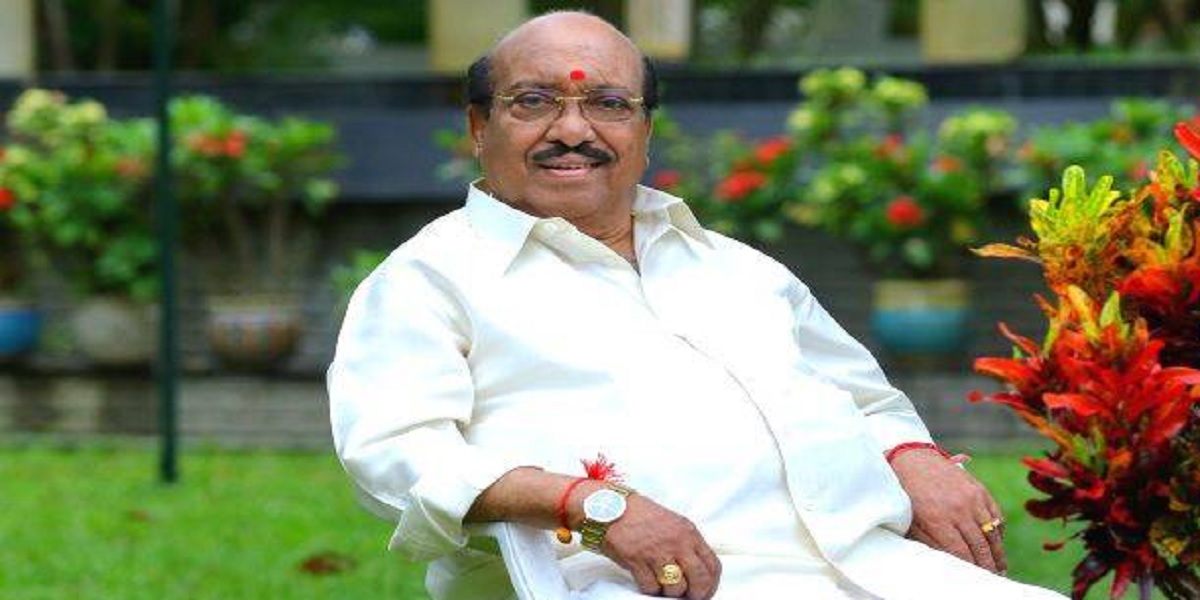
Vellappally Natesan.
Synopsis: An investigation by South First found multiple irregularities in the functioning of SNDP Yogam and the schools and colleges run under its management. The proceedings were initiated against SNDP Yogam, Kollam, represented by Vellappally Natesan and the then-president. However, allegations suggest that corruption in educational institutions run by the SNDP remains untouched.
Sree Narayana Dharma Paripalana (SNDP) Yogam General Secretary Vellappally Natesan is seen by a section of politicians and community members as one of the most powerful pillars of the Ezhava community in Kerala. But how many are aware that revenue recovery proceedings were once initiated against the SNDP Yogam headquarters itself?
An investigation by South First found multiple irregularities in the functioning of SNDP Yogam and the schools and colleges run under its management. During the first term of the Pinarayi Vijayan government, the Kollam district administration initiated revenue recovery action against SNDP Yogam in Kollam over arrears exceeding ₹3.60 crore.
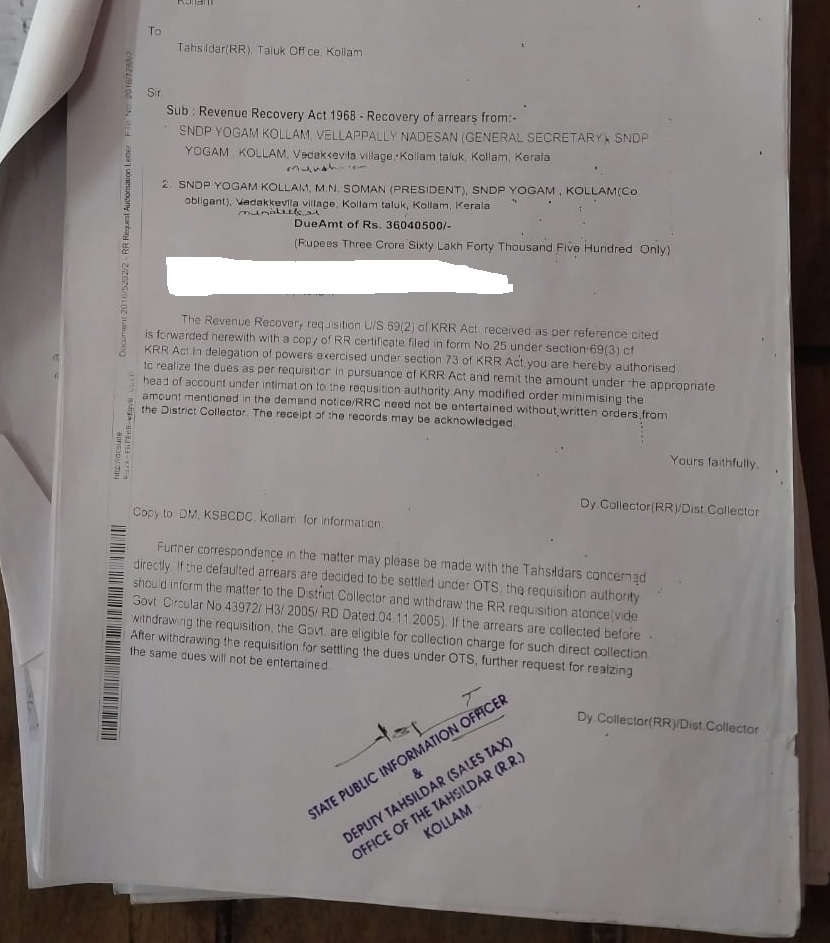
Copy of the revenue recovery documents.
According to official records, the Kollam District Collector authorised recovery under the Kerala Revenue Recovery Act, 1968, to realise ₹3,60,40,500. The action followed a requisition from the Kerala State Scheduled Castes Development Corporation (KSSCDC) issued on 28 January 2016.
The proceedings were initiated against SNDP Yogam, Kollam, represented by Natesan and the then-president. The Tahsildar (Revenue Recovery), Kollam Taluk, was authorised to proceed under Sections 69 and 73 of the Act, with the district administration stating that any reduction or modification of the amount would require written orders from the District Collector.
The order further noted that settlement under the One Time Settlement (OTS) scheme would be possible only if the requisitioning authority formally withdrew the revenue recovery request, in accordance with a 2005 government circular.
”How can a leader who could not protect the community’s own headquarters claim to safeguard the entire Ezhava community?” a community member asked.
To uncover irregularities in educational institutions, Kerala launched Operation Black Board, a state-wide vigilance initiative involving surprise inspections across offices under the General Education Department.
The drive exposed bribery in service approvals, fake student admissions, violations of disability reservation norms, manipulation of attendance records to retain teacher posts, and the use of retired officials as intermediaries. Unaccounted cash and digital payment trails pointed to an entrenched system of corruption.
SN College, Kollam.
However, allegations suggest that corruption in educational institutions run by the SNDP remains untouched.
Kadakampally Manoj, an activist and Ezhava community representative, told South First, “Lecturer appointments in colleges are being sold for crores. The rate is around one crore now, while clerical posts cost about ₹40 lakh.” He alleged, “No one speaks about these recruitments because everyone from political parties to other SNDP leaders gets a share.”
A job aspirant from Kollam, Veena (name changed), supported these claims, saying, “At Vellappally’s office in Kanichukulangara, job seekers are asked to write their name, phone number, the post they want, and how much they are ready to pay. Selection is not based on merit or community preference but on who offers more money.”
She added, “Despite having multiple degrees, I never received a call because I couldn’t afford to ‘buy’ a teacher’s post.”
Manoj further claimed, “These dealings leave no receipts or documents, making them hard to trace”, and alleged that “recruitments alone bring in crores every year.” Calling it a betrayal of the community, he said, “SNDP was built on the blood and sweat of our ancestors. It is not meant to be a business.”
He also claimed that top accounts in the SNDP and SN Trust are managed by a Christian and a Muslim officer, not community members, because Natesan trusts them more. Yet, he has no hesitation in speaking ill of his close aides’ community.
South First also found that the bank accounts of the Kanichukulangara SNDP branch have been frozen. An office-bearer, speaking on condition of anonymity, said the action followed the failure to properly file income tax returns and maintain mandatory records. He added that the branch was unable to complete even basic Darpan registration — now compulsory due to the absence of valid documents and records.
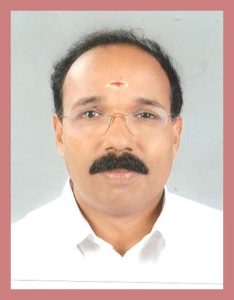
KK Mahesan.
For a long time, there was virtually no internal dissent within the SNDP Yogam against Natesan. That silence began to break only after the death of KK Mahesan.
Mahesan, a senior office-bearer of the SNDP Yogam, was found dead in June 2020. His death triggered serious controversy following the emergence of letters allegedly written by him and persistent claims raised by his family.
They alleged that Mahesan was subjected to sustained harassment, was driven to suicide, and was falsely implicated in a microfinance-related case.
Dissatisfied with the initial police probe, Mahesan’s family approached the courts. In late 2022, a court directed the police to register an FIR, naming Natesan as the prime accused, with Thushar Vellappally and KL Ashokan also listed as accused.
When South First contacted PS Rajeev, a retired tahsildar from Cherthala and a member of the Ezhava community, he explained the large-scale deception of hundreds of families in the region.
According to him, the microfinance operation linked to the SNDP leadership could turn out to be one of the largest financial scams in the country if investigated thoroughly, potentially even larger than the Vyapam scam.
Rajeev pointed out that Natesan himself had earlier admitted that more than ₹15,000 crore was distributed as loans to community members. He described the mechanism as deceptively structured. Under this model, loans worth nearly ₹1 crore to ₹15 crore were sanctioned in the name of each branch, which comprised thousands of Ezhava family units affiliated with the SNDP.
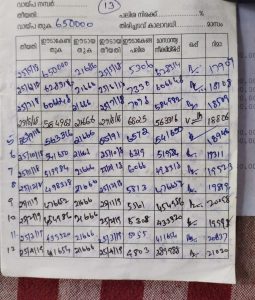
Copy of a page from a microfinance passbook
Legally, all members of such a unit were jointly liable for repayment, meaning that if one defaulted, the burden fell on everyone.
However, Rajeev alleged that the loan amounts were not directly disbursed to beneficiaries by banks. Instead, the funds were routed through Natesan, who allegedly redistributed the money.
While regulations permit a service charge of up to two percent, he claimed that significantly higher amounts were collected. In many cases, only about half of the sanctioned loan amount actually reached the families, yet they were forced to repay the full sum.
As defaults mounted, banks often opted for one-time settlements. While this helped banks recover some funds, the affected families were left with damaged credit scores and long-term debt traps.
Rajeev said that many victims remain unaware of the legal violations and alleged fraud involved in the process.
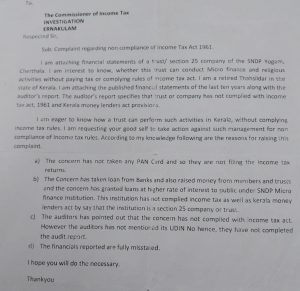
copy of IT complaint
Meanwhile, a complaint submitted to the Income Tax Investigation wing in Ernakulam in September 2019 alleged serious tax violations by a trust/Section 25 company linked to SNDP Yogam in Cherthala.
The complaint questioned how the entity was allowed to run microfinance and religious activities without complying with the Income Tax Act, 1961.
It alleged that the organisation had no PAN, had not filed income tax returns, raised funds from banks and members, and issued loans to the public at higher interest rates while bypassing the Kerala Money Lenders Act.
The submission also flagged incomplete audits lacking a valid UDIN and claimed that the financial statements were misstated.
Despite the detailed complaint and supporting documents, there has reportedly been no progress in the probe since it was filed.
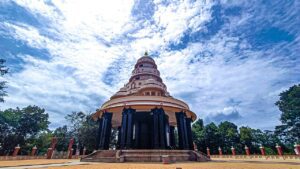
An image of Sivagiri Madom in Varkala (Wikimedia Commons)
Many wonder whether Natesan wields influence within Sivagiri Mutt as well. However, sources associated with the mutt say his role there has always been limited.
Speaking to South First, an office-bearer linked to Sivagiri Mutt said that nearly 26 sanyasins attached to the mutt have voting rights and that the institution largely functions independently of SNDP Yogam’s organisational politics.
“Most of the sanyasins are deeply engaged in spiritual pursuits and do not actively involve themselves in trust management or SNDP affairs,” the source said.
According to the office-bearer, Swami Saswathikananda was the only sanyasin who actively participated in organisational and administrative matters.
“After him, that space closed,” the source added. The current head of Sivagiri Mutt, Swami Satchidananda, is said to have drawn a clear line. “Vellappally Natesan is allowed to speak only for a few minutes during the inauguration of the Sivagiri pilgrimage. Beyond that, there is no role. The mutt has consciously maintained its distance,” the source said.
Yet, controversy has followed Sivagiri in the past.
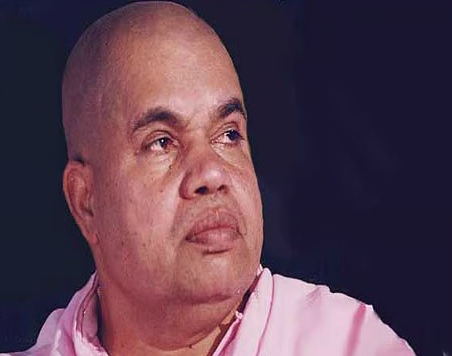
Swami Saswathikananda
The death of Swami Saswathikananda in 2002 continues to cast a long shadow. The sanyasin was found dead on 1 July 2002, at a bathing ghat in the Periyar River near Advaitashramam in Aluva. Police initially concluded that he had drowned after being swept away by strong currents.
Over the years, however, allegations of foul play repeatedly surfaced.
Hotelier Biju Ramesh later alleged that the death was linked to financial disputes and misuse of Sree Narayana Trust funds, naming Vellappally Natesan in an alleged murder conspiracy and even claiming insulin poisoning.
While Natesan publicly welcomed investigations, police had earlier closed the case as accidental. Fresh demands for reinvestigation were later raised, but in May 2025, the Kerala High Court ruled against reopening the probe.
Despite the legal closure, questions have not entirely faded. Sivagiri Mutt today stands as one of the few institutions where Natesan’s influence appears structurally restricted.
Yet, as the controversies surrounding the show, the story of Natesan is layered — many of those layers are still waiting to be fully opened.
(Edited by Muhammed Fazil.)


