


Published Jan 04, 2026 | 9:00 AM ⚊ Updated Jan 04, 2026 | 9:00 AM

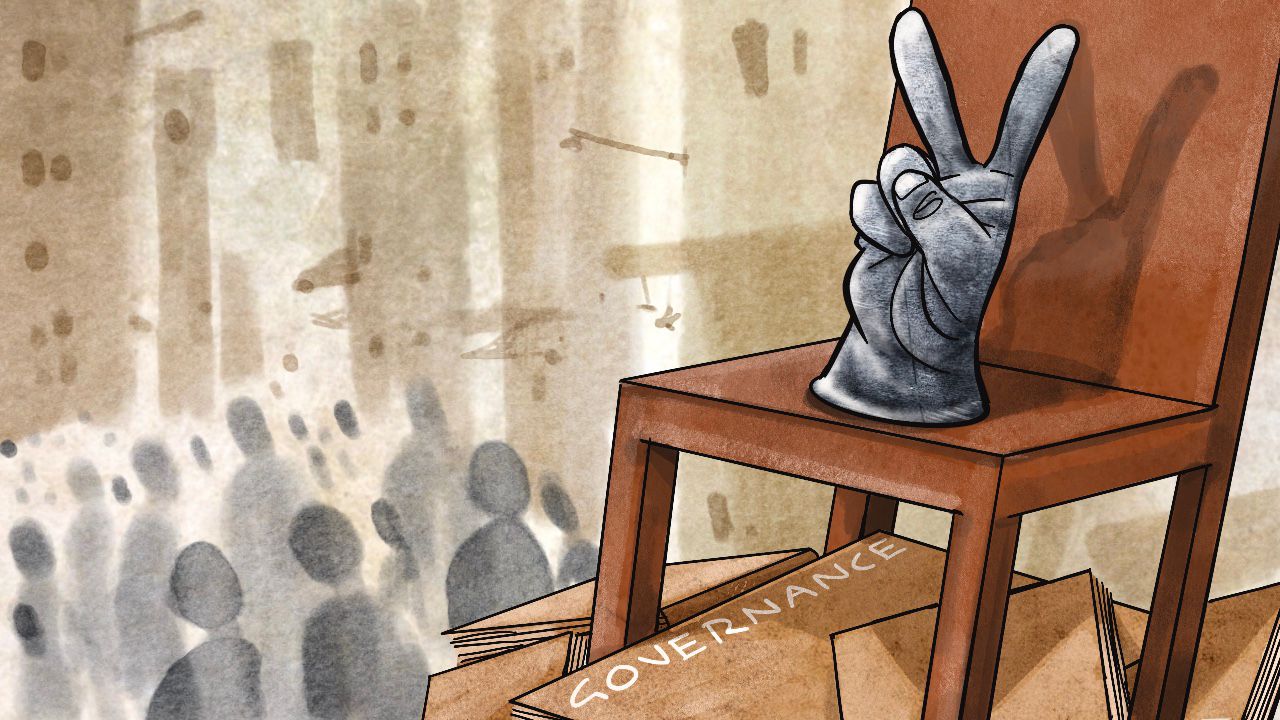
Instead of demonstrating administrative competence, the BJP has focused on confrontations that keep it in the headlines.
Synopsis: Following its historic victory in the Thiruvananthapuram Corporation, the BJP appears more focused on asserting political authority than on administration. From open conflicts with an MLA to controversies within corporation buildings, the party seems keen on turning governance into a spectacle.
The BJP’s maiden victory in Kerala’s capital city corporation has undoubtedly altered the State’s political landscape. For a party that remained on the margins for decades, capturing the Thiruvananthapuram Corporation is historic.
However, what has followed this breakthrough victory has been equally striking and troubling.
Instead of settling into governance with restraint, the BJP appears to be asserting power through daily confrontations and high-decibel politics.
From open conflicts with an MLA to controversies within corporation buildings, the party seems keen on turning governance itself into a spectacle.
One of the earliest flashpoints after the BJP’s rise in the capital has been the controversy involving councillor R Sreelekha and CPI(M) MLA VK Prasanth.
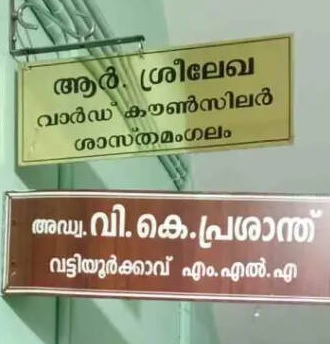
By sharing the images herself on social media, the councillor ensured the act gained political visibility.
The dispute, centred on office space in the Sasthamangalam corporation building, quickly escalated from an administrative disagreement into a political statement.
Sreelekha’s decision to install a new name board with her name placed directly above that of the sitting MLA was not merely an assertion of space; it was an assertion of power.
By sharing the images herself on social media, the councillor ensured that the act gained political visibility.
Her insistence that the MLA vacate the office before the end of his term, and her dismissal of legal complaints as attempts to intimidate her, further sharpened the confrontation.
The language used, mocking the forwarding of a complaint to the DGP as “scaring with a toy snake”, suggested defiance rather than dialogue.
Such episodes raise concerns about priorities.
Governance requires negotiation, coordination and institutional respect, particularly between elected representatives at different levels. Turning administrative issues into public standoffs may energise party cadres, but it also risks paralysing local governance and normalising confrontation as a governing style.
Prime Minister Narendra Modi’s congratulatory letter to newly elected Mayor VV Rajesh framed the Thiruvananthapuram victory as “epoch-making” and symbolic of Kerala’s readiness, especially its youth and women, for a “new dawn”.
He portrayed the BJP-led NDA as an alternative rooted in nationalism, corruption-free development and non-appeasement, while attacking the LDF and UDF as participants in a long-running “fixed match”.
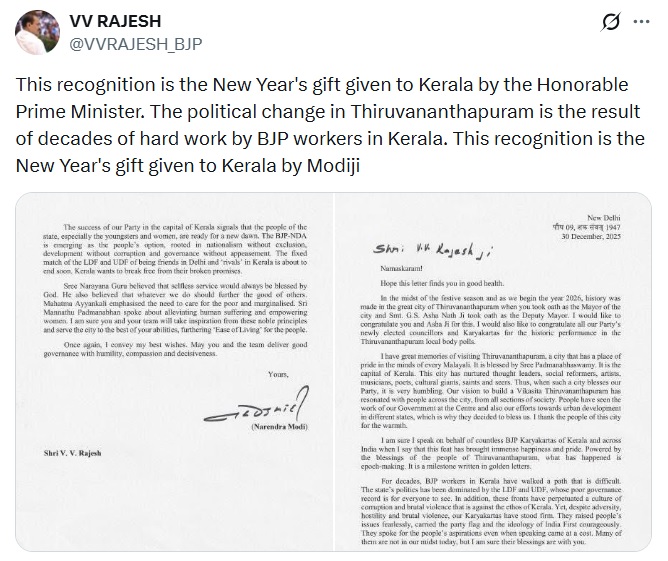
Prime Minister Narendra Modi’s congratulatory letter to newly elected Mayor V.V Rajesh
There is no denying the rhetorical power of this narrative. Winning 50 out of 101 seats, and later securing a simple majority with independent support, marks a genuine political shift in the capital.
Yet, the leap from electoral success to claims of a governance model requires more than symbolism and sharp political messaging.
Critics argue that instead of demonstrating administrative competence, the BJP has focused on confrontations that keep it in the headlines.
The party’s approach appears less about institutional reform and more about projecting dominance, locking horns not just with rival councillors but also with MLAs and MPs.
This aggressive posture may reinforce the BJP’s image as a challenger party, but governance demands a different temperament from opposition politics.
The confrontational pattern has not been limited to disputes with MLAs. Mayor VV Rajesh himself has been at the centre of a disagreement with State Transport Minister KB Ganesh Kumar over city bus services in Thiruvananthapuram. The issue pertains to urban transport management, a critical civic concern requiring coordination between the corporation and the State government.
Instead of quiet negotiations, the differences spilled into the public domain, with competing claims over responsibility, control and accountability. The episode highlighted a larger friction between the BJP-led corporation and the LDF-led State government, where even essential services such as public transport became arenas for political assertion.
Education Minister V Sivankutty also entered the fray, criticising the BJP for focusing on disputes over office space and administrative turf rather than addressing urgent civic challenges.
He questioned why the corporation leadership was pursuing conflicts over building utilisation when issues such as waste management, stray dog attacks and urban infrastructure demanded immediate attention.
Together, these episodes, ranging from office disputes to transport policy disagreements, have turned the corporation into a daily political battlefield involving councillors, MLAs and Ministers alike.
Critics argue that instead of establishing functional coordination, the BJP appears intent on projecting dominance across institutions.


