

Published Dec 16, 2025 | 11:55 AM ⚊ Updated Dec 16, 2025 | 7:47 PM

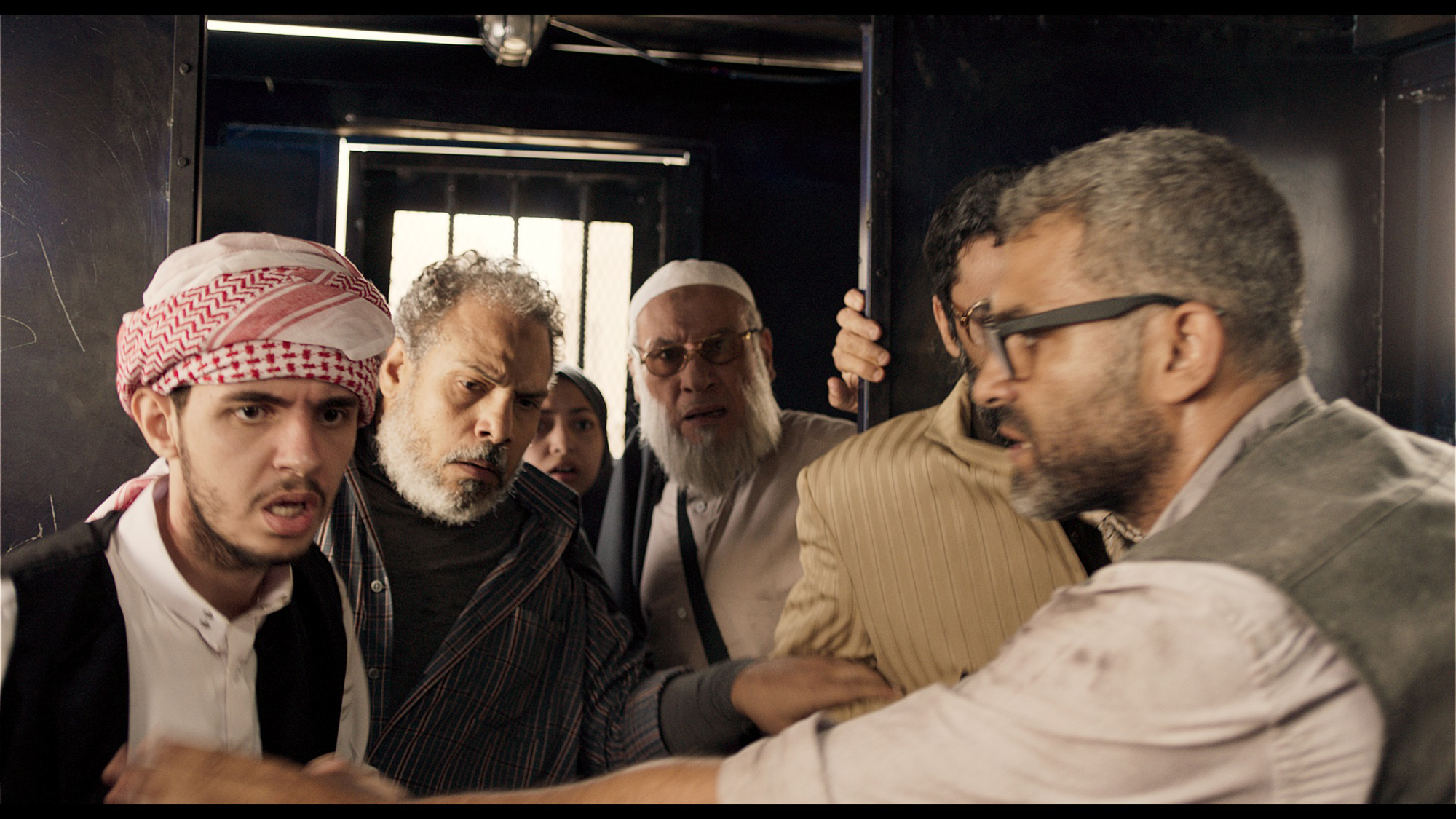
'Clash', shot entirely inside a police van, had won the Golden Crow Pheasant Award at the 21st IFFK. It is among the 19 movies that have been denied permission.
Synopsis: The minister instructed academy chairman Resul Pookutty and the secretary to ensure that the films are screened as per the original schedule without any disruption. Terming the Centre’s stance undemocratic and authoritarian, Cherian said such an approach undermines Kerala’s progressive cultural and artistic traditions.
A day after the screening of 19 films, including those based on Palestine, was delayed at the 30th International Film Festival of Kerala (IFFK), which started on 12 December and was inaugurated by State Culture Minister Saji Cherian, because the organisers were waiting for special censor clearance from the Union government, the minister directed the Kerala State Chalachitra Academy to screen all films despite the denied clearance.
The minister instructed academy chairman Resul Pookutty and the secretary to ensure that the films are screened as per the original schedule without any disruption. Terming the Centre’s stance undemocratic and authoritarian, Cherian said such an approach undermines Kerala’s progressive cultural and artistic traditions.
He reiterated the state government’s commitment to safeguarding artistic freedom and asserted that festival delegates have the right to watch the films, many of which are acclaimed and widely appreciated by audiences.
Resul Pookutty also took to his social media to announce that the screenings will be continued as per schedule.
In the video message captioned, “Unprecedented times, unprecedented decisions”, Pookutty said, “I am happy to let you know, dousing all the fire on controversy regarding the film screenings at IFFK, we are going ahead will all the screenings as scheduled as per the notification issued by government of Kerala. And Long Live Cinema.”
View this post on Instagram
Chief Minister Pinarayi Vijayan also released a stated on Instagram.
View this post on Instagram
The films affected included internationally famous movies and some that deal with politically sensitive topics, especially those about the Palestine conflict.
Among the notable films whose screenings were halted is Sergei Eisenstein’s centennial classic Battleship Potemkin, which dramatises the 1905 mutiny aboard the eponymous battleship and is widely considered one of cinema’s most influential works. Scheduled to be screened at Sree Theatre on Monday, 15 December, its show was cancelled, with festival organisers promising a revised schedule.
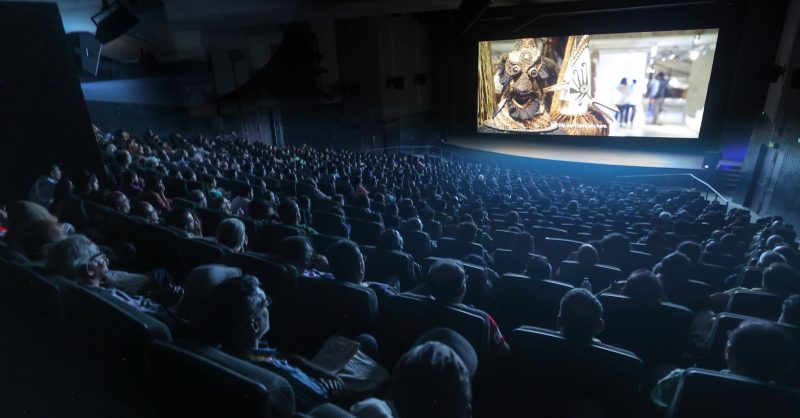
Several of these works are part of the Palestine package, four of which have been explicitly denied screening permission.
Similarly, the film All That’s Left of You, which traces the tragic story of a young Palestinian boy, Noor, during the First Intifada and is later recounted by his mother Hanan, was also denied screening permission. The film premiered at the 2025 Sundance Film Festival and was Jordan’s entry for Best International Feature Film at the 98th Academy Awards.

The 30th edition of the IFFK opened with ‘Palestine 36’.
The Spanish film, Beef, which follows Lati, a young woman from Barcelona who turns to freestyle rap to confront grief, prejudice, and gender barriers following her father’s death was another work awaiting official approval.
Other films caught in the impasse included: A Poet: Unconcealed Poetry, Bamako, Clash, Eagles of The Republic, Heart of The Wolf, Once Upon a Time in Gaza, Palestine 36, Red Rain, Riverstone, The Hour of the Furnaces, Tunnels: Sun In The Dark, Yes, Flames, Timbuktu, and Wajib.
Incidentally, Clash (Dir: Mohamed Diab), had won the Suvarna Chakoram (Golden Crow Pheasant) Award at the 21st IFFK.
Several of these works are part of the Palestine package, four of which have been explicitly denied screening permission.
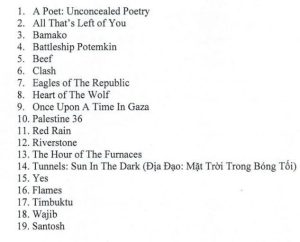
List of embargoed films.
Palestine 36 (Dir: Annemarie Jacir) was the opening movie of the ongoing edition of the IFFK. Jacir’s Wajib had won the Suvarna Chakoram at the IFFK, 2017.
Festival organisers explained that under normal circumstances, films without a censor certificate can be shown at festivals under a special exemption issued by the Union Ministry of Information and Broadcasting.
In this case, however, the necessary clearances were not granted leaving the IFFK unable to proceed with its scheduled screenings.
The denial has sparked sharp criticism from political and cultural figures. CPI(M) General Secretary MA Baby described the move as a deliberate attempt to sabotage the festival and expressed concern over what he termed the Centre’s growing intolerance toward artistic expression.
IIFK,celebrating its 30th edition,scuttled by GoI denying censorship exemption to 19 films,without any rhyme or reason.The list of films includes classic Battleship Potemkin and even films screened in IFFI Goa and Palestinian films.The only rationale seems to be disruption.#IIFK
— Thomas Isaac (@drthomasisaac) December 16, 2025
Veteran filmmaker Adoor Gopalakrishnan also criticised the ban, highlighting the arbitrary nature of denying films based on their titles or subject matter.
The disruption has not only affected festival-goers but also raised broader questions about artistic freedom and the ability to showcase politically or socially challenging cinema at international cultural events.
As the festival continues until 19 December, organisers are engaged in high-level discussions with the Information and Broadcasting Ministry in hopes of securing the pending exemptions and salvaging the screenings.
Thiruvananthapuram MP Shashi Tharoor took to X to call the move “most unfortunate” and an “unseemly controversy” that has arisen over the Centre’s denial of clearance to 19 films.
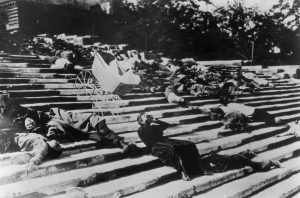
The famous Odessa Steps scene from Battleship Potemkin, a classic example of the Soviet montage theory of editing.
“The original list was much longer, but several clearances were obtained after my intervention with Minister @AshwiniVaishnaw at the request of @resulp, the chairman of the festival. The rest are awaiting clearance from the Ministry of External Affairs,” he said.
“The list of 19 films suggests an extraordinary degree of cinematic illiteracy on the part of the bureaucracy. To deny clearance to a classic like “Battleship Potemkin”, a 1928 film on the Russian Revolution which has been viewed by literally hundreds of millions around the world (and in India) over the last century, is laughable. Denying permission to some Palestinian films reflects bureaucratic over-cautiousness rather than the cultural breadth of vision that should be involved when it comes to world cinema.”
“I have urged both I&B Minister @AshwiniVaishnaw and EAM @DrSJaishankar to grant expeditious clearance and avoid any further embarrassment in the eyes of the cinema lovers of Kerala, and the world.” he concluded in his tweet.
(With inputs from Sreelakshmi Soman. Edited by Amit Vasudev)


