

Published Jul 20, 2026 | 12:35 PM ⚊ Updated Jul 20, 2026 | 1:58 PM

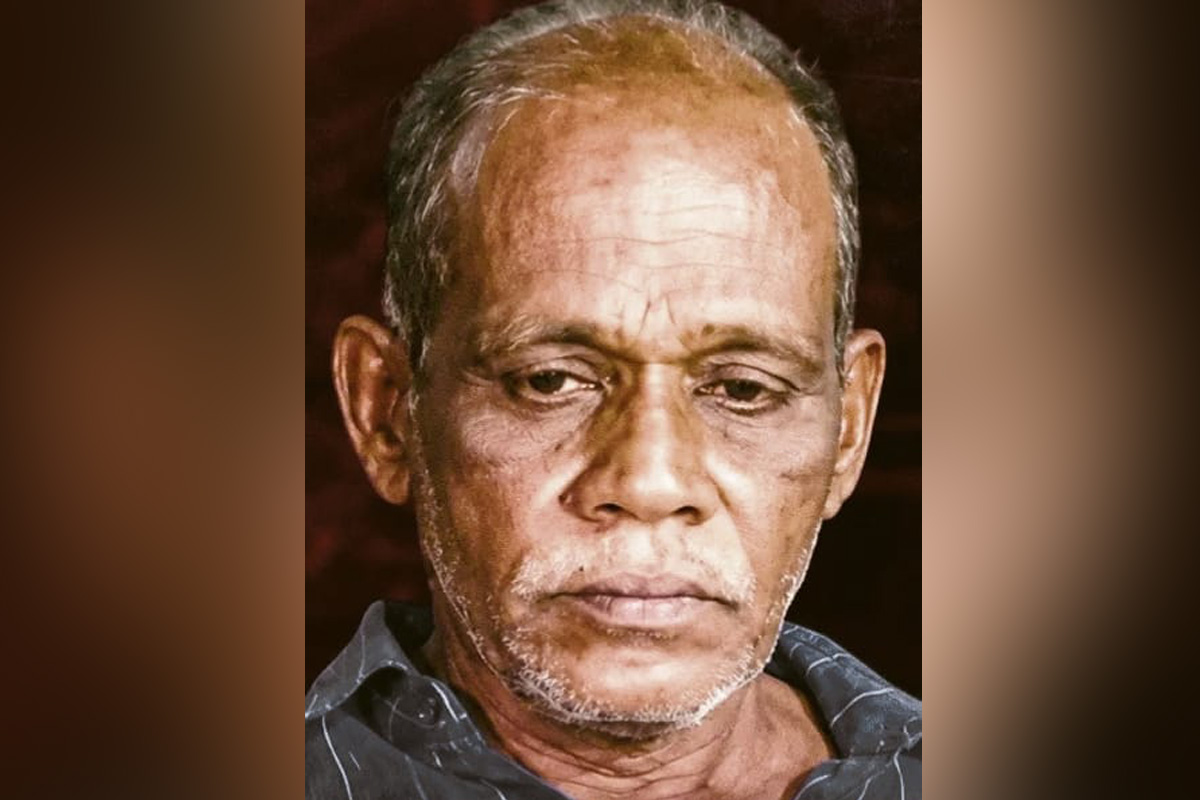
Judge Kenneth George sentenced 61-year-old Chenthamara to death a week after he was found guilty.

Synopsis: The Palakkad Additional District and Sessions Court sentenced Chenthamara to death for the January 2025 murders of Sudhakaran and his mother, Lakshmi, at Pothundy. The court described the case as the “rarest of the rare” and ruled that there was no prospect of his reform. The killings were committed while he was out on bail in the 2019 murder case of Sudhakaran’s wife, Sajitha.
The Palakkad Additional District and Sessions Court-IV on Monday, 20 July, sentenced Chenthamara, the sole accused in the sensational Pothundy-Nenmara double murder case, to death.
The court also imposed a fine of ₹20 lakh on him.
Judge Kenneth George pronounced the sentence in the case relating to the January 2025 murders of Sudhakaran and his mother, Lakshmi.
The Judge observed the case as the rarest of the rare and added that there was no hope that Chenthamara would show any kind of repentance.
Ahead of sentencing, the District Legal Services Authority (DLSA), on 16 July, submitted a mitigation report after counselling convict Chenthamara for two days.
Also Read: Of experiments with astral projection and massacres
The defence had then requested the court not to impose the death penalty, arguing that Chenthamara had been under severe mental stress and still had the potential for rehabilitation.
It also sought a lenient sentence, saying the possibility of reform could not be dismissed.
The prosecution, however, dismissed the mitigation report as lacking independent evaluation, contending that it merely repeated the convict’s own claims without supporting evidence.
It also disputed the report’s suggestion that inadequate treatment of his condition had contributed to the second murder, maintaining that there was no basis to conclude he suffered from a mental illness.
Prosecutors further opposed Chenthamara’s offer to donate his prison earnings to the children of victim Sudhakaran, arguing that he had never expressed genuine remorse for the killings.
Also Read: Chenthamara found guilty in sensational Nenmara double-murder case
The case dates back to 27 January 2025, when Chenthamara allegedly entered the victims’ house at Pothundy in Nenmara and hacked Sudhakaran (55) and his 75-year-old mother Lakshmi to death with a machete.
Chenthamara was arrested from the Pothundi forest area two days after he had committed the crime.
The fast-track trial began on 26 February 2026 and was completed within four months.
The killings sparked outrage across Kerala, with the victims’ family accusing the police of ignoring repeated complaints about threats from the accused despite the accused being out on bail.
According to the prosecution, the double murder was the culmination of a long-standing grudge.
Chenthamara had earlier murdered Sudhakaran’s wife, Sajitha, on 31 August 2019, believing, out of superstition, that her family was responsible for the breakdown of his marriage and had practised witchcraft against him.
He was arrested in that case but was later released on bail.
While on bail, he allegedly continued threatening Sudhakaran and his family before carrying out the 2025 double murder.
In October 2025, Chenthamara was convicted in the Sajitha murder case and sentenced to double life imprisonment, along with five years’ imprisonment for destruction of evidence.
While declining to award the death penalty, the court, in the Sajitha murder verdict, observed that he had a “persistent criminal tendency”, found no evidence of mental illness, and remarked that there was “no hope of repentance or reform”.
The court had also noted then that he allegedly committed the double murder while on bail in the Sajitha case.
Public Prosecutor MJ Vijakumar described the judgment as a well-reasoned verdict, saying the court had held an extensive discussion before concluding that the case fell under the “rarest of the rare” category.
“The court examined every aspect, including Chenthamara’s character and the possibility of his rehabilitation. It ultimately found that there was no scope for remorse. The judgment also noted that the murders were cold-blooded and carried out without any provocation,” Vijakumar said.
The court also observed that the convict has no financial means to pay the compensation ordered, meaning the state will have to bear the liability. In addition, it recommended that one of the daughters of the deceased couple be considered for a government job to help support the bereaved family.
The judgment further directed that if Chenthamara is ever released on parole, adequate security must be provided to all prosecution witnesses before his release to ensure their safety.
Deputy Superintendent of Police Muraleedharan, who headed the investigation, said the verdict reflected the painstaking probe carried out by the police.
“We conducted a thorough investigation and are satisfied with the outcome. But when you think about the irreparable loss suffered by Sudhakaran and Sajitha’s daughters, no verdict can truly compensate for what they have lost,” he said.
Sudhakaran’s daughters, Akhila and Athulya, welcomed the court’s decision to award the death penalty to Chenthamara, saying it had given them a sense of justice after an unimaginable tragedy.
They said the compensation ordered by the court would provide some financial relief as they rebuild their lives. At the same time, the sisters made it clear that they have no intention of returning to the house where they lost their father, mother and grandmother.
Despite the verdict, they admitted that fear continues to haunt them. They said that fear would remain until Chenthamara is finally hanged, adding that only then would they feel a sense of closure and security.
(Edited by Majnu Babu).



