


Published Jan 18, 2026 | 12:23 PM ⚊ Updated Jan 18, 2026 | 12:23 PM

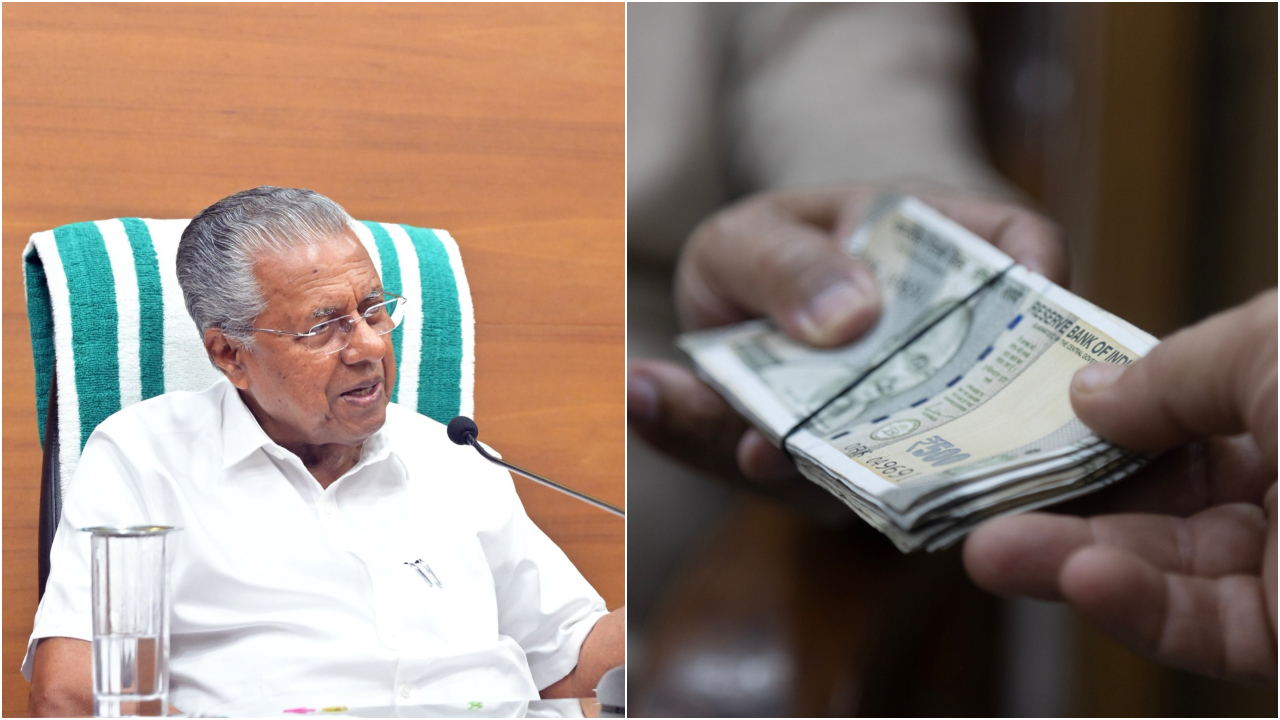
DA controversy has acquired acute political sensitivity because it strikes at the core of Left's political identity, labour relations and federal tensions. Credit: x.com/pinarayivijayan, iStock
Synopsis: Kerala’s DA dispute has escalated after the LDF government told the High Court that DA is not a “statutory right”, citing fiscal stress and Centre-imposed borrowing limits. Employee unions call the stance anti-labour, while critics accuse the Left of betraying workers. Meanwhile, Kerala Finance Minister Balagopal insists DA arrears will be cleared, stressing on state’s commitment despite financial constraints.
Kerala is witnessing a fresh storm over dearness allowance (DA), as the state government’s recent assertion that DA is not a statutory right has sent ripples through its workforce and political circles.
Once considered a routine cost-of-living adjustment, the allowance has now become a flashpoint, with government employees and teachers’ unions accusing the CPI(M)-led LDF of betraying its long-standing pro-labour image.
While the government cites fiscal constraints and policy prerogatives for delayed payments, critics argue that the stance undermines decades of established practice and threatens the economic security of tens of thousands of state employees at a time of rising inflation.
In a position that runs counter to its long-standing pro-employee image, LDF told the Kerala High Court that the payment of DA cannot be claimed as a matter of right by government employees, as it is neither a statutory nor a compulsory benefit.
The submission, made through a counter-affidavit filed by the Finance Department, has triggered fresh disquiet among government employees and their organisations, especially as several instalments of DA have remained unpaid for years.
The affidavit was filed in response to petitions moved by non-teaching staff of universities and by the Federation of University Employees’ Organisations, seeking revision and disbursement of DA arrears with effect from 1 January, 2021, as per the formula linked to the All India Consumer Price Index (AICPI).
According to the Finance Department, DA is a cost-of-living adjustment paid to government employees and pensioners to cushion the impact of inflation.
It is calculated as a percentage of the basic salary, based on changes in the AICPI, and is intended to protect purchasing power when prices rise.
In Kerala, DA revisions are traditionally implemented at periodic intervals in line with inflation trends.
However, employees point out that six instalments of DA have been pending since July 2023, while revisions due from January 2021 have not been fully implemented.
In its latest affidavit, filed by Under-Secretary (Finance) KA Navas, the state argued that the payment of pay and allowances, including DA, flows from policy decisions taken by the government depending on its financial resources.
It asserted that sanctioning such benefits is the prerogative of the government and not an enforceable entitlement. The government also told the court that it was not in a position to specify a time frame for clearing the arrears. It attributed this to fiscal constraints arising from what it described as restrictive borrowing limits imposed by the Centre.
Kerala had earlier challenged the Centre’s curbs on its borrowing powers before the Supreme Court, contending that restrictions on open market borrowing have severely affected its ability to mobilise funds.
The state informed the High Court that any decision on DA would depend on the outcome of the pending plea in the apex court and on future policy decisions based on fund availability.
The counter-affidavit further questioned the scope of judicial intervention in the matter, arguing that DA disbursement involves substantial financial liability and that courts could intervene only to a limited extent in policy decisions with major fiscal implications.
The state’s latest stand stands in contrast to earlier observations made by the High Court.
During previous hearings, when the government cited financial difficulties, the court had noted that DA payments are obligations of the government and that fiscal stress cannot by itself justify indefinite delays in meeting such commitments.
The High Court had also directed the state to place before it a concrete plan or timeline for discharging the obligation, a direction that appears to have prompted the detailed counter-affidavit now under scrutiny.
Kerala government has also pointed out that the Supreme Court has not mandated immediate or compulsory payment of DA, but has only held that there should not be undue delay in disbursement.
The DA controversy has acquired acute political sensitivity because it strikes at the core of Left’s political identity, labour relations and federal tensions. For employee unions and teachers’ organisations, the issue is not a narrow legal dispute but a question of economic survival and dignity.
DA, though not expressly codified as a statutory right, has long evolved into a settled service benefit designed to neutralise inflation.
Withholding it, they argue, effectively amounts to a real wage cut at a time of rising living costs, eroding the social contract between the State and its employees.
For the LDF government, this matter is even more fraught.
The government’s affidavit in court stating that DA is not a legal right sharply contradicts its long-cultivated image as a champion of workers’ rights and pro-labour governance.
This has opened it to criticism from within its own ideological constituency, with Left-leaning service organisations describing the stance as “anti-labour” and inconsistent with socialist policy traditions.
The Teachers and Service Organisations Struggle Committee has strongly criticised the state government’s stance in court, calling it an anti-labour position that goes against Left ideology. The committee demanded that the government immediately withdraw the affidavit and present its declared political position before the court. They said, DA is an integral part of salary revisions and has historically been granted to offset rising living costs, based on changes in the cost of living index.
Left governments in Kerala, it pointed out, have traditionally regulated and granted DA without allowing it to become a matter of dispute.
While acknowledging that the delay in DA payments is largely due to the Centre’s financial squeeze on Kerala, the committee insisted this cannot justify denying employees’ rights.
General Convener KP Gopakumar said, “Claiming in court that DA is not a right contradicts the Left’s own principles and undermines the long-standing pro-worker stance of the government.”
At the same time, Congress working committee member Ramesh Chennithala accused the state government of double standards over its stand on DA and arrears of government employees and teachers.
He said the affidavit filed by the government in the High Court, stating that DA was not an employee’s right, contradicted assurances given by the Finance Minister at a press conference.
If DA was not a right, why was the government publicly claiming commitment to employee welfare, he asked.
Chennithala termed the stance a betrayal of workers and dismissed claims that the affidavit was filed without the government’s knowledge.
At the same time, Finance Minister KN Balagopal on 16 January, firmly asserted the LDF’s unwavering commitment to providing DA and all due benefits to state government employees and pensioners, dismissing reports suggesting a negative approach as completely misleading.
Addressing the media, the minister underscored that even amid a severe economic crisis, the government remains focused on safeguarding employee benefits and will ensure the disbursement of all entitled amounts, including DA arrears, leaving no room for doubt on this front.
He emphasised that the provision of DA is an administrative decision of the government and forms part of its broader responsibility to protect the rights and welfare of employees and pensioners, urging them not to be anxious.
Highlighting Kerala’s distinct approach, Balagopal noted that the state has consistently paid salaries on time, even during the Covid period when the Centre had withheld DA, and has chosen, unlike many other states, to strengthen the civil services system, appointing around four lakh people over the past decade.
He pointed out that arrears arising from pay revision have been cleared in phases and that work is progressing to roll out the assured pension scheme.
Despite losing nearly ₹2 lakh crore in revenue over the past five years due to sharp cuts in central grants and borrowing limits—and receiving less than 25 percent of its revenue income as central share compared to 50–72 percent for many other states—the minister said— the government has managed to enhance welfare pensions and launch new initiatives such as the Women’s Security Scheme and Connect to Work for Youth.
Balagopal added that Kerala has approached the Supreme Court to assert its constitutional rights, expressing confidence that a favourable verdict would significantly ease the state’s financial stress.
Earlier, in March 2025, Kerala government announced a DA hike for its employees and dearness relief for state service pensioners and family pensioners, increasing the rate from 12 percent to 15 percent with effect from April 2025.
The enhanced DA and dearness relief are to be drawn along with salary and pension for April 2025, payable from May 2025 onwards. The order also raised DA rates for teaching staff under the UGC, AICTE and Medical Education schemes who had shifted to the revised scales from January 1, 2016, from 34 percent to 38 percent.
(Edited by Amit Vasudev)


