

Published Feb 17, 2026 | 5:59 PM ⚊ Updated Feb 17, 2026 | 5:59 PM

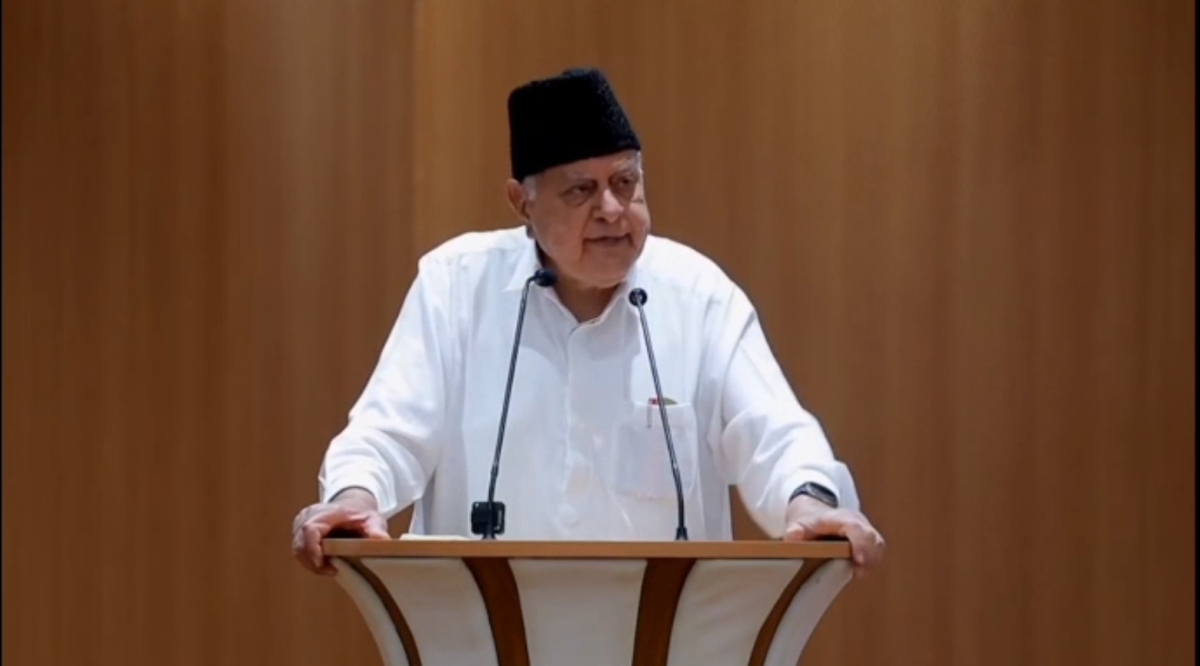
Former Jammu and Kashmir CM Farooq Abdullah. (Supplied)
Synopsis: Speaking at a session on ‘Secularism, Democracy and Consultative Government’ held as part of the ‘Vision 2031: An International Conference on Development and Democracy’, the National Conference president lauded Kerala for what he described as its steadfast commitment to religious harmony and inclusive growth.
At a seminar in Thiruvananthapuram on Tuesday, 17 February, former Jammu and Kashmir Chief Minister Farooq Abdullah drew a stark contrast between the political climates of northern and southern India, warning that the country is passing through a critical phase marked by centralisation of power, communal polarisation and democratic backsliding.
Speaking at a session on ‘Secularism, Democracy and Consultative Government’ held as part of the ‘Vision 2031: An International Conference on Development and Democracy’, the National Conference president lauded Kerala for what he described as its steadfast commitment to religious harmony and inclusive growth.
He said the southern state stood out for “respecting every religion and every human being” and for making significant strides in reducing poverty, despite what he termed limitations imposed by the Centre.
In contrast, Dr. Abdullah voiced anguish over what he characterised as growing insecurity and marginalisation in the North.
“We derive strength from you in the south,” he said emotionally, adding that people in the northern region aspire to the same freedom to “walk freely, talk freely and think freely.”
Raising concerns about federalism, the veteran leader alleged that the Union government has increasingly encroached upon the powers of states.
Referring to the abrogation of Article 370 and the reorganisation of Jammu and Kashmir into a Union Territory, he questioned whether the move had delivered on its promise of ending militancy, pointing to continuing incidents of violence.
He also noted that key decisions of the elected Assembly now require approval from the Lieutenant Governor, which he said has curtailed the autonomy once enjoyed by the state.
Dr. Abdullah defended the legacy of India’s first Prime Minister Jawaharlal Nehru, crediting him with building major national institutions and laying the foundation for scientific and technological advancement.
He also expressed disappointment over the stagnation of SAARC, recalling that Indira Gandhi had envisioned regional cooperation as a way for neighbouring countries to address shared challenges.
Touching on the reported U.S.-India trade deal, he said uncertainty surrounding its provisions has caused apprehension among farmers and economically weaker states.
Concluding on a cautionary note, Dr. Abdullah said attempts to erode diversity and democratic norms would ultimately fail.
“If diversity is destroyed, it will be the end of the country,” he said, asserting his belief that democratic values would endure despite present challenges.
(Edited by Sumavarsha, with inputs from Dileep V Kumar)


