

Published Jul 03, 2025 | 12:15 PM ⚊ Updated Jul 03, 2025 | 12:15 PM

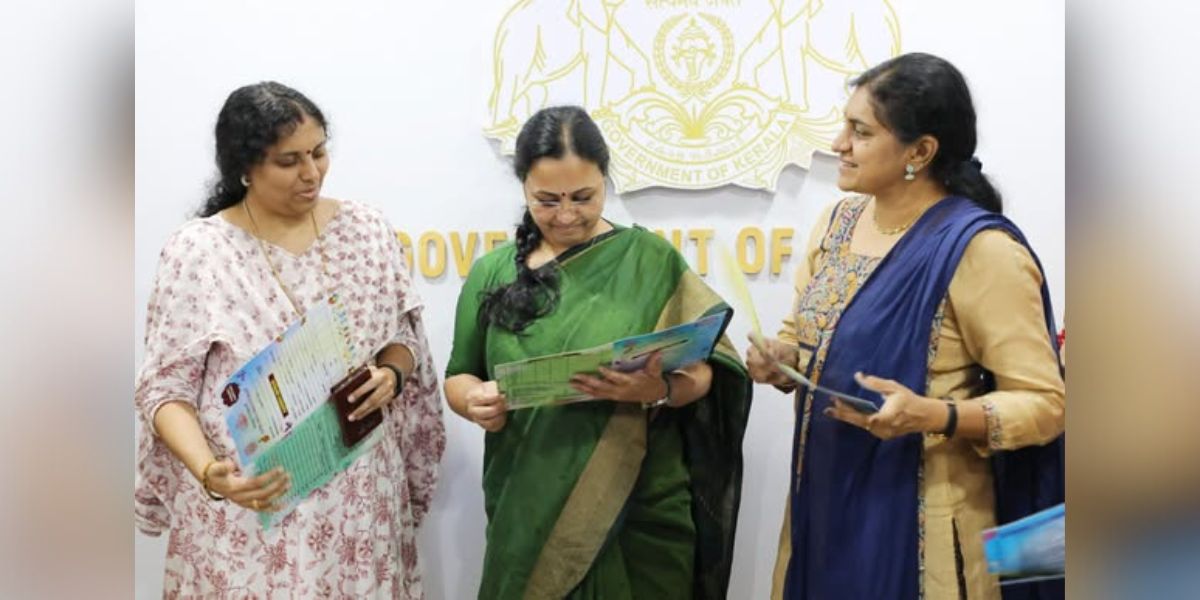
WCD and Health Minister Veena George having a look at the Kunjus Card.

Synopsis: The Kerala government set to revolutionise early childhood care by monitoring the physical, intellectual, and sensory development of children in Anganwadis using the ‘Kunjus Card’. Each card is tailored to capture the milestones appropriate to that particular age bracket.
For the first time in India, little ones in Anganwadis will have their growth journeys carefully tracked through a scientific, age-specific record.
Meet the ‘Kunjus Card’ — a pioneering initiative by the Kerala government set to revolutionise early childhood care by monitoring the physical, intellectual, and sensory development of children, ensuring no milestone is missed and every concern is detected early.
Recognising the critical nature of early childhood years, the state government has designed three separate cards for children in the age groups of three to four years, four to five years, and five to six years.
Each card is tailored to capture the milestones appropriate to that particular age bracket.
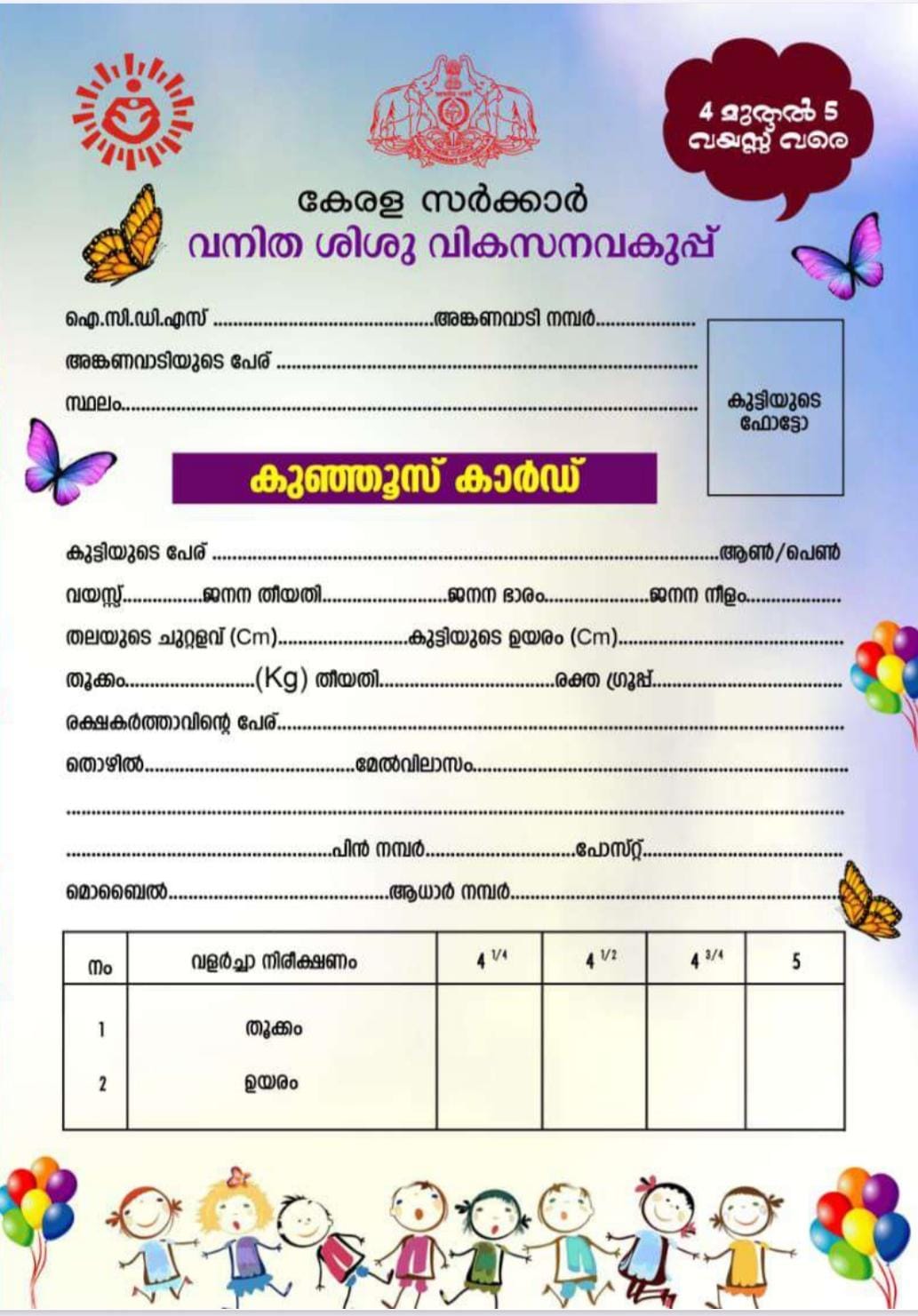
Kunjus Card for children of four to five years of age.
The Kunjus Card comprehensively records various dimensions of child development — physical motor development, cognitive development, language development, socio-emotional development and creative development. Beyond these, a child’s life skills development is also tracked, making the card a holistic tool for nurturing well-rounded growth.
The initiative was developed by a technical committee headed by the Women and Child Development Department (WCD) in Kerala, with expert inputs from paediatricians and specialists from the Centre for Disability Studies (CDC), Thiruvananthapuram.
It represents a collaborative intervention strategy, where the WCD and the Health Department work hand-in-hand to track, assess, and intervene whenever necessary.
At the same time, WCD stated that the “Kunjus Card”, prepared based on the new Early Childhood Care and Education, is a revised version of the ‘Amma Ariyaan Card’ to help parents review the age-appropriate growth and development of children attending Anganwadis.
Anganwadi is a centrally sponsored scheme implemented by States/UTs providing a package of six services, namely, supplementary nutrition; pre-school non-formal education; nutrition and health education; immunisation; health check-up; and referral services has been provided to all eligible beneficiaries, namely, children in the age group of 0-6 years, pregnant women and lactating mothers through the platform of Anganwadi Centres across the country.
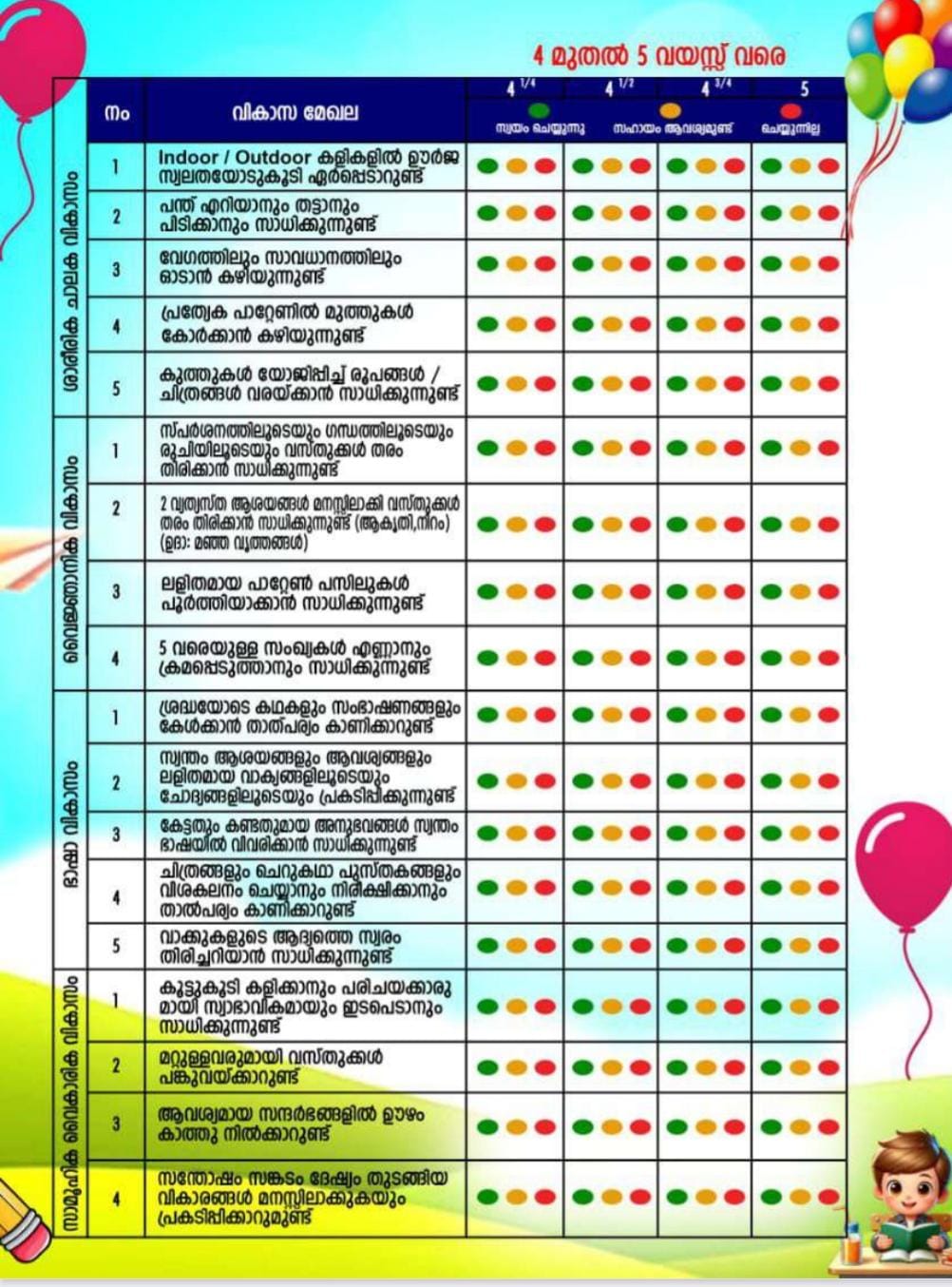
Bubble marking in the Kunjus card.
The cards would have a quarterly recording of a child’s height and weight, ensuring consistent physical growth monitoring. Additionally, personal information such as birth weight, birth length, head circumference, blood group, vaccination status, attendance percentage, any known allergies, and even the child’s Aadhaar number is documented.
A standout feature of the card is its three-colour bubble assessment system, enabling Anganwadi workers to quickly mark developmental status.
A green bubble indicates that the child can perform a particular activity independently, yellow suggests the child requires assistance, and red signifies the child is unable to perform the task.
“This simple yet effective colour coding helps our Anganwadi workers instantly identify children who might need special attention and further expert evaluation,” a senior official from the WCD Department told South First.
Acknowledging the importance of sensory development in early years, the Kunjus Card includes specific assessments for speech, hearing, vision, mobility, and attention span.
Officials said early detection of deficits in these areas is crucial for timely intervention and reducing the risk of long-term developmental challenges.
The card also pays special attention to dental health, which experts say is often overlooked in early childhood but is vital for overall growth and well-being.
Regular dental health assessments are also a part of the Anganwadi health records.
One of the most crucial aspects of the Kunjus Card is its integrated referral mechanism. If a child consistently receives red bubbles for specific activities or health indicators, the card prompts Anganwadi workers to initiate referral services.
The child can then be sent for expert evaluation at government hospitals or child development centres, ensuring no case of developmental delay goes unnoticed.
“This early identification system can make a world of difference. Detecting and addressing growth and developmental issues in these formative years helps prevent future complications and supports better learning outcomes,” said a paediatrician, who was part of the technical committee that designed the card.

Kunjus Card.
Child rights activists and public health experts have lauded the initiative, calling it a model that other states should replicate.
“By scientifically documenting and tracking children’s growth and sensory development at the Anganwadi level, Kerala is setting a new benchmark in public childcare. It bridges gaps between community-level workers and medical experts through structured, evidence-based monitoring,” said an official of the WCD.
Commenting on the initiative, WCD Minister Veena George, who also handles the health portfolio, had stated, “The Kunjus Card is scientifically structured to understand the physical and intellectual development of the child according to his/her age.”
“Since the child’s sensory development must be identified to detect growth abnormalities, speech, hearing, vision, movement, and attention have been added under the heading of health. Dental health has also been included since it plays a very important role in the overall development of children,” she added.
As the cards start reaching Anganwadis statewide, thousands of children spread across more than 33,000 Anganwadis will benefit from consistent health and development surveillance.
Officials say the data generated from these cards will also help the government refine its nutrition, education and health programmes for young children in the years to come.
It’s expected that the Kunjus Card may become a model health-centric approach to early childhood care — one where every child’s growth is closely watched, supported, and celebrated.
(Edited by Muhammed Fazil.)



