

Published Aug 28, 2026 | 9:00 AM ⚊ Updated Aug 28, 2026 | 9:23 AM


Different images of Sukumara Kurup available with police.

Synopsis: After decades of searching for Kerala’s most notorious fugitive, Sukumara Kurup, the Keralam Police appeared ready to close the case, believing he may have died years ago. But hours later, claims surfaced about a man in Brunei who allegedly resembles Kurup. Police have not confirmed his identity, making it only a fresh lead in the decades-old mystery.
Since 21 January 1984, people have reported seeing Sukumara Kurup in different avatars in different places. None of that information has led police to the longest-wanted fugitive, who has caught the imagination of even filmmakers.
Kurup, aka PK Gopalakrishna Kurup, has remained a blot on the Keralam police, evading arrest and staying aloof even since he murdered a film representative, KJ Chacko, on the night of 21 January 1984, in a bid to grab insurance money. The plan was to make the world believe that he had died, so that his family could claim the insurance amount.
For generations of police officers, Kurup’s case has been more than just another murder file.
No police batch has gone through training without studying the Sukumara Kurup case, long considered a classic example of a fugitive evading the law. More than four decades after a murder that shocked Keralam, Kurup’s whereabouts have remained one of the state’s most enduring criminal mysteries.
On Thursday, 27 August, it appeared that the mystery had finally been cracked.
Sources within the police department revealed an important development: the long-pending case has reportedly reached the conclusion that Kurup is probably no longer alive. The sources said investigators were preparing to submit a final report to the Crime Branch chief, potentially bringing the decades-long hunt to an end.
The working theory was that Kurup, who was known to have suffered from heart disease, may have died several years ago. But then came another twist.
Hours after reports emerged that the police were preparing to close the case, fresh claims surfaced about a man in Brunei who allegedly bore a striking resemblance to the fugitive.
At present, the Brunei development is a lead — not an identification.
The sudden turn has also complicated what appeared to be a near-final chapter in Keralam’s longest-running manhunt.
Related: Crime Branch revives hunt for Sukumara Kurup
The Crime Branch returned to the Kurup case around three months ago as part of an exercise to review long pending and undetected cases. Rather than launching a dramatic new manhunt, investigators went back to old leads, witness statements and information gathered over the years.

An image circulating on social media from Brunei
One of the most important pieces of information came from Ratnamma, an Alappuzha native who had worked as a nurse outside Keralam.
Ratnamma had earlier told investigators that she had seen a man she identified as Kurup at a hospital where she worked. The details surrounding the sighting became important because the man was reportedly undergoing treatment for a heart condition.
Investigators revisited her account while examining whether Kurup could realistically have remained alive for more than four decades after disappearing.
The logic was straightforward.
Kurup was around 40 when he was reportedly seen receiving treatment and was already suffering from heart disease. If that sighting was indeed of Kurup, investigators reasoned, the chances of him surviving for another four decades were considered extremely low.
The team also examined whether Kurup had maintained contact with people close to him.
Investigators found no continuing contact between him and his wife or other close family members. Taken together, these factors led the team towards a conclusion that had eluded police for years: Kurup may have died long ago.
The investigation team was therefore preparing to submit its findings to the Crime Branch chief. Any decision to formally close the investigation would be taken after the report was examined at the higher level.
It was not, therefore a declaration that Kurup’s death had been scientifically established. Rather, investigators had reached a working conclusion based on the available evidence and were moving towards closure after examining the remaining details.
And then the Brunei claim surfaced.
Reports on Thursday evening said a cyber expert had traced a Malayali elderly man in Brunei who allegedly reportedly Kurup. The man was reportedly being located and monitored and information about where he lived and his movements had emerged.
Some reports also claimed that the man was living under another name.
When South First contacted Shyam Sundar, IPS, who is currently heading the investigation, he said that no such claim has been verified and that no decision to close the case has been reached. Asked about the fresh reports circulating on various channels, accompanied by visuals from Brunei, he dismissed them as baseless.
Before Shyam Sundar, Ajeetha Beegum, IPS, was heading the case.
Another police officer who has closely followed the case for years also confirmed that the person seen in Brunei has not been verified as Kurup. While the police are aware of the claims and are closely monitoring the developments, there is no official confirmation so far that the fugitive has been traced.
A photograph, resemblance or digital trail alone cannot settle a mystery that has lasted 42 years.
If the Brunei lead proves credible, investigators would need far stronger evidence to establish the man’s identity. That could include documentary records, biometric verification and, where legally and practically possible, DNA comparison.
Until such evidence emerges, the man in Brunei remains just that—a man who reportedly resembles one of Keralam’s most wanted fugitives.
Yet the timing of the claim could hardly have been more dramatic.
Related: The case in detail: Kerala’s longest-wanted fugitive still elusive
To understand why every new Kurup sighting still attracts attention, one has to return to a cold January morning in 1984.
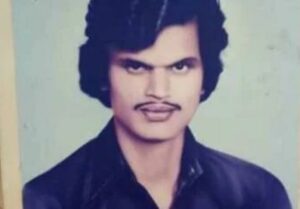
KJ Chacko. (Supplied)
On 22 January, a charred body was found inside a black Ambassador car near Mavelikkara. At first, the circumstances appeared to point towards a shocking possibility: the dead man was believed to be Kurup.
But the apparent death soon began to unravel.
The body was not Kurup’s.
It was identified as that of KJ Chacko, a native of Karuvatta and a film representative. Investigators concluded that Chacko had been lured into a deadly plan in which his death would be used to create the illusion that Kurup had died.
The alleged motive was insurance fraud.
Kurup had reportedly taken out an insurance policy worth ₹8 lakh and allegedly wanted to make it appear that he had died so that the insurance money could be claimed. Instead of merely disappearing, however, the plan involved the murder of an innocent man.
According to the prosecution case, Chacko was strangled. His body was then placed inside a car, which was set on fire to make investigators believe that Kurup had died in the vehicle.
The plan might have worked for a brief period. But the body was eventually identified as Chacko, exposing the deception. By then, Kurup had vanished.
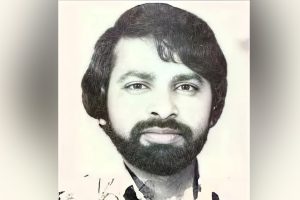
Sukumara Kurup
What followed became one of the most extraordinary manhunts in Keralam’s criminal history.
Police searched for him in different parts of India and pursued information about his possible movements outside the country. Over the years, reports of sightings surfaced repeatedly. Different names, different locations and different descriptions kept appearing.
Each apparent breakthrough seemed to lead nowhere. Kurup became more than an accused in an old murder case. His disappearance itself became the mystery.
For police officers, the case became a lesson in how an accused could exploit false identities, distance and the passage of time. For the public, every reported sighting brought back the same question: Where is Sukumara Kurup?
The question survived changing generations of investigators. It survived changes in technology. It survived the growth of forensic science, digital databases and international policing. And it survived the death of many of the people who had first investigated the case.
The fugitive, meanwhile, remained elusive.
Over the years, the case generated numerous theories about where Kurup might have gone and whether he was still alive. Some accounts placed him in different parts of India, while others suggested that he had crossed international borders.
None resulted in his confirmed capture. That is what made the latest development so significant.
The investigators are proceeding cautiously.
The police have not said that the Brunei man is Kurup. They have not authenticated the photographs or publicly established the identity of the person being discussed. Officials South First contacted indicated that the claims are being watched but have stopped short of verification.
That means the central mystery remains exactly where it has been for more than four decades.
Until official confirmation the name Kurup will continue to carry the same strange power it has held since 1984: a name attached to a murder, an insurance fraud, a vanished man and a question that has refused to die.
(Edited by Majnu Babu).



