

Published Aug 26, 2026 | 8:00 AM ⚊ Updated Aug 26, 2026 | 8:00 AM

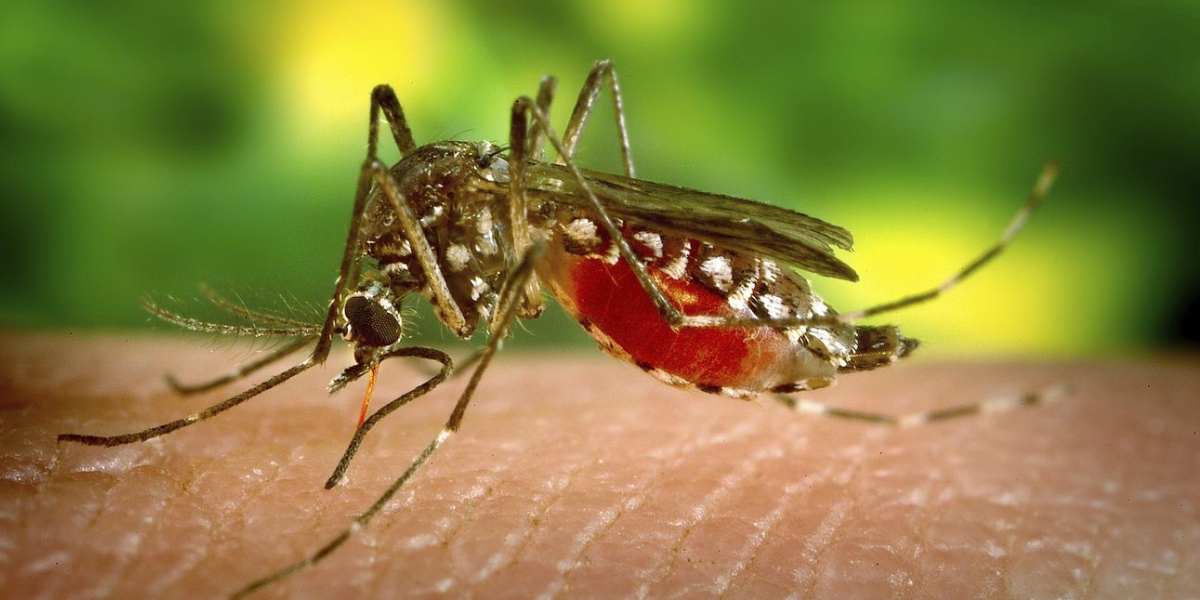
West Nile fever is a disease caused by the West Nile Virus (WNV), a flavivirus related to other mosquito-borne viruses such as Zika virus, dengue virus, Japanese encephalitis, and yellow fever virus. (Creative Commons)

Synopsis: A new serosurvey has found that nearly 30% of people tested in areas affected by West Nile outbreaks in Keralam had antibodies against the virus, suggesting that its spread may be far wider than reported cases indicate. The findings also point to the state’s climate, wetlands, migratory birds and abundant Culex mosquitoes as factors sustaining transmission. At the same time, the infection’s potential to cause serious and lasting neurological problems adds to the need for closer surveillance.
Nearly three in every 10 people tested in a new serosurvey in Keralam had antibodies against West Nile Virus (WNV). The finding suggested that the virus has reached a much wider section of the population than the number of reported West Nile fever cases.
The study by the ICMR-National Institute of Virology, Pune, found a WNV seroprevalence of 29.96 per cent following the outbreak reported in Kerala in 2024, with antibodies detected across age groups.
The finding is significant as the presence of antibodies indicates previous exposure to the virus, including among people who may not have developed noticeable symptoms.
Researchers from ICMR, the Directorate of Health Services-Kerala, State Health Systems Resource Centre-Kerala and the Academy of Scientific and Innovative Research, Ghaziabad, conducted the study, published in New Microbes and New Infections.
In Keralam, WNV was first reported in 2011 from Alappuzha.
An earlier ICMR study published in September 2025 identified Keralam’s tropical climate, water bodies, forest cover and bird habitats as favourable conditions for the breeding of Culex mosquitoes that spread WNV. Outbreaks in the state were recorded during the pre-monsoon period.
Also Read: Why Kerala is first to detect and report exotic viral strains
The focal sero-survey has found WNV neutralising antibodies in 29.96% of the blood samples collected.
The findings, published in January 2026, were based on a cross-sectional study conducted after a surge in WNV cases between January and May 2024. The team investigated all 27 reported cases during the period.
The investigators visited the households and locations linked to the 27 cases and collected 751 blood samples. These included samples from 19 confirmed patients, 49 family members and 683 neighbours.
Two patients had died, while two children were unwilling to provide samples. Four confirmed patients were away when the samples were collected.
Depending on the family size, the number of neighbouring households and the availability of volunteers, between 17 and 43 samples were collected from each patient cluster.
Of the 751 samples tested, 225 were positive for WNV-neutralising antibodies, giving a sero-positivity rate of 29.96%. The samples included 247 males, of whom 87 tested positive, and 504 females, of whom 138 tested positive.
The presence of WNV-neutralising antibodies means the blood contained antibodies capable of blocking the virus. Such antibodies indicate that the person had been exposed to WNV at some point. However, a positive antibody result does not establish that the person had an active infection at the time of sample collection.
The focal sero-survey was undertaken to detect evidence of WNV circulation among people living in areas affected by the reported cases. Such surveys can help establish whether a virus has circulated unnoticed, identify areas where transmission has occurred and detect infections that may not have produced noticeable symptoms.
The study reported that the 29.96% WNV sero-positivity recorded among participants was higher than rates reported in earlier sero-prevalence studies.
Also Read: Kerala plans long-term tracking of Zika and co-infections
Vector-borne WNV, which can cause neurological disease and death, is found across Africa, Europe, the Middle East, North America and West Asia.
A member of the Flaviviridae family, WNV belongs to the Japanese encephalitis antigenic complex. It was first isolated from a woman in Uganda’s West Nile district in 1937.
The virus circulates mainly between birds and mosquitoes, with Culex mosquitoes serving as the principal vectors. Birds act as reservoir hosts, while mosquitoes can also maintain the virus by transmitting it from adults to eggs.
Humans and animals, including horses, become infected through the bite of an infected mosquito.
According to the WHO, around 80% of infected people develop no symptoms. About 20% develop West Nile fever, marked by fever, headache, fatigue, body aches, nausea and vomiting, sometimes accompanied by a rash or swollen lymph nodes.
Severe disease affects about one in 150 infected people and can cause encephalitis, meningitis or paralysis, with symptoms including high fever, neck stiffness, confusion, seizures and muscle weakness.
There is currently no vaccine for WNV for human use.
Also Read: Curious case that forced the closure of a Kerala court complex
The study also highlighted that Keralam’s geography, climate, and mosquito population are creating conditions favourable for WNV circulation. Migratory birds, domestic ducks and mosquito vectors form an important part of the transmission cycle.
“Increasing urbanisation, population movement, climate change and changes in agricultural practices have altered local ecosystems,” the study pointed out.
“Keralam’s extensive coastal wetlands, where paddy cultivation and duck rearing take place alongside each other, add another dimension to the risk. The state also falls along the Central Asian Flyway, a major migratory route for birds. Its lakes, wetlands and bird sanctuaries provide wintering grounds for several migratory species.”
The state also has a large mosquito population, particularly of the Culex genus. Studies have found Culex mosquitoes accounting for more than 70% of mosquito catches in coastal areas of Keralam.
This ecological setting allows interaction between migratory birds, domestic ducks and mosquito vectors, creating opportunities for the circulation of pathogens such as WNV and avian influenza viruses. Earlier studies have reported WNV circulation among ducks and wild birds in southern India, although recent attempts to detect the virus in mosquitoes have not been successful.
An ICMR study published in 2025 pointed to climate change, vector abundance and the presence of a sizeable migratory bird population as factors contributing to conditions favourable for WNV outbreaks in Keralam.
The study also noted that the seasonality of outbreaks in the state indicates a possible association with migratory birds. Climate change could be influencing fluctuations in the number and diversity of migratory birds arriving in different parts of Keralam.
Earlier, in 2013, WNV lineage 1 activity was first detected in human samples from Alappuzha. Complete genome analysis showed that the virus belonged to genetic lineage 1, clade 1a. The lineage has also been reported from the Middle East, Africa, North America and Europe.
While lineage 1 activity has been established in Keralam, the ICMR researchers said the possible co-circulation of other WNV lineages needs to be investigated, particularly in relation to the seasonal arrival of migratory birds.
The viral strains responsible for recent outbreaks in Keralam, however, remain unidentified.
In 2026 (till 23 August), the state has reported 10 confirmed cases of West Nile. In 2023, 16 confirmed cases and three deaths were reported. Whereas in 2024, 38 confirmed cases and seven deaths were reported. The 2025 data is yet to be released.
Also Read: How to keep yourself safe from Zika virus?
WNV infections in Keralam have shown an unusual clinical and epidemiological pattern, with researchers reporting neurological complications, disproportionate mortality and long-term cognitive problems among survivors.
A 2025 study by researchers from the ICMR’s Vector Control Research Centre (VCRC) Field Station, Kottayam, and VCRC, Puducherry, noted that several children were affected during outbreaks in Keralam. Encephalitis, one of the major neurological manifestations of WNV infection, was reported in both adults and children.
The study also noted acute flaccid paralysis in adults, an unusual presentation of WNV infection in Keralam. A child who died of West Nile fever in Malappuram in 2019 had also developed acute flaccid paralysis.
A follow-up of patients one year after the initial outbreak found that a majority of those affected had developed cognitive dysfunction, pointing to neurological effects that persisted well beyond the acute infection.
The virus has also shown a pattern of re-emergence. WNV was first reported from Alappuzha district in 2011, but no subsequent reports came from the district until the disease reappeared in 2024. The researchers stressed the need for sustained vector control and regular monitoring of entomological and environmental factors associated with the disease’s re-emergence.
The study also noted that the actual extent of WNV infection in Keralam remains unknown. Encephalitis develops in about one in 150 infected people, while most infections either cause a febrile illness or remain asymptomatic. This means infections may have occurred on a much larger scale than the number of reported neurological cases suggests.
At the same time, a 2026 report by doctors from the Departments of General Medicine and Neurology at Baby Memorial Hospital, Kozhikode, further highlighted the seriousness of WNV encephalitis. The report described it as a neurotropic infection associated with significant morbidity and mortality.
The clinical picture can range from mild illness to profound encephalopathy, coma and death. With no specific targeted treatment available, supportive care remains the mainstay of management, while research into antiviral therapies and vaccines continues.
The findings have underlined the need for closer surveillance of WNV infections and their neurological consequences in Keralam.
(Edited by Majnu Babu).



