

Published Jan 16, 2026 | 9:00 AM ⚊ Updated Jan 16, 2026 | 9:00 AM

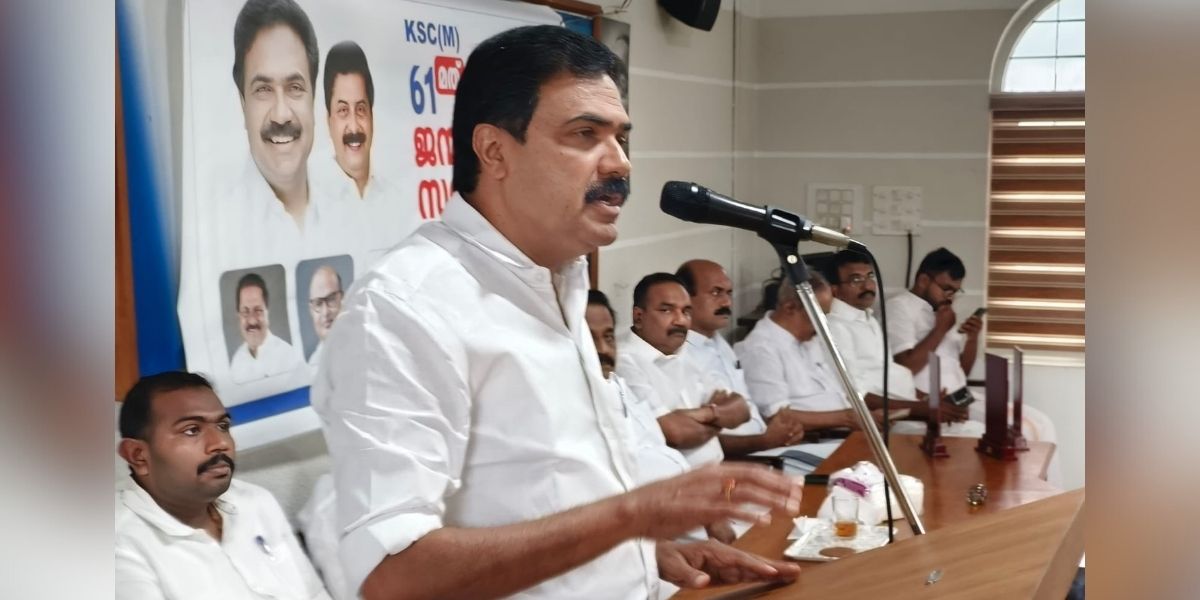
KC(M) President Jose K Mani.
Synopsis: As Kerala Congress (Mani) president Jose K Mani stayed away from the LDF’s recent satyagraha against the Union government, speculation has risen about the party’s departure from the Left Front to the UDF. Meanwhile, the Congress appears to be playing a calibrated waiting game, with leaders hinting at “surprises” ahead of the election.
As Kerala inches closer to another Assembly election, political activity in the state has taken on the quality of high theatre. Familiar players are reprising familiar roles, alliances are being weighed and re-weighed, and old certainties are once again under strain.
Only a few parties embody this churn as vividly as the Kerala Congress (M), a formation long described — only half in jest — as one that “splits as it grows and grows as it splits.”
Today, amid whispers, denials, and strategic silences, KC(M) finds itself once again at the centre of Kerala’s political suspense.
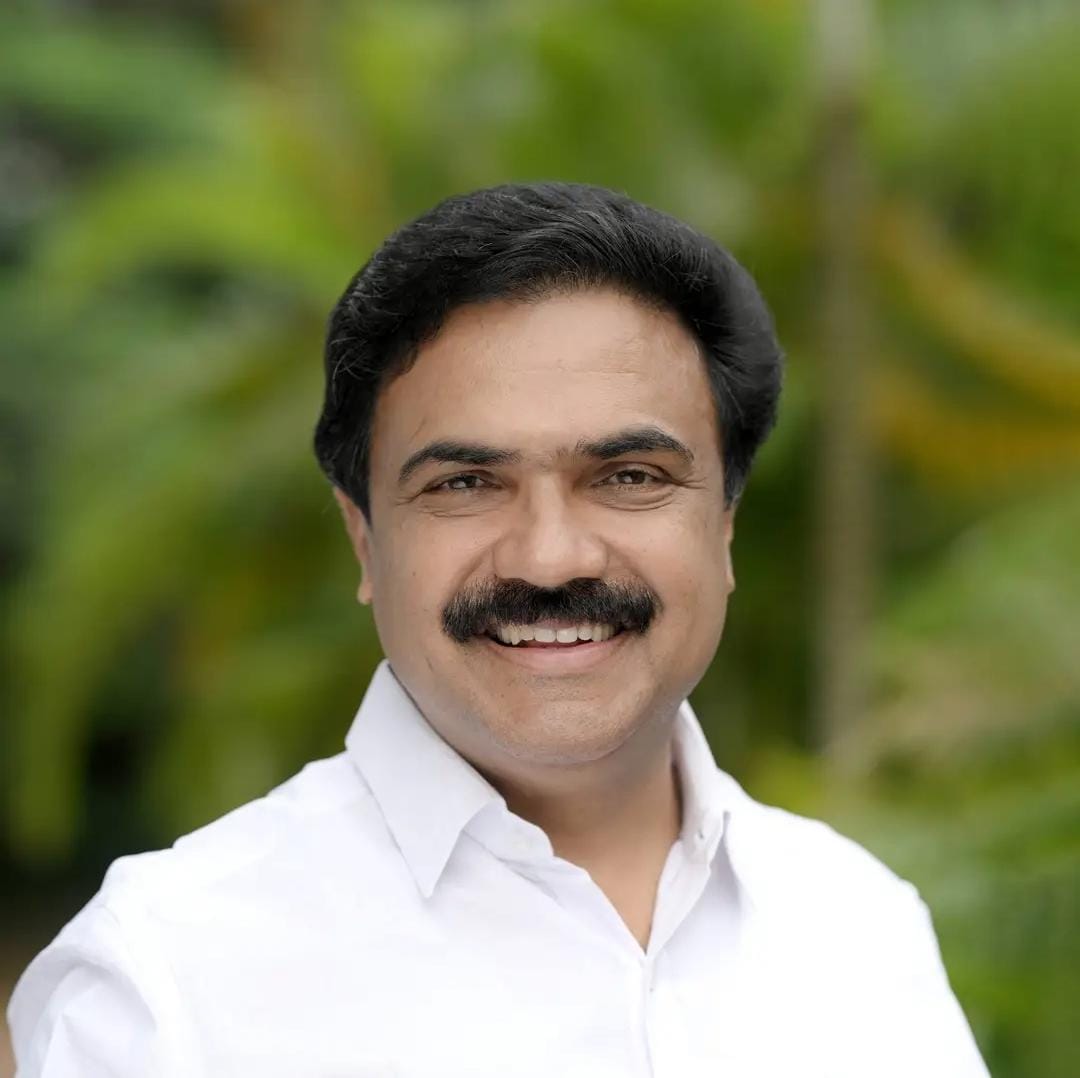
Jose K Mani.
The latest round of speculation was triggered not by a dramatic declaration, but by a conspicuous absence.
Jose K Mani, KC(M) president and a Rajya Sabha MP backed by the LDF, stayed away from the Front’s satyagraha against the Union government at Palayam Martyrs’ Square on 12 January.
His absence from two consecutive LDF meetings, coupled with his reluctance to captain the proposed LDF Central Region Jatha as part of election mobilisation, only added fuel to the fire.
In Kerala politics, such silences rarely go unnoticed.
The whispers quickly coalesced into a familiar narrative that Mani was testing the waters for a possible return to the UDF, the alliance his party had dramatically walked away from ahead of the 2021 elections.
Mani’s press conference on 14 January was clearly designed to draw a line under the speculation.
Opening with a biblical verse from Luke —“Do not weep for me, but weep for yourselves and for your children”— he struck a tone that was equal parts defiant and reassuring.
There was “absolutely no plan” to leave the LDF, he said, stressing that the party stood “rock solid” with the ruling front. Yet, even as he denied talks with the Congress and dismissed rumours of rifts within the party, two statements stood out for their layered implications.
“Wherever Kerala Congress (M) is, there is power. And today, KC(M) is with the LDF,” he said, repeating the line for emphasis.
He also acknowledged that differences of opinion do exist within the party, but insisted that all key decisions are taken unanimously and are binding on everyone.
In Kerala’s hyper-attuned political ecosystem, such remarks are rarely read at face value. It’s said that they suggested not closure, but an option being deliberately kept open.
If the LDF rumours had one source, the UDF’s own moves had another.
The Indian Union Muslim League (IUML), the UDF’s second-largest constituent, has made no secret of its desire to bring back parties that drifted away. KC(M) has been foremost among them.
Senior IUML leaders have publicly spoken of an electoral momentum favouring the UDF and of a growing queue of parties expressing interest in joining the front.
It was in this context that Mani C Kappan’s 14 January meeting with IUML National General Secretary PK Kunhalikutty in Malappuram assumed significance.
Kappan, the sitting MLA from Pala in the Kottayam district and a former ally of both Fronts, made his position unambiguous: he would not vacate the Pala seat under any circumstances, even if Mani were to return to the UDF.
The message was twofold. While Kappan did not oppose Mani’s return in principle, he drew a red line around Pala, the symbolic heart of Kerala Congress politics.
He also floated alternative scenarios, including seat swaps involving Elathur and Perambra, and even suggested that a winnable seat like Thiruvambady could be offered to Jose instead of Pala.
Kunhalikutty, careful not to overplay his hand, remained non-committal, describing the meeting as routine and dismissing talk of seat-sharing as premature.
Beneath the public denials lies a harsh political arithmetic.

Jose K Mani with Pinarayi Vijayan.
In 2021, KC(M) contested 12 Assembly seats as part of the LDF and won five, including ministerial representation through Roshy Augustine and a chief whip with Cabinet rank in N Jayaraj.
Yet the party’s subsequent performance — in the Lok Sabha polls, local body elections, and even the Pala Municipal Council — has been underwhelming.
For the first time in its history, the Kerala Congress found itself in Opposition in Pala Municipality. This record weakens Mani’s bargaining power.
If he were to return to the UDF, matching the 12-seat allocation he enjoyed in the LDF would be difficult.
The Congress and the Kerala Congress (Joseph) faction dominate the very districts — Kottayam, Pathanamthitta and Idukki — where the Mani faction would naturally seek seats.
Any accommodation would mean displacement, something neither party is eager to accept.
The Joseph faction, in particular, has been blunt in its opposition. Having endured its own splits and battles over the two-leaves symbol, it sees little incentive to surrender its seats to rehabilitate a rival faction.
The Congress, already juggling internal aspirants and factional equations, would face fresh turbulence if asked to make space.

The symbol of KC(M).
No seat captures the dilemma better than Pala.
Once the undisputed bastion of the Mani family, it is now firmly held by Kappan, who has won there under both fronts. His refusal to budge places Mani in an unenviable position.
Contesting from elsewhere — be it Thiruvambady or any other constituency — would risk eroding his carefully nurtured political image. Forcing Kappan out, meanwhile, could fracture the UDF’s local coherence and damage electoral prospects.
The complications extend to local governance.
The UDF currently runs the Pala Municipality with support from councillors who are openly opposed to Mani, mainly the Pulikkakandam family.
His return would unsettle this fragile arrangement and reopen old wounds.
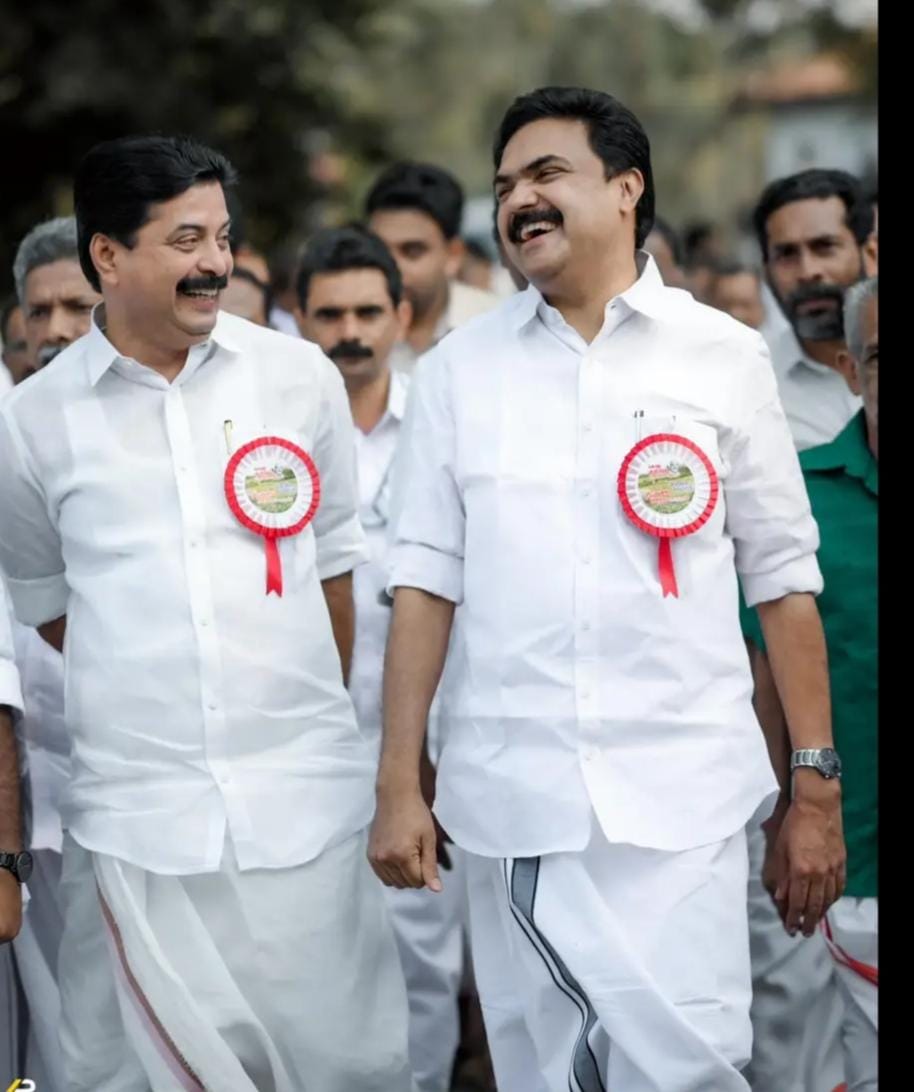
Jose K Mani and Roshy Augustine.
In contrast, remaining with the LDF appears far less disruptive for the KC(M).
The CPI(M) has shown greater flexibility in seat allocations during recent local body polls, and Mani’s position as a Rajya Sabha MP is secured through Left support.
A switch of fronts would require him to resign, inviting criticism of opportunism and reviving questions about the party’s ideological consistency.
Notably, the visual cues from within KC(M) tell their own story.
Roshy Augustine’s social media post from the LDF satyagraha, captioned “Thudarum” (to be continued), and a similar signal from Pramod Narayanan MLA, as the speculation of switching rages on, suggest that a significant section of the party remains committed to the Left.
Mani’s own insistence that the party will not split may reflect confidence — or an awareness of how easily history could repeat itself.
Meanwhile, the Congress appears to be playing a calibrated waiting game.
Leader of the Opposition in Kerala Assembly VD Satheesan deliberately refused to spell out names, asserting that Kerala Congress (M) continues to function within the LDF, while teasing “surprises” that could dramatically alter the political landscape could indeed happen in the coming days.
His cryptic remarks suggest that shifts from the LDF, NDA and even neutral quarters towards the UDF are imminent — but only time will reveal them.
In contrast, senior Congress leader and Congress Working Committee (CWC) member Ramesh Chennithala adopted a more grounded tone, insisting that any discussion with Mani is premature unless KC(M) formally exits the Left Front.
Emphasising recent UDF victories in grama panchayat, by-election and parliamentary polls, Chennithala expressed confidence in a decisive regime change, arguing that expanding the UDF is about consolidating secular, democratic forces rather than “capturing” parties already aligned elsewhere.
For now, Mani has slammed the door shut on talk of a front switch. Yet his own words about invitations from “many quarters” hint that the lock has not been thrown away.
In Kerala Congress politics, clarity often arrives late, and decisions are frequently shaped by the last available advantage.
Whether KC(M) stays put in the LDF or attempts another leap across the aisle, one thing is certain: the party’s moves will have consequences far beyond its size.
As the Assembly polls draw closer, the familiar paradox of the Kerala Congress is once again in play — and the next act, as ever, promises to be watched as much for what is said as for what is left unsaid.
(Edited by Muhammed Fazil.)


