

Published Feb 03, 2026 | 10:12 AM ⚊ Updated Feb 03, 2026 | 10:12 AM

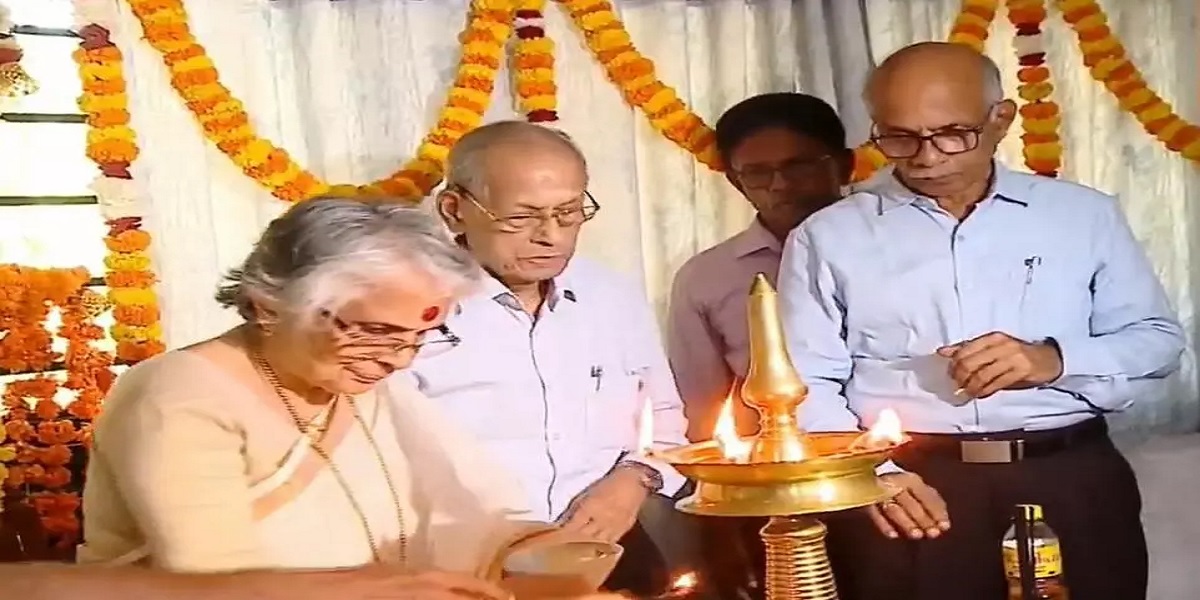
E Sreedharan's office inaugurated to kickstart Kerala high-speed rail despite Budget omission.
Kerala woke up on Monday, 2 February, to an unusual sight. A freshly opened office for a high-speed rail project that does not officially exist. It was inaugurated by the wife of a veteran technocrat who said he was verbally authorised by the Union Railway Minister to prepare a detailed project report (DPR).
In many places, this would be called jumping the gun. In Kerala, it passes as ambition with a political timetable.
E Sreedharan, the “Metro Man”, chose his hometown of Ponnani in Malappuram to unveil the office of a proposed ₹1 lakh-crore high-speed rail corridor running from south to north Kerala. His wife, Radha, lit the lamp.
One day after the Budget announced seven high-speed rail corridors across the country, excluding Kerala, an office materialises. A DPR is promised. A project is declared “under consideration”.
Sreedharan maintains that Railway Minister Ashwini Vaishnaw personally asked him to prepare the DPR.
This places the project in a rare infrastructure category. It is sanctioned by conversation, sustained by trust, and inaugurated by his family. There is no notification from the Railways. There is no line in the Budget.
Still, a lamp has been lit.
Predictably, the state government and non-BJP parties were unimpressed. Their objection was not to Sreedharan’s engineering record. It was to the theatre around it. Mega projects, they argued, are announced by governments, not individuals.
Especially not individuals who once contested elections on a BJP ticket. The irony was hard to miss.
For years, the LDF’s SilverLine project was criticised as impractical, unaffordable, and socially disruptive. Now, a faster and even costlier alternative is floated with remarkable ease and very little paperwork.
The proposal promises trains running at 200 kmph. Travel time from Thiruvananthapuram to Kochi would drop to one hour and 20 minutes; 70 percent of the line would be elevated; and 20 percent would be underground.
It said land acquisition will be “minimal”. Further, the list of stations seems less like a transport plan and more like an election route map; Thiruvananthapuram, Kollam, Kottayam, Ernakulam, Thrissur, Kozhikode and Kannur.
What makes the episode more curious is the Union government’s shifting narrative. When Kerala accused it of neglect, the Railway Minister replied that allocations had increased tenfold compared to the UPA days. He added that Kerala would indeed get a high-speed railway if the state cooperated in land acquisition.
This is where Sreedharan’s office becomes useful. It acts as a bridge between accusation and assurance. The Union government can suggest progress without committing anything officially. The BJP can present a Kerala-specific vision without explaining the Budget omission.
The project also positions itself neatly as an alternative to SilverLine; same dream, different branding.
However, the state government calls the project a bluff, while the Union government calls it cooperation. Sreedharan calls it urgency, and the public sees another rail project that exists vividly in speeches and faintly in files.
What was inaugurated in Ponnani may not just be an office. It may be a political platform.
The train itself is still waiting for a signal.
(Edited by Muhammed Fazil.)


