

Published Aug 08, 2024 | 4:13 PM ⚊ Updated Aug 08, 2024 | 4:13 PM

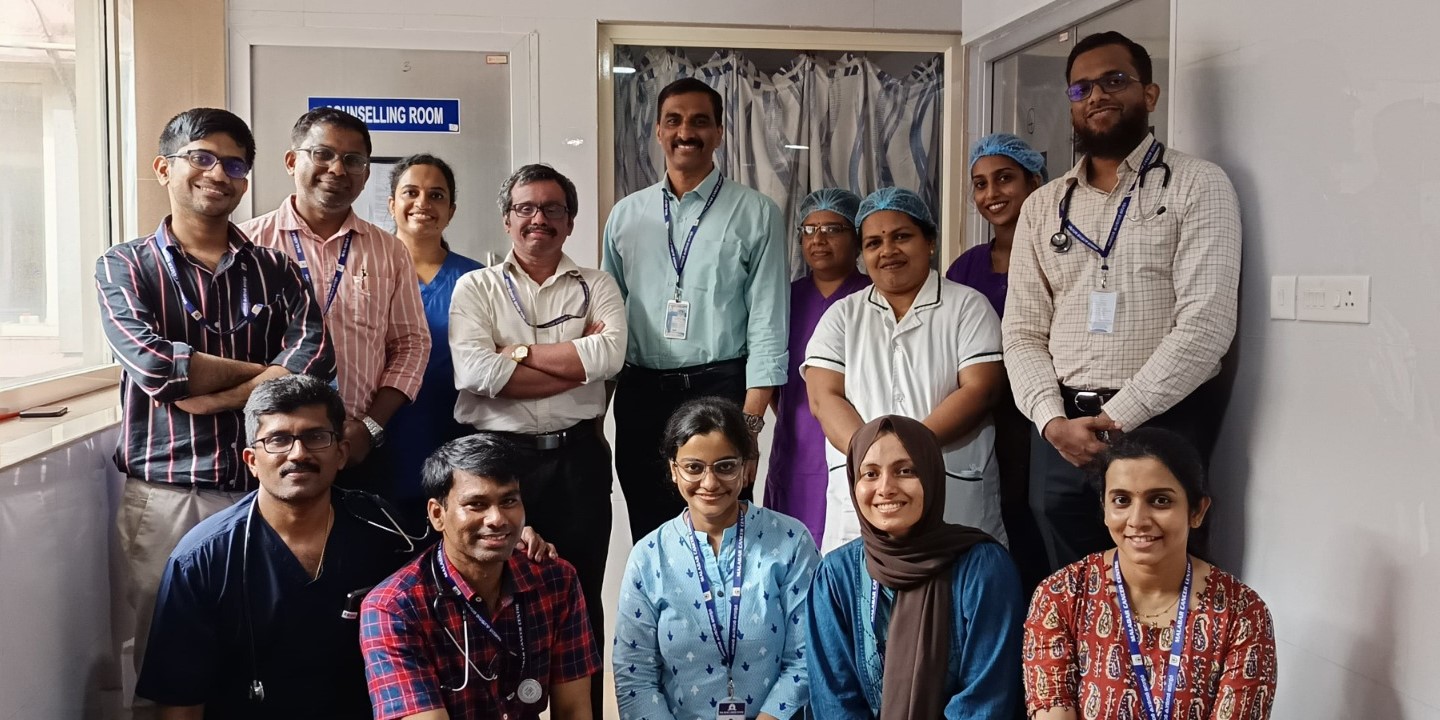
The team of doctors that performed the CAR-T cell therapy in MCC. (Supplied)
The Post Graduate Institute of Oncological Sciences and Research of the Malabar Cancer Centre (MCC) in Kerala’s Thalassery completed CAR-T cell therapy, a cutting-edge cancer treatment.
A 19-year-old patient with acute lymphoblastic leukaemia underwent this treatment at the MCC.
Following Tata Memorial Hospital in Mumbai, this achievement makes MCC, only the second government institution to offer this advanced treatment.
The CAR-T cells were produced by ImmunoACT, the only approved CAR-T cell company in India.
The treatment, which normally costs around ₹50 lakh, was made available for ₹30 lakh through the “Patient Assistance Programme”. Various government schemes also supported the treatment.
CAR-T cell therapy is an immunotherapy that uses genetically modified T cells to fight cancer. T cells are a type of white blood cell that plays a crucial role in the immune system.
In CAR-T cell therapy, T cells are collected from the patient, genetically modified in a laboratory, and reinfused into the patient to target cancer cells.
This therapy is known for its ability to genetically re-program the immune system of patients to combat cancer.
It is designed to treat various diseases, including acute lymphocytic leukaemia, multiple myeloma, glioblastoma, and hepatocellular carcinoma.
CAR-T cell therapy is a rapidly evolving field, with ongoing research.
State Health Minister Veena George congratulated the team, including the director of MCC for the achievement.
Cancer remains a significant public health challenge in India, with approximately 16 lakh new diagnoses reported in 2023.
Despite the widespread prevalence of cancer across the country, access to innovative treatments remains limited.
One such treatment, CAR-T cell therapy, is known for its efficacy but is hindered by severe side effects and high costs, making it inaccessible for many patients.
In 2015, Dr Alka Dwivedi, then a graduate student at IIT Bombay, and her team addressed these challenges by modifying CAR-T cells to carry more human-like antibodies.
This groundbreaking effort resulted in the development of NexCAR19, an indigenous CAR-T cell therapy tailored for blood cancers like leukaemia and lymphoma.
Notably, NexCAR19 is not only effective but also available at a more reasonable cost, addressing the unique needs of patients within India’s healthcare system.
The administration of NexCAR19 involves a single intravenous infusion following chemotherapy. Collaboratively developed by ImmunoACT, a company incubated at the Indian Institute of Technology Bombay (IIT-B), and Tata Memorial Hospital, the therapy has already been successfully administered to 15 patients in India.
In a historic move, Kokilaben Dhirubhai Ambani Hospital in Mumbai became the first to offer CAR-T cell therapy to cancer patients in January of this year.
Overcoming the challenge of developing this technology cost-effectively, a significant milestone was achieved on 4 June, 2021.
On this day, the first CAR-T cell therapy was conducted at the bone marrow transplant unit at ACTREC, Tata Memorial Centre in Mumbai, using CAR-T cells designed and manufactured at the Bioscience and Bioengineering (BSBE) department of IIT Bombay.
In October 2023, NexCAR19 became India’s inaugural CAR-T cell therapy to receive approval from the CDSCO.
This endorsement followed extensive trials involving 64 individuals diagnosed with advanced lymphoma or leukaemia.
The findings, disclosed at the American Society of Hematology meeting in December 2023, revealed that 67 percent of participants (36 out of 53) across the two trials experienced a significant reduction in their cancer’s extent (objective response).
Additionally, approximately half of these patients achieved a complete response, where the cancer disappeared entirely.
(Edited by Muhammed Fazil)
(South First is now on WhatsApp and Telegram)



