


Published Dec 23, 2025 | 12:59 PM ⚊ Updated Jan 26, 2026 | 8:54 AM

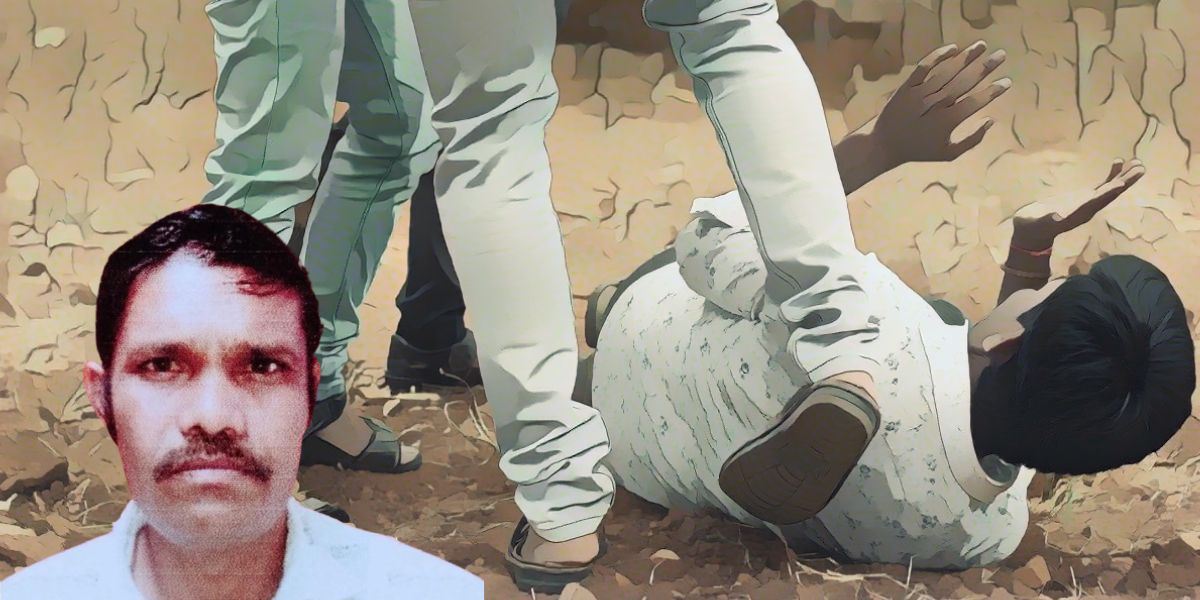
Ram Narayan Baghel, a migrant worker from Chhattisgarh, was allegedly subjected to a mob trial and execution.
Synopsis: A few days ago, a migrant worker from Chhattisgarh was allegedly subjected to a mob trial and execution in Walayar. Political parties spar over whether the incident should be classified merely as mob lynching or as a more serious hate crime driven by racial animosity. However, the larger and more troubling picture is hard to ignore, the state’s repeated failure to decisively confront and prevent mob violence.
Kerala, long celebrated for its progressive credentials, has once again been jolted by the brutal reality of mob justice. Six years after the lynching of Madhu, a young tribal man from Attapady whose killing in Palakkad in 2018 had momentarily shaken the state’s collective conscience, another life has been lost to vigilante violence in the same district.
On 17 December, Ram Narayan Baghel, a migrant worker from Chhattisgarh, was allegedly subjected to a mob trial and execution in Walayar, also in the Palakkad district, on suspicion of theft. Disturbingly, the assault was also laced with racial profiling, with the mob reportedly questioning whether he was “from Bangladesh”, exposing a dangerous mix of prejudice, xenophobia and brute violence that appears to be taking root even in Kerala’s so-called enlightened social fabric.
As political parties spar over whether the incident should be classified merely as mob lynching or as a more serious hate crime driven by racial animosity, the larger and more troubling picture is hard to ignore: The state’s repeated failure to decisively confront and prevent mob violence.
Despite clear directives from the Supreme Court in the Tehseen S Poonawalla vs Union of India (2018) judgment and persistent calls for a specific anti-lynching law, Kerala has continued to drag its feet, allowing impunity and societal silence to fill the vacuum.
The killing of Ram Narayan Baghel raises an uncomfortable question: Have hate politics and racial suspicion begun to corrode the moral foundations of a society that prides itself on progressivism?
Despite repeated assurances on the ground, the state government has dragged its feet in addressing the growing threat of mob violence and lynching.
In its landmark 2018 judgement, the Supreme Court came down heavily on mob justice, categorically stating that no individual or group has the right to take the law into their own hands.
The then-Chief Justice Dipak Misra underlined that every citizen must “remain obeisant to the command of law,” warning that unchecked lynching could become “the new normal,” as it once did in the United States, infamously dubbed the “United States of Lyncherdom.”
The apex court did not stop at condemnation.
It issued a series of binding directions to States: appointment of district-level nodal officers not below the rank of Superintendent of Police, identification of lynching-prone districts within three weeks, automatic FIRs under Section 153A of the IPC against those spreading incendiary content, and the formulation of a victim compensation scheme under Section 357A of the CrPC within a month.
Yet, years later, implementation on the ground remains patchy.
This is despite the Kerala Law Reforms Commission going a step further by drafting the Kerala Protection from Lynching Bill, 2020. The proposed law explicitly acknowledged that existing provisions were “totally insufficient” to deal with the contemporary nature of lynching.
It sought to create a comprehensive legal framework by defining lynching as a distinct offence, prescribing stringent and graded punishments, fixing responsibility on public officials for dereliction of duty, and providing for designated special courts to ensure speedy trials.
The draft Bill also placed strong emphasis on victim-centric measures, including rehabilitation, interim relief, and compensation to the families of victims, while proposing safeguards to curb hate speech, incitement and the spread of provocative content, particularly on social media.
The Bill’s statement of objects clearly acknowledged lynching as an assault on constitutional guarantees of life, liberty and equality. However, the draft was never translated into law.
On 22 December, Revenue Minister K Rajan said the Chief Secretary had been tasked with taking Supreme Court guidelines seriously. For now, however, Kerala’s approach to lynching remains heavy on intent but light on action — leaving critical safeguards trapped on paper.
Kerala was gripped by outrage and grief following the alleged mob lynching of Ram Narayan Baghel, with allegations that authorities initially attempted to downplay the incident as an ordinary crime.
Amid sustained protests by the victim’s family and activists, the state government stepped in, assuring a thorough investigation, compensation, and dignified repatriation of the body, which is set to be flown to Chhattisgarh on 23 December.
Ram Narayan, survived by his wife, two minor children and his mother, had arrived in Walayar barely a week before his death, seeking work and to meet his cousin Sasikanth, a mason employed in the area.
According to Sasikanth, Ram Narayan was keen to return home as he was finding it difficult to stay away from his family. “He left for the railway station on 17 December. We came to know about his death only on 18 December, when the Walayar police informed me,” he said, adding that Ram Narayan carried identification with his name and address.
From the outset, activists alleged serious lapses, including the police’s failure to invoke mob lynching charges despite evidence, and claims that the family was asked to pay ambulance charges when the body was shifted from Walayar to Thrissur Medical College Hospital for post-mortem, as well as the cost of taking the body home.
On 21 December, tense scenes unfolded at Thrissur Medical College Hospital as Ram Narayan’s family refused to receive the body, demanding ₹25 lakh compensation, registration of the case as mob lynching, and that the government bear all expenses for transporting the body to his native place.
The Ram Narayan Action Council cited the Supreme Court’s Tehseen S Poonawalla (2018) judgement and Section 103(2) of the Bharatiya Nyaya Sanhita, which specifically addresses mob lynching.
Following talks held on 22 December, Revenue and Housing Minister K Rajan assured that the case would be investigated by a Special Investigation Team in line with Supreme Court guidelines.
Five arrests have already been made.
The government, he said, would consider compensation of not less than ₹10 lakh from the Chief Minister’s Distress Relief Fund and ensure full protection to “guest workers” from other states.
Thrissur District Collector Arjun Pandian announced that Ram Narayan’s body, along with his family, would be flown from Kochi to Raipur, with ambulance arrangements made to take the body to his village in Chhattisgarh.
The district administration, he said, would also expedite financial assistance, as the state sought to restore dignity in death and assure justice to the bereaved family.
The brutal mob lynching of Ram Narayan triggered sharp political reactions across Kerala, with leaders cutting across party lines condemning the crime while trading blame over its ideological roots.
Chief Minister Pinarayi Vijayan, on 22 December, assured that justice would be ensured for the victim’s family, terming the incident a blot on Kerala’s civilised social fabric.
He said a special investigation team led by the Palakkad Superintendent of Police was probing the case and that strict action would be taken against the accused.
The government, he added, would examine compensation and extend all possible support to the family, stressing that mob violence would not be tolerated under any circumstances.
Leader of the Opposition in Kerala Assembly VD Satheesan described the lynching as an incident that made Kerala “bow its head in shame,” recalling the haunting memory of the Madhu murder in Attappady.
While demanding severe punishment for those responsible, he urged the government to provide financial assistance to the bereaved family and take firm steps to prevent mobs from taking the law into their own hands.
In a letter to the chief minister, Satheesan underlined that such acts were incompatible with a democratic and civilised society.
From the Left, CPI(M) State Secretary MV Govindan squarely blamed the Rashtriya Swayamsevak Sangh (RSS), alleging that the accused were linked to the Sangh Parivar and warning that polarising politics was being imported into Kerala.
Excise Minister MB Rajesh echoed the charge, stating that RSS hate politics, rooted in majoritarian nationalism, had manifested in the killing.
CPI leader Binoy Viswam went further, accusing the RSS of attempting to turn Kerala into a land of mob lynchings and attacking the broader ideological climate behind such violence.
However, as investigations progressed, a twist emerged: Of the five accused, four are reportedly BJP–RSS supporters, while one is said to be associated with CITU, the CPI(M)-affiliated trade union — adding a complex layer to an incident that has already ignited intense political debate in the state.
(Edited by Muhammed Fazil.)


