


Published Dec 17, 2025 | 4:10 PM ⚊ Updated Dec 17, 2025 | 4:10 PM

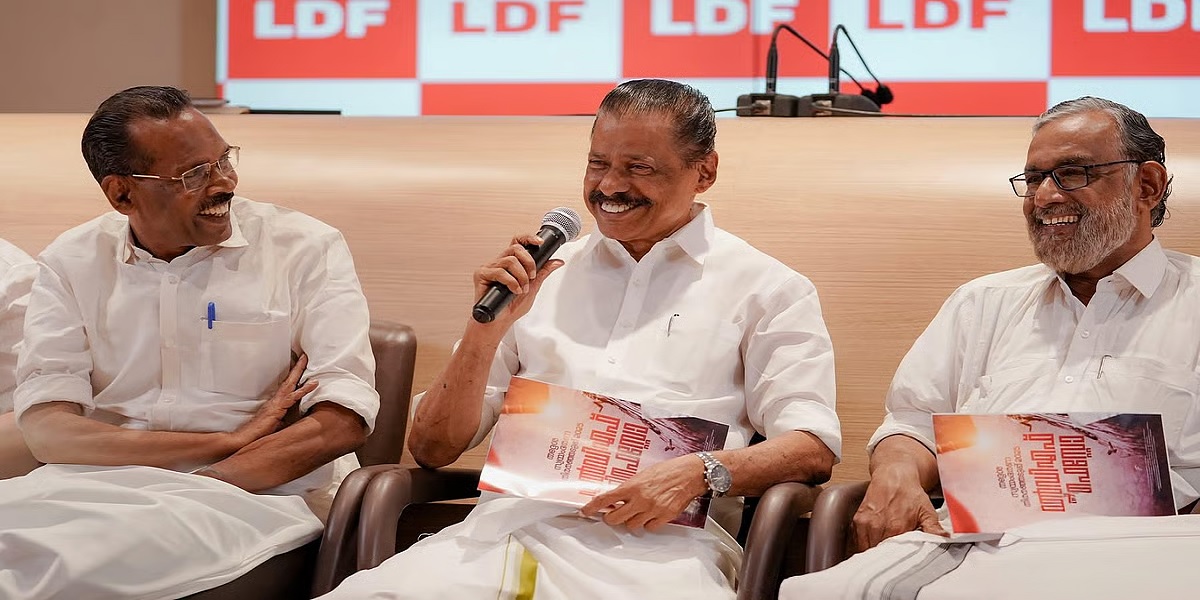
While CPM leaders have downplayed the role of anti-incumbency, other partners have warned that such claims do not match voter behaviour across districts.
Synopsis: Two weeks after a bruising local body poll setback, the LDF has deferred a frank discussion on its defeat, drawing criticism over political denial. While leaders downplay anti-incumbency and blame external factors, allies warn of voter fatigue. The front’s silence, critics say, risks deepening public distrust ahead of next year’s Assembly elections.
A Karnataka-registered van decorated for Sabarimala pilgrimage rolled through Kottayam, blaring ”Pottiye Kettiye” leaving commuters confused, amused, and slightly numb. Apparently, the pilgrims searched for an Ayyappa hit song, found this viral parody instead and played it with full devotion.
But ”Pottiye Kettiye” is not a devotional song at all, it’s a viral parody from Kerala’s recent local body elections—now so controversial that the CPM believes action should be taken against it, thinking the song contributed to the party’s electoral setback.
Even former minister MM Mani insulted voters by saying they betrayed the LDF despite receiving welfare pensions and benefits. Such remarks show how the party often responds to setbacks, insensitive and out of touch.
Opposition Leader VD Satheesan summed it up neatly, the toughest task ahead isn’t governance, it’s convincing the CPM that they actually lost the election.
Now, the LDF’s first meeting after suffering a major reversal in the local body elections ended without a direct discussion on the defeat, raising fresh questions about whether the ruling coalition is willing to confront uncomfortable political realities.
Held amidst widespread public debate on anti-incumbency and voter discontent, the meeting instead focused on issues such as voter list revision and the Centre’s proposed changes to the employment guarantee scheme.
The decision to defer a review of the election outcome has drawn criticism from political observers and even sections within the front, who fear that delaying introspection could prove costly ahead of the Assembly elections next year.
Team LDF
LDF leadership said a detailed discussion on the election outcome would be taken up only in the first week of January, after constituent parties complete their internal assessments.
The meeting, which began around 10 am and concluded by noon, offered little public reflection on the scale of the setback the front had suffered.
CPM state secretary MV Govindan told reporters that an overall assessment would be possible only after collecting feedback from all partners.
”We need to hear every party before drawing conclusions” he said, signalling that the leadership was in no hurry to take collective responsibility.
Chief Minister Pinarayi Vijayan also chose not to comment on the poll outcome at the meeting, saying his views would be shared after CPM’s state committee discussions later this month.
With both the Chief Minister and CPM leadership maintaining silence, LDF convener TP Ramakrishnan was left to explain why the issue had been postponed.
According to Ramakrishnan, the matter would be taken up once organisational reviews were completed. ”There is no attempt to avoid the issue” he insisted, though the optics of delay have fueled criticism.
Interestingly, the reluctance to discuss anti-incumbency at the LDF forum stands in contrast to remarks made by leaders outside the meeting. CPI state secretary Binoy Viswam had earlier stated at a party forum that voter fatigue with the government played a role in the defeat.
That assessment, however, did not find voice at the LDF table.
While the CPM has argued that the results were influenced by factors other than public anger, several allies have privately expressed concern that ignoring ground-level sentiment could repeat the mistake in the Assembly polls.
”If we don’t listen now, the consequences could be bigger later” one ally cautioned.
Kerala Congress (M), meanwhile, used the occasion to reaffirm its loyalty to the front. Party chairman Jose K Mani said his party would remain with the LDF despite the setback.
”We are being courted because our cadre is intact” he said, dismissing speculation about a possible shift to the UDF.
TP Ramakrishnan, LDF Convenor
LDF’s cautious approach to the election review also reflects deeper differences within the coalition over how the defeat should be interpreted.
While CPM leaders have downplayed the role of anti-incumbency, other partners have warned that such claims do not match voter behaviour across districts.
Govindan has repeatedly asserted that LDF’s core base remains solid and that the front is still confident of securing a third consecutive Assembly term.
”Our foundation has not weakened” he said after the results, alleging that the Congress-led UDF and BJP had worked in tandem to erode Left support.
He also pointed to communal polarisation and campaigning by religious organisations as factors behind the outcome.
However, critics argue that attributing losses to external forces without a candid internal review risks appearing dismissive of public dissatisfaction.
The results themselves paint a sobering picture.
Of the six municipal corporations in the state, the LDF retained only Kozhikode and even that without a clear majority.
In several former strongholds, including Thiruvananthapuram and Kollam, the front lost control, marking a sharp contrast to its dominant performance in 2020.
Instead of election analysis, the meeting announced a statewide protest on 22 December against the Centre’s proposed law affecting the employment guarantee scheme.
Ramakrishnan criticised the move, saying it would shift the financial burden to states and dilute the legacy of MGNREGA. ”This is an assault on workers’ rights and federal principles” he said.
While the issue resonates with the Left’s ideological core, critics argue that prioritising protest politics over electoral introspection sends the wrong message.
”People voted and delivered a verdict, but the leadership chose to postpone listening” S Nandagopan, a political researcher from Kochi, told South First.
Ramakrishnan did strike a more conciliatory note before the meeting, telling the media that the government had accepted the people’s verdict and was willing to correct its mistakes.
”We will study the defeat seriously and plan future actions accordingly” he said, though he stopped short of acknowledging anti-incumbency.
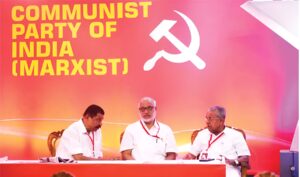
CPI(M) state secretary MV Govidan, and general secretary MA Baby, with Chief Minister Pinarayi Vijayan.
With internal meetings lined up across parties-CPM’s state committee sessions later this month and CPI’s executive meetings at year-end, the LDF insists that a comprehensive review is inevitable.
But the delay itself has become the story.
At a time when voters appear to be signalling fatigue, critics argue that postponing discussion risks reinforcing the perception of a leadership unwilling to confront dissent. Whether the promised January review will translate into meaningful course correction remains to be seen.
For now, the LDF’s silence on its electoral setback speaks as loudly as the verdict it has chosen not to debate, at least not yet.
(Edited by Amit Vasudev)


