

Published Feb 01, 2026 | 9:00 AM ⚊ Updated Feb 03, 2026 | 3:23 PM

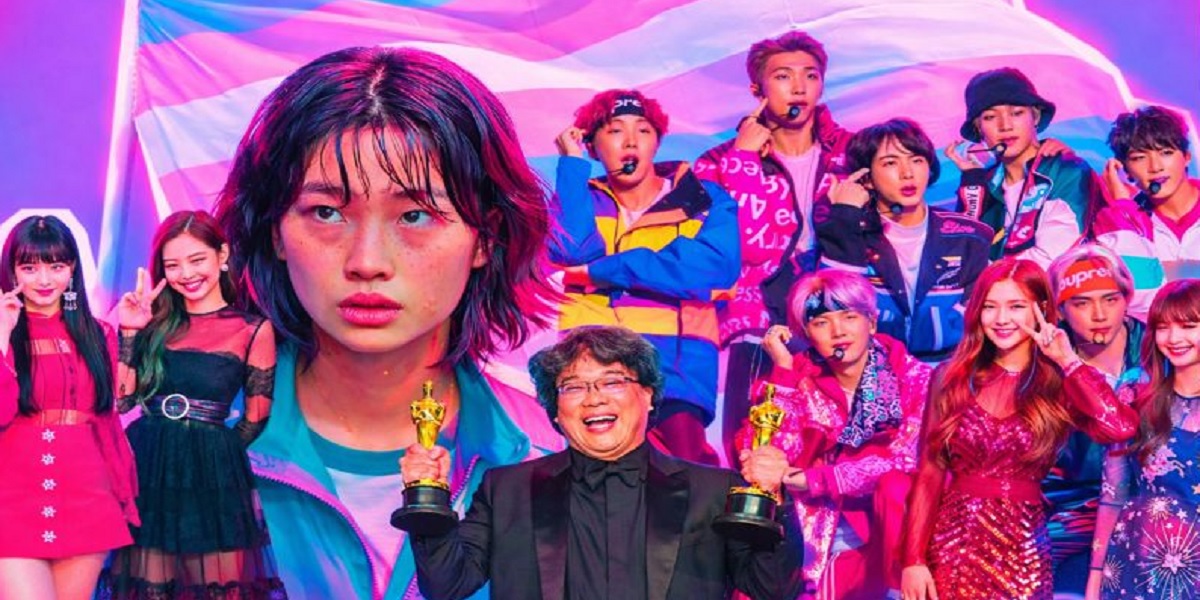
K-dramas have drawn criticism for their portrayal of suicide. South Korea has one of the highest suicide rates among OECD nations.
Synopsis: The recent death by suicide of a schoolgirl has revealed the deep influence of Korean serials among Kerala’s teens, carried away by the magical, unreal themes, and has made them live in a make-believe world.
Rahul Gandhi looked amused when he met the self-appointed BTS Army in Kerala during his Bharat Jodo Yatra in September 2020.
It was a lighthearted moment when a group of schoolgirls introduced themselves to the Congress leader as Kerala’s “BTS Army”. The moment encapsulated the popularity of K-pop in Kerala’s youth.
The girls spoke of their dreams, of becoming nurses. They said the all-boys band BTS (Bulletproof Boy Scouts or Bangtan Boys) helped them tide over tough days.
It felt like a harmless, happy wave of cultural curiosity — Kerala’s teens looking beyond borders for inspiration.
Four years later, that same fascination has taken a tragic turn.
On 27 January, a 16-year-old schoolgirl was found dead in a quarry pond near her home in Chottanikkara, Kochi. Police suspected that she was devastated by the reported death of a Korean friend she had met on Instagram.
Her suicide note, accessed by South First, pointed to the deep emotional influence of Korean series and this claimed online bond.
What once looked like innocent fandom has now blurred into dangerous emotional dependence, raising unsettling questions about how Hallyu, grief, and teenage vulnerability collide in the digital age.
Reality soon dawned. The Hallyu wave has claimed its first life in Kerala.
”She was happy and even packed her lunch for school. I never imagined that it would be the last meal I’d ever make for my child,” her mother told South First.
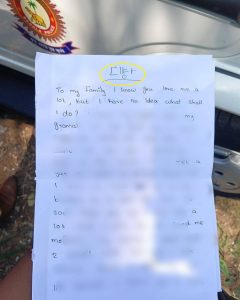
The girl left a suicide note, headlined Dita in Korean.
The girl was the only daughter of a construction worker and a homemaker. They had worked tirelessly to give her every opportunity they thought would help her flourish — a good education, a smartphone, and constant internet access.
She left home for school at 7.45 am. Shortly after 9 am, her cousin found her body in a water-filled quarry, nearly 150 feet deep.
The case took a crucial turn when police recovered a four-page suicide note from her school bag, which had been neatly placed on the quarry edge with her books and lunch box.
The note revealed a world shaped by Korean culture.
The death note mentioned a Korean friend, a member of a music band she had met on Instagram, who had died in an accident on 19 January. The loss appeared to have left her deeply heartbroken, according to investigators.
The suicide note written in English was headlined ”Dita” in the Korean language.

Dita Karang
For K-pop fans, Dita Karang—a former member of SECRET NUMBER and the first Indonesian to debut in a K-pop group needs no introduction.
Speaking to South First anonymously, one of the girl’s friends said that most of them were into K-pop.
“She was a die-hard fan of Dita. She knew most of her songs by heart. I even listen to them when I feel low. Many of the songs are about building confidence and success,” she said.
She added that she had no clue about the Korean friend mentioned in the suicide note.
“Teenagers’ emotional brains develop faster than their impulse-control systems, making them more vulnerable to harmful narratives that can normalise suicidal thoughts and reduce fear of death. Teenage suicide is rarely due to a single cause; it reflects unmet emotional needs combined with developmental vulnerability and cultural influence,” Kushal Roy, a clinical psychologist & psychotherapist from Hyderabad, told South First.
“Every adolescent needs at least one adult who listens without judgment and takes their inner world seriously — that is what saves lives.
Teenagers today do not lack families; they lack felt presence,” Roy added.
”My last wish is to see him, his family, brothers’ family, my family after I become a spirit,” the deceased girl wrote in the death note.

A still from Hi Bye, Mama!
These words pointed to her fascination with the themes often seen in Korean dramas—ghosts, spirits, and reconnecting with loved ones after death.
In popular shows like Hi Bye, Mama!, a woman who has died gets a short chance to return to her family. See You in My 19th Life tells the story of a girl who remembers her past lives and tries to meet someone from one of them.
Other popular series, such as Goblin, Tomorrow, and Mystic Pop-Up Bar, feature characters interacting with spirits, helping them find peace, or dealing with unfinished dreams.
These stories often suggested that love and connections could exist even beyond death.
See You in My 19th Life.
Sharon Philip, a cinephile, told South First that, ”The K-drama world is mostly fantasy. Teenagers, who often dream of magical things, can be easily drawn into them.”
The creators could show anything with a disclaimer that the fictional theme has no connection to real characters.
“But how convincing is fiction for a child or teenager? For them, the line between fantasy and reality is very thin,” he said.
K-dramas have drawn criticism for how they portray suicide, especially as South Korea records one of the highest suicide rates among OECD (Organisation for Economic Co-operation and Development) nations.
The deaths of several young celebrities, including Sulli, Goo Hara, Jonghyun, and Kim Sae-ron, have intensified debate about the industry’s harsh pressures and poor attention to mental health.
In August 2025, several Muslim religious scholars, including Rahumathulla Qasimi Mutthedam, sparked an unusual controversy in Kerala over a toy, Labubu, which they claimed promoted satanic influences and was often referred to as ”kuttichathan (goblin).”
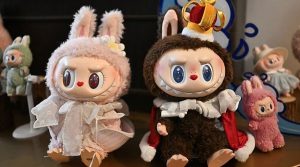
Labubu
Despite the debate, the craze for Labubu and other similar collectables remains widespread among teenagers. Many of them frequently shop for such items at Miniso outlets, with five to six stores in Kochi located in areas like Panampilly Nagar, Marad, and Kakkanad.
Recently, a new trend has emerged with teenagers flocking to Mumuso stores in upmarket malls. While Mumuso markets itself as a Korean lifestyle brand, it is actually based in Shanghai, China.
A stroll through any of these stores reveals that teenagers, drawn by the Hallyu wave and Korean pop culture, form the majority of customers in Kochi.
A quantitative study by Singh and Saumya (2022) used multiple linear regression to examine the consumer behaviour toward Korean cosmetics and products.
The study highlighted that urban consumers increasingly demand Korean beauty items, reporting a 40% monthly growth since the pandemic.
Interest in Korean language courses has also risen.
The research identified five key motivations for watching K-dramas—cultural curiosity, drama appeal, cultural similarity, relational influences, and viewing habits while themes and production quality were found to affect purchasing intentions for Korean lifestyle products.
Dr Jostin Francis, a consultant psychiatrist from Kalpetta, told South First that the deceased girl’s case calls for a ”psychological autopsy.” The intensity of her grief appeared to go far beyond normal mourning.

The all-boys band BTS.
”Pathological grief and the possibility of social learning are high in this case. In such grief, people may feel the presence of the deceased, hear their voices, and constantly check their phones expecting a message from them. This often leads to depression, anxiety and insomnia, and can finally push a person towards extreme steps like suicide” he said.
He added that the girl may also have been influenced by social learning, where fiction and fantasy are perceived as reality.
”When someone is repeatedly exposed to unreal themes, they may begin to see them as logical solutions. In her case, she wrote about meeting her loved ones after death. For her, that may have felt like a real and reasonable outcome” he explained.
Chottanikkara CI Tony J Mattam told South First that her Instagram account has not been retrieved yet.
”A request has been sent to Meta, but responses are not easy because these platforms prioritise user privacy. Some searches found are mostly related to Korean music bands and dramas. Cracking passwords is also a costly process.” he said.
As BTS prepare for their return on March 20 with Jimin and Jungkook already discharged from the South Korean military in June 2025, fans across the world, including Kerala’s ”BTS Army” are waiting for another wave of music and celebration.
But in Kochi, one young fan’s story has ended in silence.
(If you need support or know someone who has suicidal thoughts, please reach out to your nearest mental health specialist or contact the helpline numbers of suicide prevention organisations that can offer emotional support to individuals and families. Tele-MANAS: 14416; Life Suicide Prevention: 7893078930; Arogya Vani: 104; Sahay Helpline: 080-25497777; Roshni: 9166202000, 9127848584.)
(Edited by Majnu Babu).


