

Published Mar 30, 2026 | 9:06 AM ⚊ Updated Mar 30, 2026 | 9:06 AM

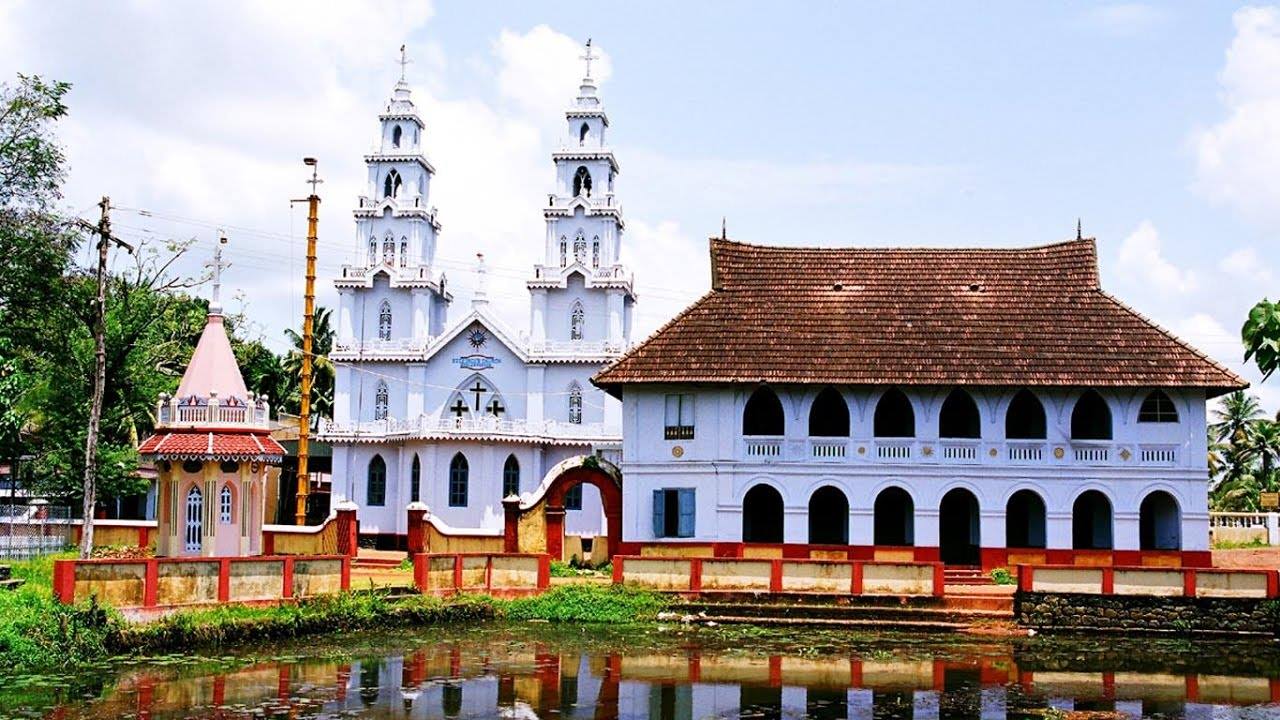
A Knanaya church in Kottayam.
Synopsis: Central Kerala, comprising the districts of Kottayam, Idukki, Ernakulam and Thrissur, is crucial in deciding which political front will rule the state after the Assembly elections. With a sizeable voting population from all three major religions, the 41 seats in the region are significant for all political parties. What makes the region even more crucial is its voting pattern — central Kerala has backed the winning alliance in each of the last three Assembly elections.
From literacy hubs to the latex belts of Kottayam, the high-range labour heartlands of Idukki, the influential Christian–Hindu social matrix and the port-driven, globally connected economy of Kochi, central Kerala encapsulates the state’s political and socio-economic diversity.
Often referred to as Central Travancore, this region remains the nerve centre of Kerala’s politics.
As the 2026 Assembly elections approach, their strategic weight is once again unmistakable. Comprising Thrissur, Ernakulam, Kottayam and Idukki, the region sends 41 MLAs to the Assembly — more than enough to decisively shape the balance of power.
For the UDF, however, central Kerala is also a reminder of past setbacks. In 2021, the front was reduced to just 16 seats there, its weakest showing in the region.
As the electoral battle intensifies, the UDF is aiming for a significant resurgence, setting an ambitious target of crossing the 30-seat mark in what is widely seen as the state’s decisive battleground.
Speaking to South First, even the Leader of Opposition in the Kerala Assembly, VD Satheesan, acknowledged that social groups in the region, which had drifted away from the UDF over the past two decades, are now returning to its fold.
The question that looms large is not just about numbers, but about narratives. How did the UDF lose its traditional stronghold? How did the LDF expand its footprint into the high ranges? And can central Kerala, with its history of reinvention, script yet another political turnaround?
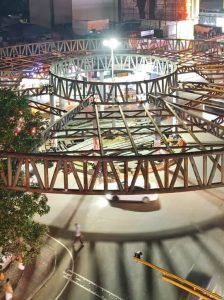
The unfinished skywalk in Kottayam.
Central Kerala remains one of the most decisive regions in the state’s electoral map. The region has, on average, a population mix of around 51 percent Hindus, 13 percent Muslims and 36 percent Christians, making it socially diverse and politically sensitive.
While Thrissur and Ernakulam have a relatively higher Muslim presence (around 17%), Kottayam and Idukki have only about seven percent.
However, in regions like Erattupetta in Kottayam, a high Muslim population plays a key role in constituencies such as Poonjar. The town has also drawn attention after being part of the 2022 statewide raids by central agencies, including the NIA, in connection with the banned Popular Front of India (PFI).
Christians form nearly 40–45 percent of the population across most districts here, except Thrissur, where they account for roughly a quarter of the electorate. Idukki stands out with a notable share of Scheduled Castes (13%) and Scheduled Tribes (5%).
What makes the region even more crucial is its voting pattern — central Kerala has backed the winning alliance in all the last three Assembly elections. With multiple swing constituencies and close contests, even small shifts in vote share can alter outcomes, reinforcing its reputation as a political bellwether.
The UDF’s long-standing dominance in central Kerala was built on strong support from Christian communities and the influence of parties like the Kerala Congress. Formed in 1964 after breaking away from the Congress, the Kerala Congress initially enjoyed backing from influential groups such as the Nair Service Society (NSS) and the Syro-Malabar Church.
However, repeated splits and shifting alliances within the party have mirrored the growing diversity within the Christian electorate itself. This fragmentation has gradually weakened the UDF’s traditional hold over the region.
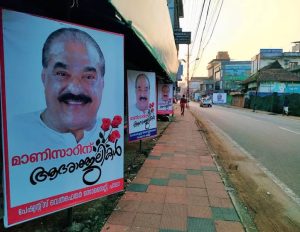
A road in Pala. (File image)
When South First visited Pala in Kottayam, the election was widely seen as crucial, with the potential to shape the future of political parties, especially the Kerala Congress (M) faction and the political prospects of veteran KM Mani’s son, Jose K Mani, who is now aligned with the LDF.
Despite this, the UDF showed signs of recovery in the recent local body elections and is hoping to convert that momentum into gains in 2026. Still, the challenge remains significant, as voter behaviour is now influenced more by local issues than by historical loyalties.
The LDF has steadily expanded its influence in central Kerala, particularly in high-range areas like Idukki. Through governance, welfare measures and consistent grassroots engagement, it has managed to make inroads into regions that were once seen as UDF strongholds.
Issues such as human-wildlife conflict in highland areas where many settlers, especially from Christian communities, face livelihood losses, have played a key role in shaping political preferences.
The LDF’s approach to such concerns has helped it gain acceptance beyond its traditional base. This shift is visible in electoral outcomes, with the Left performing strongly even in constituencies that were earlier competitive or UDF-leaning.
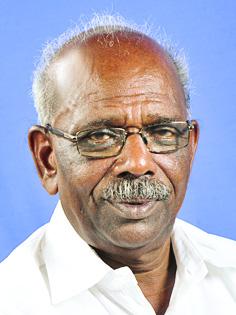
MM Mani. (Wikimedia Commons)
In the 2021 elections, all constituencies in Idukki district except Thodupuzha were won by parties in the LDF.
Udumbanchola was won by MM Mani of the CPI(M), Idukki by Roshy Augustine of the Kerala Congress (M), Devikulam by A Raja of the CPI(M) and Peerumade by CPI’s Vazhoor Soman.
Thodupuzha chose Kerala Congress’s PJ Joseph, who has represented the constituency in the state Assembly for over 40 years.
The political landscape in central Kerala is also being reshaped by smaller but influential players.
The Twenty20 party, which has pockets of support in Ernakulam, contested eight seats in 2021 and secured around 13.5 percent vote share in those constituencies. Its decision to align with the NDA could strengthen the BJP in a region where it has traditionally been organisationally weak.
This evolving alliance arithmetic will be closely watched in constituencies like Kunnathunad in Ernakulam, where the outcome may depend on whether numerical combinations translate into actual votes on the ground.
The BJP even gave Twenty20 one of its A-class constituencies — Thrippunithura in Ernakulam, where it governs the municipality. According to voters in the region who spoke to South First, the decision might be due to behind-the-scenes deals or overconfidence in its new ally.
The Christian communities continue to be a crucial electoral force in central Kerala. They account for about 18.4 percent of Kerala’s population based on the 2011 Census, and some estimates suggest a decline to around 14 percent. According to voters in the region who spoke to South First, their influence in this region is significantly higher.
However, the issues between different communities suggest that the idea of a unified ”Christian vote” has weakened over time.
The community is internally diverse, split across Catholic, Malankara (Orthodox and Jacobite) and evangelical groups, each with distinct political preferences and leadership influences.
In the rubber belt of Kottayam and Idukki, sections of the Syro-Malabar community still show a pro-Congress inclination.
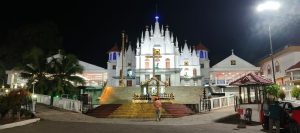
St. George Orthodox Church in Puthuppally
At the same time, parts of the Orthodox Church are seen as closer to the Congress, while the Jacobite faction has often leaned towards the Left. Pentecostal groups are also emerging as a separate political segment, adding further complexity.
Key issues such as human-wildlife conflict, agrarian distress and the long-pending recommendations of the JB Koshy Commission are likely to influence voting decisions more than direct political messaging from church leadership.
In Thrissur, the contest remains a tight three-way fight. In 2021, the CPI narrowly won with 34.25 percent votes, defeating Congress (33.52%) by just 946 votes, while the BJP secured 31.30 percent. With Suresh Gopi having won the Lok Sabha seat in 2024 and Congress leader Padmaja Venugopal now contesting as a BJP candidate, the dynamics have become even more unpredictable.
Similarly, Aranmula in Pathanamthitta continues to witness shifting political fortunes. The seat has alternated between the Congress and the CPI(M) over the years and is currently represented by Minister Veena George. While the main fight is between the CPI(M) and Congress, the BJP, led by Kummanam Rajasekharan, is aiming to consolidate Hindu votes.
Central Kerala’s political behaviour shows that it rarely remains static. With its mix of communities, internal diversities and evolving alliances, the region continues to defy straightforward predictions.
The 2026 election will test whether the UDF can reclaim lost ground, whether the LDF can consolidate its gains, and whether the NDA can convert new alliances into electoral success.
In a region known for backing the eventual winner, even a slight shift in voter sentiment could once again reshape Kerala’s political landscape.
(Edited by Muhammed Fazil.)


