

Published Feb 21, 2026 | 10:00 AM ⚊ Updated Feb 21, 2026 | 10:00 AM

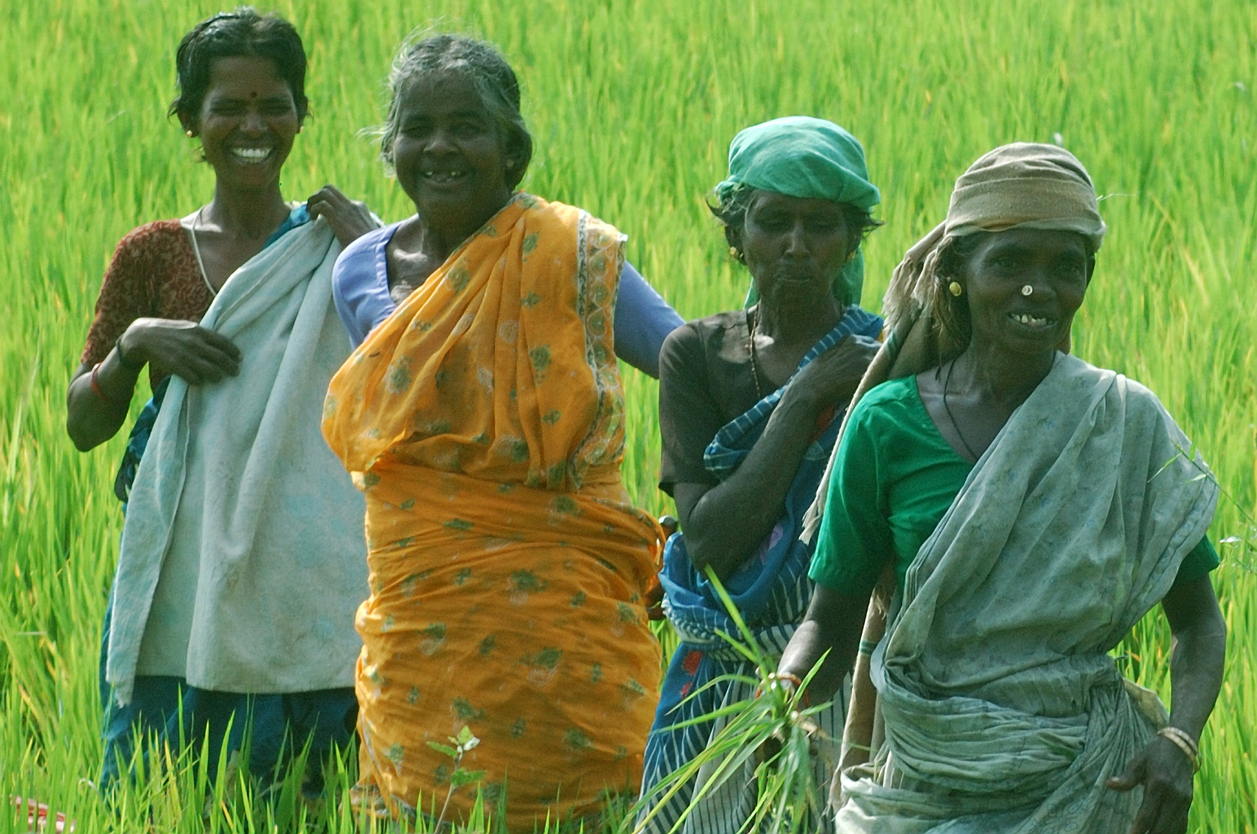
Representational image. Credit: iStock
Synopsis: Kerala’s Women’s Policy 2026 acknowledges that the state’s strong overall gender indicators mask persistent inequalities faced by Dalit, tribal and coastal women. It points to disparities in education, health and livelihoods — from higher dropout rates among tribal girls to job losses in fishing communities — and outlines targeted corrective measures
Kerala has long held up its women-centric development model as a benchmark for the country — high literacy, favourable sex ratio, strong public health systems and visible female participation in public life. But behind these impressive indicators lies another, less celebrated reality.
The state’s revised Women’s Policy 2026 turns the spotlight on that uncomfortable truth: women from Dalit, tribal and coastal communities continue to live on the margins of Kerala’s progress story.
The new policy document does not shy away from acknowledging that structural inequalities — of caste, geography, occupation and gender — have produced deep disparities that broad social indicators often conceal.
It makes a focused case for targeted interventions to bridge these gaps.
The latest Women’s Policy makes an unambiguous admission: the state’s celebrated social indicators conceal deep inequities when it comes to Dalit and tribal women.
Women’s Policy 2026 says that although Scheduled Tribe (ST) communities constitute just 1.45 percent of Kerala’s population (Census 2011), the depth and intensity of deprivation they face remain disproportionately high.
Kerala is home to 37 ST communities, with a current population of 4.88 lakh people across 1.47 lakh families living in 6,578 habitations, according to the Scheduled Tribes Development Department.
The concentration is highest in Wayanad (34 percent) and Kasargod (17 percent), highlighting regional disparities.
The policy acknowledges that while successive governments have rolled out schemes in education, health and employment, more focused and sustained interventions are needed to bring Dalit and tribal women into the social and economic mainstream.
The demographic picture itself is layered.
Kerala continues to be cited nationally for its favourable sex ratio, but the document notes that in tribal-majority regions such as Attappadi, Wayanad and Idukki, there are only 990 women for every 1,000 men — a figure that tempers the state’s overall achievements.
Though there has been a gradual improvement in the male-female ratio within the tribal community over the past four decades, disparities persist when compared with other sections of society.
Education presents a familiar paradox – visible gains, but stubborn gaps.
The Women’s Policy 2026 acknowledges that literacy among Dalit and tribal communities has improved over the years. Yet, when placed alongside overall literacy levels in the state, the educational position of women from these communities remains comparatively weak.
Increased enrolment has not translated into sustained educational progress. Tribal girls, in particular, continue to face socio-cultural barriers, economic precarity, and geographic isolation that disrupt their learning journeys.
The policy notes that the educational attainment of tribal girls still trails the state’s broader indicators. It promises to intensify measures to ensure equity in education and to strengthen safety mechanisms in residential hostels for Dalit and tribal girls — a recognition that access without security is incomplete.
The concern is not new. The Economic Review 2025 flagged these disparities with stark clarity.
Scheduled Tribe students constitute 1.9 percent of total enrolment. Scheduled Caste students account for 9.95 percent of total school enrolment in 2025–26, a marginal increase from 9.91 percent the previous year.
On the surface, the numbers suggest incremental progress. But dropout data tells a more layered story. The dropout rate among SC students in 2024–25 stood at 0.07 percent. For ST students, it was substantially higher at 0.92 percent — a gap too significant to dismiss as statistical noise.
Meanwhile, district-level patterns deepen the concern. Wayanad recorded the highest overall dropout rate in Kerala, followed by Idukki.
Among SC students, dropout was highest in Idukki and Kasaragod. For ST students, the crisis was most pronounced in Wayanad and Palakkad. These trends make it evident that geography compounds disadvantage.
Remoteness, poverty, limited institutional support, and social marginalisation converge to shape uneven educational outcomes.
The policy also draws attention to socio-cultural and economic pressures that weigh heavily on tribal girls despite improved school access.
Literacy rates among Dalit and tribal communities have risen in recent years, yet remain below general literacy levels, particularly for women.
In tribal belts, the policy says, poverty, early responsibilities, migration for work and entrenched discrimination continue to interrupt educational trajectories.
Beyond classrooms, the vulnerabilities multiply. The policy underscores that tribal women in Kerala have high labour force participation, particularly in agriculture, daily wage work and the collection of forest produce.
Yet, it says that, much of this work remains informal, underpaid and unprotected. The policy flags concerns about wage discrimination, exploitation and the lack of skill diversification.
It also points to deeply rooted challenges such as anemia, maternal and child health issues, malnutrition, the prevalence of substance abuse in certain regions and the social stigma faced by unwed mothers.
Poverty levels among Dalit and tribal communities remain markedly higher than the state average, with tribal women and children bearing the brunt. In response, the Women’s Policy outlines a series of corrective measures aimed at bridging these structural gaps.
It promises intensified efforts to prevent school dropouts among tribal girls, including systems to track and support those at risk of leaving school. Residential hostels for Dalit and tribal girls are to undergo stronger security checks and gender audits to ensure safety and adequate facilities.
Recognising their underrepresentation in vocational and paramedical courses, the government proposes targeted encouragement and support to widen access.
Talented girls in sports are to be identified early and provided structured pathways, including specialised academies, to compete at national and global levels.
Economic empowerment features prominently.
The policy calls for close monitoring to detect wage discrimination and labour exploitation, alongside context-specific skill development programmes.
Training in sericulture, bamboo work, organic farming and traditional crafts is to be coupled with structured support for production, storage and marketing. It also proposes steps to remove bottlenecks in the collection and sale of forest resources, a crucial livelihood source for many tribal women.
Health interventions form another pillar.
The government plans to strengthen mobile medical units in remote colonies, expand nutrition programmes in schools to address malnutrition among girls and women, improve maternal and newborn care, and ensure adequate labour room facilities — including operation theatres — in hospitals serving tribal-majority areas.
De-addiction and counselling centres attached to government hospitals are to be expanded, and awareness campaigns will target misconceptions related to menstruation, pregnancy and child marriage.
The presence of women police personnel in stations located in Dalit and tribal regions is to be ensured, alongside gender sensitisation for law enforcement, the policy envisions.
Perhaps most significantly, the policy emphasises representation.
It seeks to guarantee the inclusion of Dalit and tribal women in administrative systems, local bodies and community institutions, and calls for sustained efforts to dismantle caste-based discrimination through public awareness.
While Kerala’s development narrative has long celebrated aggregate achievements, the combined reading of the Women’s Policy and the Economic Review makes it clear that progress remains uneven.
The Women’s Policy 2026 treats coastal women as a distinct social category shaped by geography, occupation and long-standing socio-economic vulnerabilities.
Spread across Kerala’s 580-kilometre coastline in nine districts, fishing communities reflect cultural diversity and regional differences, yet women across these regions, says the policy, share common struggles—economic instability, health risks, educational disruptions and the deepening effects of climate change.
The policy observes that despite initiatives such as Theeram and Vidyatheeram strengthening access to schooling in fishing villages, girls in coastal regions continue to face higher dropout rates.
Early marriage, limited exposure to career pathways and financial pressures within families contribute significantly to this pattern. The policy therefore underscores the need for structured intervention in schools located in high-dropout coastal areas.
It advocates sustained awareness campaigns reinforcing the message that education, not early marriage, must shape a girl’s future, alongside systematic career guidance to widen aspirations and prevent educational discontinuity.
Livelihood transformation in the fisheries sector is another central concern, says the policy.
Mechanisation, while increasing productivity, has steadily reduced traditional employment spaces for women, particularly in fish processing and allied activities.
Many women who once played an active role in the local fishing economy now find themselves excluded from new opportunities that demand technical skills or capital access.
The policy responds by proposing focused skill development programmes tailored to coastal women, ensuring their meaningful representation in emerging sectors of the fisheries value chain.
It also highlights the potential of aquaculture, ornamental fish rearing and aquatic plant production as alternative income avenues that can be locally sustained and women-led.
Health vulnerabilities receive specific attention.
Although primary health facilities exist in coastal belts, the policy observes that, the incidence of lifestyle diseases and nutrition-related issues among coastal women is reported to be comparatively high.
The physically demanding nature of fish vending, long hours of travel, irregular income and dietary imbalance aggravate these conditions.
The policy proposes closer health mapping in fishing communities and explores the establishment of dedicated Fishing Community Wellness Centres at the panchayat level to ensure accessible and responsive care.
Housing congestion and documentation gaps further compound disadvantage.
In several coastal areas, multiple families continue to live under one roof, leading to complications in securing individual entitlements such as ration cards and welfare access.
The policy acknowledges that such administrative exclusions perpetuate invisibility and calls for targeted review mechanisms to bridge these gaps.
Climate change and coastal erosion emerge as structural threats shaping the future of coastal women.
Rising sea levels, unpredictable weather patterns and environmental degradation directly affect housing, income stability and safety.
Recognising that women bear a disproportionate share of this burden, the policy proposes detailed situational analysis and community-specific strategies to build resilience and safeguard livelihoods.
The document also emphasises the need to review the functioning and outcomes of collective initiatives such as Society for Assistance to Fisherwomen (SAF) and Theeramaithri.
By assessing the progress of women’s groups operating within the coastal economy, the policy aims to strengthen institutional support systems that enhance solidarity, bargaining power and economic independence.
Kerala’s Women’s Policy 2026, cleared by the Cabinet on 11 February, builds on earlier policies of 1996, 2009 and 2015, but responds to a markedly different social landscape.
The revised policy acknowledges that between 2015 and 2026 the state has witnessed shifts in employment patterns, migration, digital spaces, law and order, and family structures — all of which have reshaped women’s lived realities.
Officials say the document does not gloss over persistent gaps.
“We have not shied away from highlighting the drawbacks. There are still areas to improve — particularly the issues faced by Dalit, tribal and coastal women, who continue to experience multiple layers of vulnerability,” a senior official with the Women and Child Development Department said.
The policy’s perspective frames gender justice as inseparable from social justice, grounded in the constitutional values of secularism, democracy and equality.
It recognises that many women continue to face layered struggles — as citizens, workers and members of marginalised communities.
With 38 action programmes, the policy aims to create a gender-equal Kerala by addressing patriarchal norms, ensuring equal representation in power structures, strengthening women’s rights across health, education and employment, tackling violence and discrimination, promoting gender-sensitive public spaces, protecting elderly women, and securing women’s economic independence and autonomy in a changing society.


