

Published Feb 20, 2026 | 5:09 PM ⚊ Updated Feb 23, 2026 | 4:12 PM

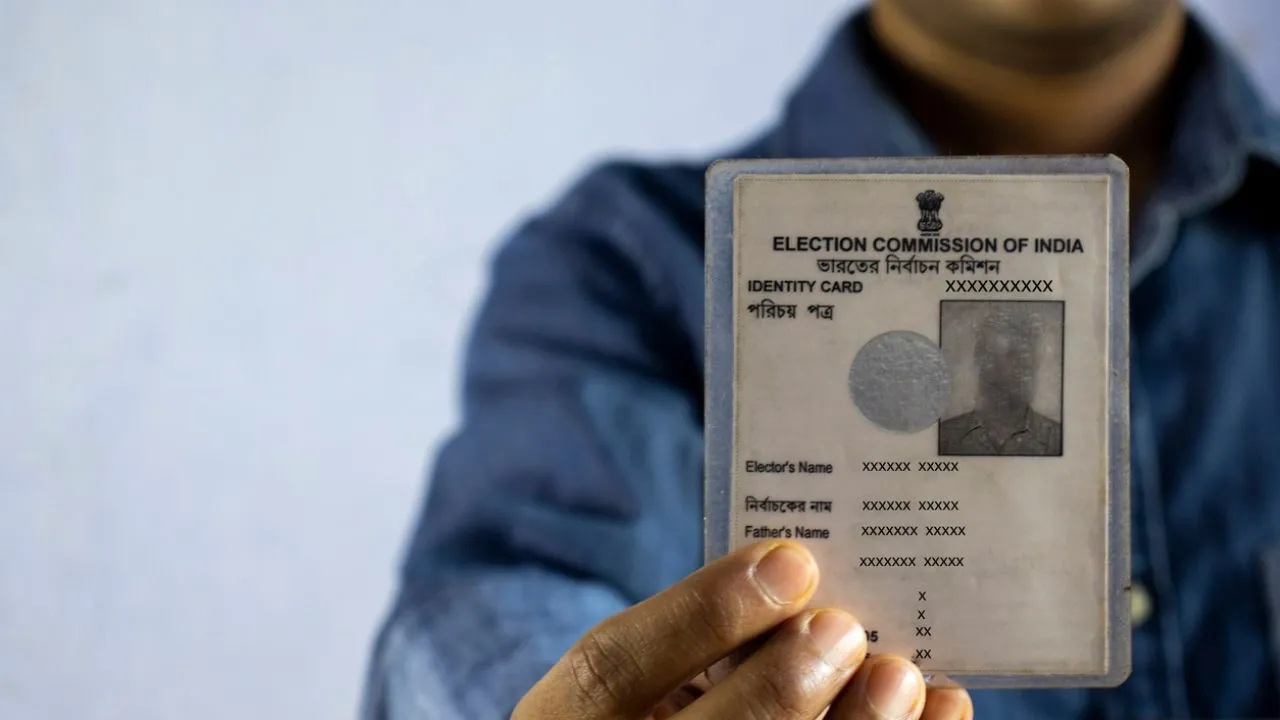
The final roll places Kerala’s electorate at 2,69,53,644 voters, a notable decline from the 2,78,50,855 recorded in October 2025.
Synopsis: Officials clarified that 53,229 names were removed from the draft list under various categories, including deceased persons, those who had acquired foreign citizenship, those who shifted domicile, duplicate entries and other ineligible cases.
A sharp drop of 8.97 lakh voters in Kerala’s latest electoral roll is set to cast a long shadow over the state’s political landscape, even before the Assembly poll dates are announced.
With the Chief Electoral Officer-Kerala (CEO) preparing to formally publish the final roll on Saturday, 21 February, what should have been a routine administrative exercise has turned into a flashpoint — one that many believe could open a Pandora’s box in the run-up to the elections.
The final roll, prepared after the Special Intensive Revision (SIR), places Kerala’s electorate at 2,69,53,644 voters, a notable decline from the 2,78,50,855 recorded in October 2025 during the special summary revision.
The figure also falls short of the 2,86,07,658 voters listed for the local body elections held in December 2025 — a difference of more than 16.54 lakh voters.
The scale of the reduction has already triggered anxiety across party lines.
According to CEO Rathan U. Kelkar, the newly finalised roll comprises 1,38,27,319 women, 1,31,26,048 men, and 277 transgender voters.
In addition, the roll accounts for 2,23,558 overseas electors and 54,110 service voters.
Among demographic segments, 4,24,518 voters fall in the 18–19 age group, while 2,04,608 voters are aged 85 and above.
The roll also includes 2,43,698 Persons with Disabilities (PwD).
The journey to the final figures has not been linear. The draft roll published following the SIR exercise on 23 December 2025, recorded 2,54,42,352 voters— including 1,23,83,341 men, 1,30,58,731 women, and 280 third gender voters.
Officials later clarified that 53,229 names were removed from the draft list under various categories, including deceased persons, those who had acquired foreign citizenship, those who shifted domicile, duplicate entries and other ineligible cases.
Yet, it is the broader downward trend that has set alarm bells ringing in political circles.
At an all-party meeting convened ahead of the publication, CPI(M) representative MV Jayarajan argued that the scale of reduction suggested the possibility of eligible voters being left out of the list. Congress representative PC Vishnunath also raised objections during discussions called by the CEO.
Meanwhile, officials indicated that the state’s electorate is poised to cross the 2.70 crore mark, with the CEO indicating that the updated voter roll to be published on Saturday will reflect a substantial rise in registrations.
The revised count released on Friday, 20 February, stood at 2,69,53,644.
With thousands of applications processed in recent weeks yet to be fully incorporated, officials expect the total number of voters to inch beyond 2.70 crore.
The large-scale revision exercise has drawn an overwhelming response.
Between 27 October 2025 and 31 January 2026, the Commission received 45,36,143 applications across various categories.
Of these, 43,32,229 were approved, while 2,00,694 were rejected after scrutiny.
The momentum continued into February. From 31 January to 16 February, another 4,01,368 applications were submitted.
This latest batch included 1,23,133 Form 6 applications for new voter registrations, 7,421 Form 6A applications from overseas electors, 1,66,404 Form 7 requests seeking deletions or objections, and 1,04,410 Form 8 applications for corrections in voter details.
Deletion and objection requests accounted for a significant portion of the overall volume.
In total, 24,32,139 Form 7 applications were processed during the revision period.
Form 7 is typically used to object to the inclusion of a name in the roll, request deletion of one’s own name, or report entries due for removal on account of death or permanent relocation.
Officials said that 99.86 percent of these applications were accepted.
Fresh enrolments also featured prominently. A combined 16,79,885 applications were filed under Form 6 (domestic voters) and Form 6A (overseas electors). Of the 14,57,468 Form 6 applications received, 13,51,151 — amounting to 92.70 percent — were approved and added to the electoral roll.
Rejections in this category largely involved applicants who had not yet reached 17 years of age.
As for overseas voters, 2,22,417 applications were submitted under Form 6A. Of these, 1,59,111 — or 71.54 per cent — were cleared.
Here too, several applications were rejected due to premature submission or incomplete documentation.
Election authorities, however, maintained that the revision process adhered to statutory procedures and that robust grievance redressal mechanisms remain available.
Under Section 24(a) of the Representation of the People Act, 1950, a first appeal can be filed before the District Election Officer, while a second appeal under Section 24(b) lies with the Chief Electoral Officer against decisions of the Electoral Registration Officer.
Applications for inclusion can be submitted until the last date for filing nominations for the Assembly elections.
Administratively, the state is preparing for the electoral exercise with 30,471 polling stations, 119 distribution centres for election materials, and 41 counting centres.
But even as the machinery moves ahead, the numbers have altered the pre-election mood.
In a politically sensitive state where margins are often narrow and turnout patterns decisive, fluctuations in voter rolls carry weight far beyond statistics.
With the final publication imminent, Kerala’s electoral landscape appears headed for intense scrutiny.
Whether the revised roll withstands political and public examination — or deepens distrust — may well shape the tone of the Assembly battle in the weeks to come.
(Edited by Majnu Babu).


