

Published Apr 05, 2026 | 3:29 PM ⚊ Updated Apr 05, 2026 | 3:29 PM

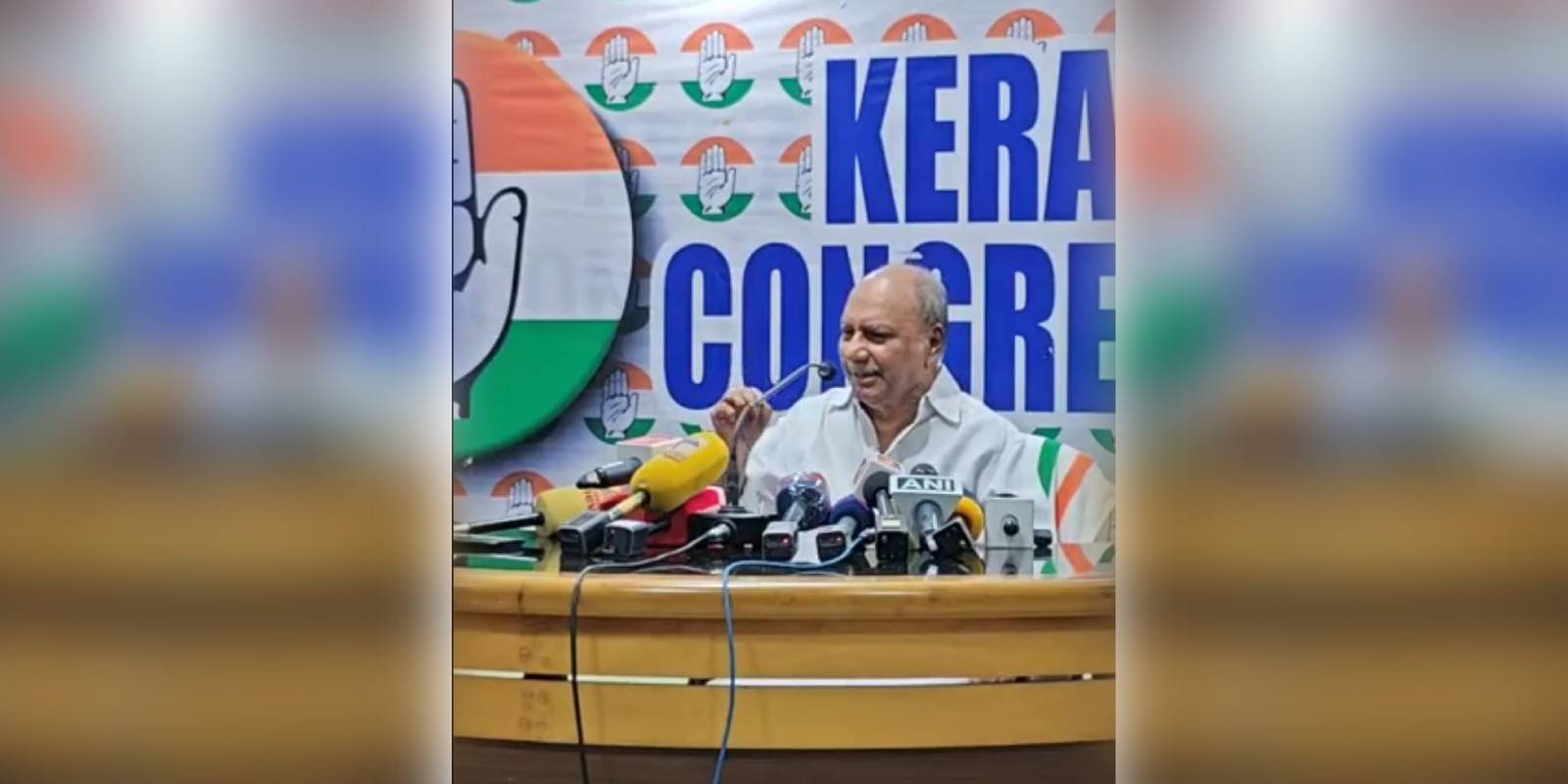
The arrack ban of 1996 was a gamble — moral in tone, political at its core — taken by AK Antony when public anger had reached a tipping point.
Synopsis: Three decades after AK Antony’s abrupt arrack ban reshaped lives and backfired at the ballot box, his decision has quietly returned to Kerala’s political conversation. As Pinarayi Vijayan’s government defends a far looser, revenue-driven liquor policy, the old gamble lingers in the background—less as history, more as an unresolved question about whether the state ever really figured out how to deal with alcohol.
History, in Kerala’s politics, has a habit of returning without warning.
Three decades ago, in April, with Assembly election round the corner, the then Chief Minister AK Antony made a call that was as dramatic as it was risky — a sweeping ban on arrack (country liquor), pitched as a moral and electoral reset aimed squarely at women voters.
It landed with force. Applause in many homes. Anxiety in thousands of others. Jobs vanished overnight, livelihoods upended, and yet the political calculus behind the move seemed clear enough at the time. But when the ballots were counted weeks later, the script had flipped. The Left surged. The United Democratic Front’s high-stakes bet lay in pieces.
Now, 30 years on, that moment — part conviction, part misread — has slipped back into the conversation, almost unannounced, amid the campaign noise. Not as nostalgia, but as a point of comparison. The questions it raised haven’t quite gone away.
What makes a policy bold — and what makes it reckless? When does social reform turn into political overreach? And why does a decision from 1996 echo in debates around a decade-long Left government and its own excise policy?
In an election season thick with claims and counterclaims, the arrack ban is no longer just history. It has become a quiet reference point — a reminder of how a single gamble can ripple far beyond the moment it was made.
It was not just another policy note tucked inside a government file. When Antony pulled the trigger on 1 April 1996, banning arrack across Kerala, it cut through everyday life with unusual force. Three decades later, the echoes have not faded. If anything, they’ve only grown more complicated.
Back then, arrack—charayam in local parlance—was everywhere. Not discreetly sold, not hidden. It moved in plain sight. More than 5,600 shops, auctioned out by the state, dotted the landscape. For a daily-wage worker, a couple of 90-ml “podikkuppi” (small bottle) cost less than a meal. By evening, these outlets turned into noisy pockets of debate, bargaining, and sometimes violence. Politics and survival shared the same wooden benches in dingy settings.
Yet, beneath that routine sat a growing unease. The drink was cheap, yes—but also dangerously unreliable. Adulteration had become a quiet epidemic. Smuggled spirit mixed in backyards, methanol sneaking into the brew. Every so often, tragedy broke through: clusters of deaths, families torn overnight. The outrage didn’t dissipate anymore. It gathered.
Women’s groups, church networks, and grassroots campaigns began to press harder. Arrack was no longer framed as a habit; it was a destroyer—of homes, of income, of any fragile stability. Wages vanished by dusk. Stories of domestic violence piled up. Children slipped through the cracks. The pressure was no longer abstract. It was political.
Inside the Assembly, the shift had already begun to show.
In his address on 29 February 1996, Governor P Shiv Shankar laid it out plainly: alcoholism, especially among the poor, was feeding family breakdown and social distress. The government, he said, would move toward prohibition in stages. The first step would be decisive—arrack would go.
Days later, the then-Finance Minister CV Padmarajan reinforced that line in the 1996–97 State Budget.
The numbers were stark. A revenue hit of over ₹300 crore. Yet the decision stood. The deficit, he noted, would still be contained at ₹28.67 crore. More telling was the follow-up—higher duties on Indian-made foreign liquor, tighter enforcement, district-level monitoring, and promises—always promises—of rehabilitation for those who would lose their jobs.
The fallout was immediate. Thousands tied to the arrack trade—shop workers, transporters, small-time suppliers—found themselves abruptly displaced. The state spoke of schemes, of transition. Implementation, as often happens, lagged behind intent.
Antony, a teetotaller, didn’t soften his stance. He would later describe it as the biggest decision of his tenure. In his words, “for the women of Kerala.” There was calculation in it too. Elections were weeks away. The United Democratic Front government he led was already under strain—riots in Vizhinjam, the aftershocks of the ISRO espionage scandal that had forced K Karunakaran to step down, and a restless electorate.
The ban cut through that noise. It spoke directly to a constituency that had been steadily mobilising.
And yet, politics has its own ironies. When the Left Democratic Front returned to power under EK Nayanar, it had campaigned against the ban. The promise was clear—scrap it. In office, that promise dissolved. The ban stayed.
The call for prohibition in Kerala did not rise in a vacuum. It came layered with grief, public anger, and a sense that something had gone terribly wrong in the state’s relationship with alcohol.
Any conversation about the ban inevitably circles back to two incidents. One happened in 1981 at Punalur where 34 died. And another the hooch tragedy that unfolded on an Onam day in 1982 in Vypeen. What should have been a day of celebration turned into a catastrophe as 70 people lost their lives after consuming liquor supplied through outlets linked to a firm named “Bee Vee Liquors.” Another 24 were left permanently blind. Many more suffered injuries that never fully healed.
The shock did not fade quickly. It seeped into public consciousness and shaped attitudes toward arrack consumption.
Academic work later captured this shift.
In her 1995 doctoral study on Kerala’s anti-alcohol movement, Reni Anna Joseph noted how arrack consumption, relatively modest until the early 1970s, rose sharply through the decade before dipping around 1980–82. The decline, she observed, was not incidental. Shortages in government supply had already pushed people toward illicit liquor, and the Vypeen tragedy deepened public hesitation.
Yet the lull did not last. By 1982–83, consumption began climbing again, and by the early 1990s, the figures had surged dramatically.
Against this backdrop came the arrack ban of 1996—framed as a decisive step toward curbing alcohol abuse and preventing further tragedies.
But policy outcomes rarely follow intent in a straight line.
By 2001, statements in the Kerala Legislative Assembly suggested a more complicated reality. Government revenue from liquor had not declined in the years following the ban. Consumption patterns had shifted instead. Toddy and Indian Made Foreign Liquor (IMFL) sales rose, filling the vacuum left by arrack. The ban had altered the landscape, not reduced the appetite.
The shift was not anecdotal—it was recorded. The Comptroller and Auditor General’s Audit Report (Commercial) for the year ending 31 March 2001 pointed out that the rise in IMFL sales from 1997–98 onwards was directly linked to the prohibition on arrack
There was a darker underside as well. In the years after prohibition, 13 hooch tragedies were reported, claiming 54 lives. The very risk the ban sought to eliminate had not disappeared; it had mutated, often slipping into less regulated spaces.
Even so, the government remained firm. Despite the data, despite the unintended consequences, there was no move to revisit the ban. Arrack stayed outlawed, a policy rooted as much in memory as in governance.
Three decades after Kerala last witnessed a sweeping restriction on liquor availability, the subject has found its way back into political conversations—unexpectedly, and not without irony.
What might otherwise have remained a side note in a high-voltage election season has been pulled into sharper focus, partly because of timing, and partly because of memory.
The earlier decision, too, had arrived in an election year.
This time, however, the debate has been reworked and amplified in cyber spaces, where comparisons with the last 10 years of the Left government’s excise policy have added a sharper edge to the discussion.
Since 2016, when the Pinarayi Vijayan-led Left Democratic Front came to power, its liquor policy has been under steady scrutiny.
Critics—ranging from the Congress-led UDF to church bodies like the Kerala Catholic Bishops’ Council—have repeatedly accused the government of drifting away from its stated goal of promoting abstinence.
Their charge is blunt: while speaking the language of moderation, the government allegedly expanded access to alcohol to keep excise revenues flowing.
The roots of the present controversy go back to 2014, when the then UDF government rolled out an ambitious phased prohibition policy, promising a “liquor-free” Kerala by 2024.
Hundreds of bars were shut down in quick succession, shrinking the number of full-fledged IMFL outlets to a fraction—limited largely to five-star hotels.
The move, though welcomed in some quarters, left deep scars: job losses ran into the tens of thousands, and the tourism sector took a visible hit.
The LDF, then in opposition, attacked the policy relentlessly.
It flagged corruption allegations in what became known as the bar scam and pitched itself as a pro-reform alternative.
When it came to power in 2016, the rollback was swift. Within a year, restrictions were eased—IMFL service returned to three- and four-star hotels, beer and wine parlours expanded, and licence upgrades became routine. The government argued that prohibition, in practice, had proven unworkable.
Numbers tell part of the story.
From just a few dozen functioning bars in 2016, the figure climbed steadily over the years, crossing several hundred by the end of the first LDF term and rising further during its second stint. By early 2026, critics claimed the total had neared or crossed four digits when all categories were counted. For the opposition, this surge stands in direct contradiction to promises of reducing availability.
Excise revenue, a crucial pillar of Kerala’s finances, sits at the centre of this debate.
Ministers have maintained that the policy is pragmatic—aimed at regulating consumption rather than enforcing prohibition—and have pointed to campaigns encouraging moderation. They also argue that per capita consumption has not spiralled in the way critics suggest.
Yet, controversies refused to fade.
The so-called “Liquorgate” episode in 2024 added fuel to the fire, with allegations—based on a leaked voice note—that bar owners were being mobilised to contribute funds for favourable policy changes. The government dismissed the claims as politically motivated, and the investigation focused more on the leak than the substance of the allegation.
More recently, decisions such as extending bar operating hours till midnight and renewing licences under relaxed conditions have triggered fresh backlash. Church groups and social organisations have warned of rising alcoholism, family distress and social fallout, rejecting the government’s argument that regulated availability helps curb illicit drug use.
The opposition, sensing an opportunity, has folded the issue neatly into its campaign narrative.
The slogan, “Barukal thurannatharappa?” (who opened the bars)—sharp, rhythmic, and instantly recognisable—draws from a popular satirical chant that recently echoed in Kerala’s political culture: “Swarnam kattathu aarappa… saghakalane Ayyappa.” (Who stole the gold? Ayyappa, it’s the comrades)
The arrack ban of 1996 was a gamble—moral in tone, political at its core—taken by AK Antony at a moment when public anger, especially among women, had reached a tipping point.
It disrupted lives overnight, redrew consumption patterns, and, in the end, failed to deliver the electoral dividend it seemed designed to secure.
Now, with the Left government led by Pinarayi Vijayan defending a vastly different approach—one that leans on regulation, access, and revenue—the old decision has slipped back into conversation. Not as a lesson neatly learned, but as a reminder of how difficult it is to engineer social change through policy alone.
(Edited by Majnu Babu).


