

Published Sep 05, 2026 | 6:00 PM ⚊ Updated Sep 05, 2026 | 6:00 PM

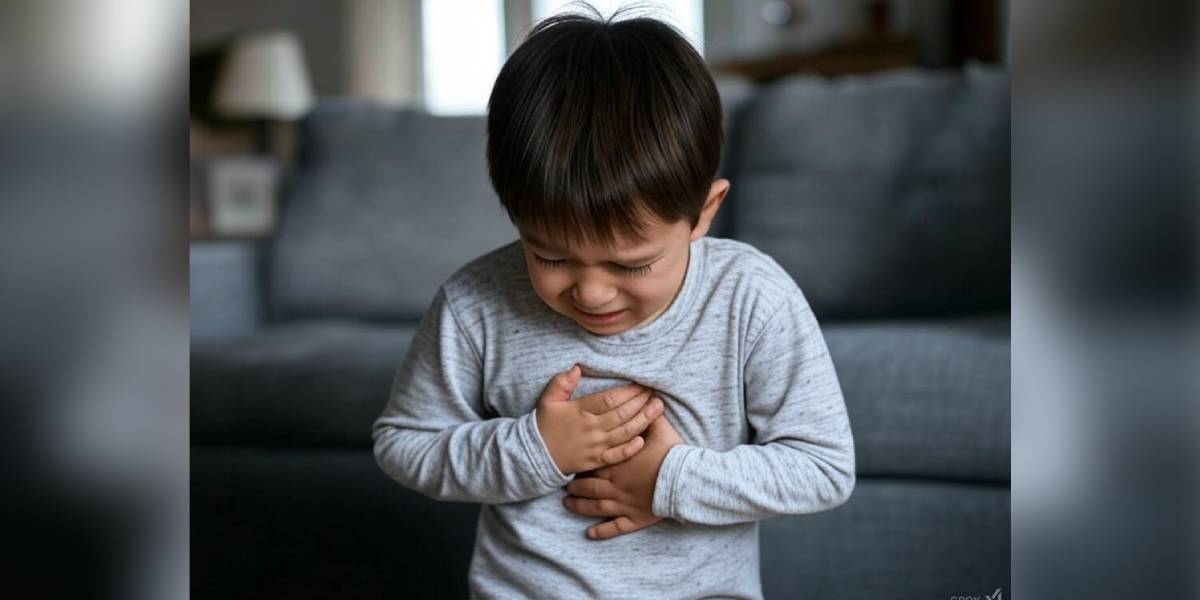
Palliative care for children, he pointed out, remains limited to certain institutions.

Synopsis: Keralam’s celebrated palliative care model has left a crucial gap: children with severe, lifelong neurodevelopmental disabilities who often struggle to access coordinated medical, rehabilitation and emotional support. A Kerala High Court intervention has now brought this overlooked crisis into focus, highlighting the need for a statewide system that supports not just the child, but families carrying the lifelong burden of care.
Keralam’s palliative care movement — a community-based system that brought care closer to people living with serious illnesses — has long been showcased as a model for the rest of the country. But behind this success story lies a less discussed reality.
For many children living with severe, lifelong neurodevelopmental disabilities, the system remains difficult to access.
While Keralam has built an extensive network of home-based and community palliative care services, paediatric palliative care remains patchy and largely dependent on individual hospitals, specialised institutions and voluntary organisations.
Families often move between hospitals, rehabilitation centres and voluntary organisations, with no assured system to coordinate long-term medical care, symptom management, rehabilitation and support for everyday caregiving. The support a child receives can depend heavily on where the family lives and which institution they can reach.
The gap is particularly stark because these children need support not for a few months, but often throughout their lives — and their families are left to navigate a fragmented system largely on their own.
Also Read: Plight of parents raising children with autism, developmental disabilities
The stark reality of palliative care available to children with chronic neurodevelopmental disabilities in the state has come under the scrutiny of the Kerala High Court, which has pointed to the absence of an organised, state-wide support system for affected children and their families.
The issue came up in an ongoing suo motu proceeding before a Division Bench of Chief Justice Soumen Sen and Justice Syam Kumar VM.
In an order issued on 19 August, the court said it could not ignore the need for a comprehensive policy and an effective framework for the care, rehabilitation and palliative support of children with chronic neurodevelopmental disabilities.
The observations laid bare a gap between Keralam’s acclaimed palliative care model and the support actually available to children with long-term and complex disabilities.
While experts stressed that paediatric palliative care should begin at the time of diagnosis and continue alongside curative and rehabilitative treatment, the court noted that such services in Keralam remain limited.
The existing system is largely dependent on isolated institutional initiatives and voluntary organisations rather than an organised public healthcare mechanism covering the entire state.
The court also drew attention to the Kerala State Palliative Care Policy, which envisages the active involvement of local self-government institutions through ward-level services delivered by primary healthcare teams.
But for children with chronic disabilities, implementation has been inconsistent and inadequate, leaving many families without effective support at the community level.
The Bench said the preparation of a Standard Operating Procedure (SOP) must take these realities into account.
It suggested that a joint meeting of the Central and State governments would help in evolving a comprehensive SOP for palliative care for children with chronic neurodevelopmental disabilities across Keralam.
Also Read: Families with special children find warmth in death’s cold embrace
Less than four per cent of those who need pain relief through palliative care have access to it in India. Among children, the coverage is estimated at less than one per cent, according to Dr MR Rajagopal, chairman of Pallium India, and widely regarded as the father of palliative care in the country.
“That’s the situation in the country,” Dr Rajagopal told South First. “In our state also, the scenario is more or less the same.”
Keralam is often cited for its relatively strong community-based palliative care network, with a government system and several non-governmental organisations working in the sector.
But Dr Rajagopal said a crucial question remains unanswered: how many of these services actually reach children and provide them with effective palliative care?
“It is yet to be studied in depth,” he further stated.
Palliative care for children, he pointed out, is limited to certain institutions. Even where services are available, adults have comparatively better access than children.
The difference, he said, is also about the ability to make decisions.
“If I have pain and have the capacity to seek assistance, I can take that decision. But children do not have that choice. They are dependent on their parents—on which treatment they are provided and which institution they are taken to.”
There is another difficult reality surrounding pain management in children.
“If I have pain, I can decide that I need morphine. But when it comes to children, parents are often fiercely protective about administering morphine,” Dr Rajagopal said, underlining the fears and misconceptions that continue to influence treatment decisions.
Also Read: Bengaluru mother kills autistic daughter, surrenders
Dr Sangeetha Suresh, in charge of the Pediatric Palliative Care Division at Pallium India, said India’s public health focus has largely been on reducing mortality. At the same time, the burden of morbidity among surviving children has not received adequate attention.
“Unfortunately, the focus of the government has been on reducing mortality and not taking care of morbidity. The morbidity factor is yet to be studied in depth,” she said.
Keralam has made significant progress in bringing down infant mortality. But, Dr Sangeetha said, an equally important question often goes unasked.
“We talk about diminishing the infant mortality rate. But we do not talk about how many of the children who survive are born fit.”
With advances in medical technology, several genetic conditions can now be identified during pregnancy. When a serious or life-limiting condition is detected, palliative care should ideally begin even before the child is born, she said.
“This is where antenatal and perinatal palliative care becomes important. But centres offering these services are limited in India. Even in Kerala, only very few centres offer them.”
Palliative care, she stressed, is not merely about medical treatment.
“It is like hand-holding. It is a holistic approach. Parents and siblings also need awareness and support to understand the situation.”
Also Read: Children in three Karnataka villages await death in darkness
Early identification of genetic conditions is another major concern.
Genetic tests can cost anywhere between ₹8,000 and ₹10,000, with prices varying between laboratories. For many families, the expense itself becomes a barrier to diagnosis and timely intervention.
“Genetic study is essential, but not everyone can afford such rates,” Dr Sangeetha said.
She said the government could consider intervening either by bringing greater uniformity to the pricing of genetic tests or by making them available at subsidised rates.
The challenge does not end with diagnosis or treatment. For families caring for children with complex medical needs, even accessing different services within a major government hospital can become an exhausting exercise.
Dr Sangeetha cited the example of Government Medical College, Thiruvananthapuram, where different services are often located in separate places.
“Physiotherapy may be at one place, occupational therapy at another and speech therapy somewhere else. Parents have to run from one place to another with their children who need these services. It is a tiring task.”
Such practical difficulties, she said, must be taken into account when authorities prepare SOPs and plan paediatric palliative care services.
Also Read: Officials look into outsourced bone marrow transplants
Palliative care for children with chronic neurodevelopmental disabilities is not just about managing pain and symptoms.
It also means confronting a difficult and often invisible reality — the emotional distress of children and the crushing social and psychological burden carried by their families.
Dr Sangeetha pointed out that some children with severe disabilities develop suicidal thoughts, believing that they have become a burden on their parents.
“The extent of suicidal tendencies among such children and their families is something that needs to be studied seriously,” she said. “We need a multidisciplinary approach to address these issues.”
Another striking pattern observed in palliative care settings is the comparatively high number of single mothers bringing children for treatment.
Behind many of these cases are stories of families falling apart after a child’s diagnosis.
Dr Sangeetha recalled one such encounter that lingers on in her mind.
A woman walked into the outpatient department with her one-and-a-half-year-old son, who had a genetic condition. Doctors treating the child had already told the family that his chances of survival were bleak.
But as the conversations continued, the medical team began to understand that the child’s illness was only one part of the crisis.
The woman had come alone with her child. After the family came to know about the boy’s condition, her husband and his family had turned hostile. The mother was facing difficulties within her own family as well.
It was her second marriage.
During one of the counselling sessions, she said something that alarmed the team.
“The day my child dies, I will also end my life.”
For her, there appeared to be no hope beyond the child’s illness.
“But we continued talking to her. We counselled her and also spoke to her husband,” Dr Sangeetha said. “The child later died, but by then she was able to cope with the loss,” she said.
Such situations, she said, underline what palliative care is really about.
“It is not confined to the patient. Sometimes, a simple question: ‘Are you okay?’ — can open up the other side of the illness that no medical test can reveal.”
There are also misconceptions about physiotherapy, particularly among parents of children with chronic neurodevelopmental conditions.
Many families view physiotherapy merely as a form of pain relief. Others expect a few sessions to bring about a dramatic improvement.
“But physiotherapy is a continuous process. It can significantly improve a child’s daily functioning and quality of life,” Dr Sangeetha said.
The problem, however, is the financial commitment it demands. The cost of repeated and long-term therapy often forces parents to step back.
For families already struggling with the emotional and financial consequences of caring for a child with a severe disability, treatment can become another battle.
The hard reality, Dr Sangeetha said, is that caring for such children requires much more than medicines and medical procedures.
It requires doctors, counsellors, physiotherapists, social workers and families to work together — and, sometimes, simply someone willing to ask a parent the question they may have been waiting for someone to ask: “Are you okay?”
(Edited by Majnu Babu).



