

Published Jun 04, 2026 | 6:41 PM ⚊ Updated Jun 04, 2026 | 6:41 PM

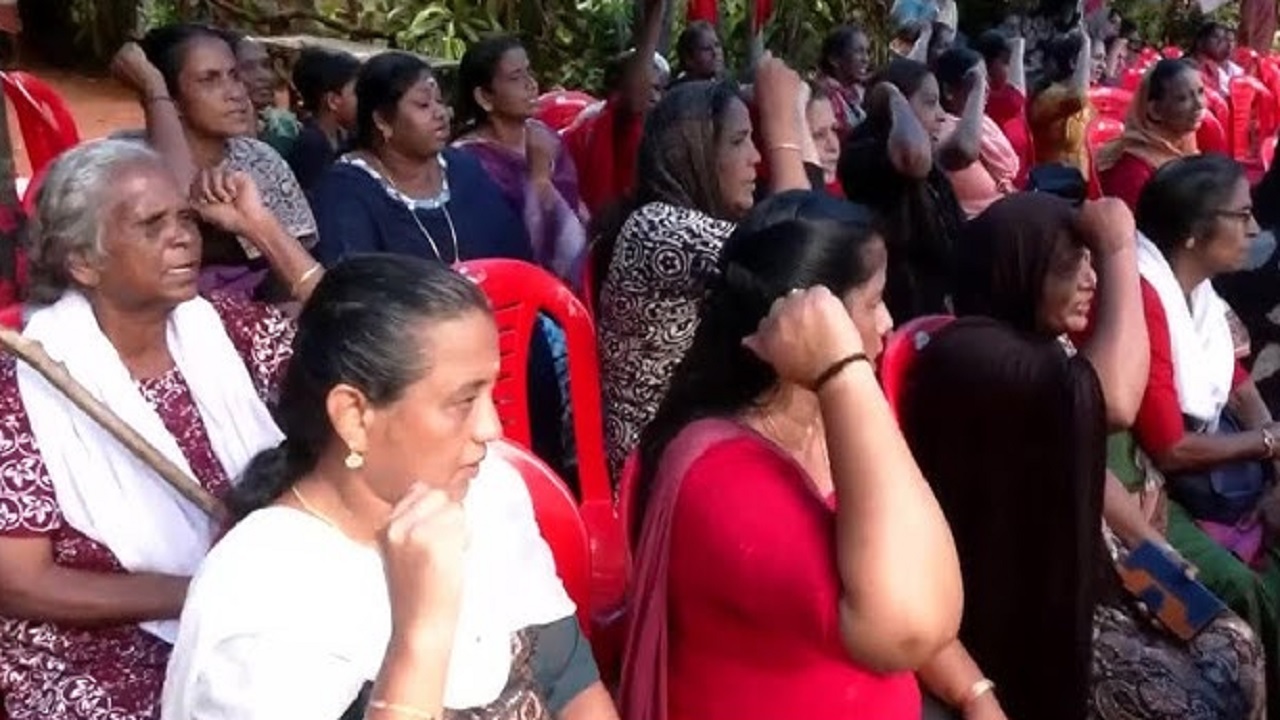
Residents of the Pariyathukavu settlement are protesting against the eviction drive

Synopsis: The Kerala High Court has temporarily stayed a Munsiff Court order to evict the residents from the disputed land by 9 June. Accepting the government’s request for more time, the high court granted it time till 16 June to arrive at a solution.
The Kerala High Court on Thursday, 4 June, granted temporary relief to seven Dalit families of the Pariyathukavu settlement at Malayidomthuruthu in Ernakulam’s Kizhakkambalam.
Allowing the state government’s request for more time, a Bench of Justice TR Ravi extended the protection to the families from eviction until 16 June. The government had submitted that discussions aimed at resolving the dispute were still underway.
The extension also provides breathing space for the UDF government, which has come under Opposition fire over the issue. The case gained urgency after the Perumbavoor Munsiff Court ordered authorities to complete eviction proceedings by 9 June and submit a report.
The state government moved the high court, arguing that the Munsiff Court’s directive conflicted with the higher court’s earlier order, pausing coercive action to facilitate talks.
Accepting the plea, the high court extended the deadline by more than a week.
The dispute pertains to a civil court decree obtained by a private claimant, seeking possession of the land occupied for decades by Scheduled Caste families at the Pariyathukavu Dalit settlement.
Earlier, the high court noted that the Supreme Court ruling in the Pariyathukavu eviction case was final and said the residents would ultimately have to be relocated.
However, it granted the state government an extension of two weeks to carry out the directive, considering ongoing efforts to resolve the issue and provide temporary relief.
Justice Ravi’s Bench made it clear that residents could not resist execution of a court decree without establishing their rights through proper legal channels.
The court observed that none of the affected families had filed objections before the execution court or initiated separate legal action to assert their claims.
At the same time, the court extended the timeline after the Advocate General informed that the government was actively working on a resolution.
Also Read: Kerala Forest Department evicts tribal families without notice
Minister Roji M John had earlier assured the residents of no immediate eviction proceedings. He told them that the state government would directly intervene in the legal battle to protect the affected families.
The assurance came after a high-level discussion attended by the minister, Kunnathunadu MLA VP Sajeendran, the District Collector, Rural SP and residents facing eviction.
John then spoke of serious issues in handling the case and added that the government was prepared to intervene directly before the court.
“The government is with the residents. If the court verdict is not favourable, the government will ensure the complete rehabilitation of all affected families. No one will be left on the streets,” the minister assured.
He also promised the residents that there would be no police action in the area.
The families later said they had received assurances that the police would not evict them.
Also Read: Is Kochi’s tourism boom threatening local culture?
The families have been opposing moves to evict them from the land, insisting that the government must first survey the disputed 19.98 acres.
They argued that such a survey would determine whether parts of the property fell under government land, which, according to them, should be allotted to families residing there for generations.
The case stems from a decades-old dispute over 2.65 acres, located next to the 19.98-acre area. The families who have been living there for generations had secured a favourable legal order in the 1970s.
However, following a resurvey in the 1980s, a private individual, Sankaran Nair, claimed the land was part of his property. Using the revised survey records, Nair obtained a favourable court order in 1984.
The dispute later reached the high court and the apex court, which, in 2022, upheld rulings in favour of Nair’s claims, paving the way for the current eviction proceedings.
The dispute has sparked sustained protests over the past several months, drawing support from various Dalit organisations and political parties.
The CPI(M) has also backed the residents, maintaining that no eviction should take place until the ownership and status of the land are conclusively determined.
The matter has also become a subject of political debate following the government’s rehabilitation proposal.
In the Assembly, Chief Minister VD Satheesan stated that the government had offered land and housing to the affected families at Malayidomthuruthu itself, and claimed that the residents had agreed to the proposal.
The families, however, have disputed the chief minister’s statement, asserting that no such consensus was reached.
They stated that their key demands — a detailed survey and clear marking of the disputed property to identify any government-owned land that could be assigned to them, rather than relocation to another site — remained unmet.
Meanwhile, the state government has said that discussions with all stakeholders were ongoing and indicated that efforts to arrive at a mutually acceptable resolution were in the final stages.
(Edited by Majnu Babu).



