


Published Dec 26, 2025 | 8:00 AM ⚊ Updated Dec 26, 2025 | 8:00 AM

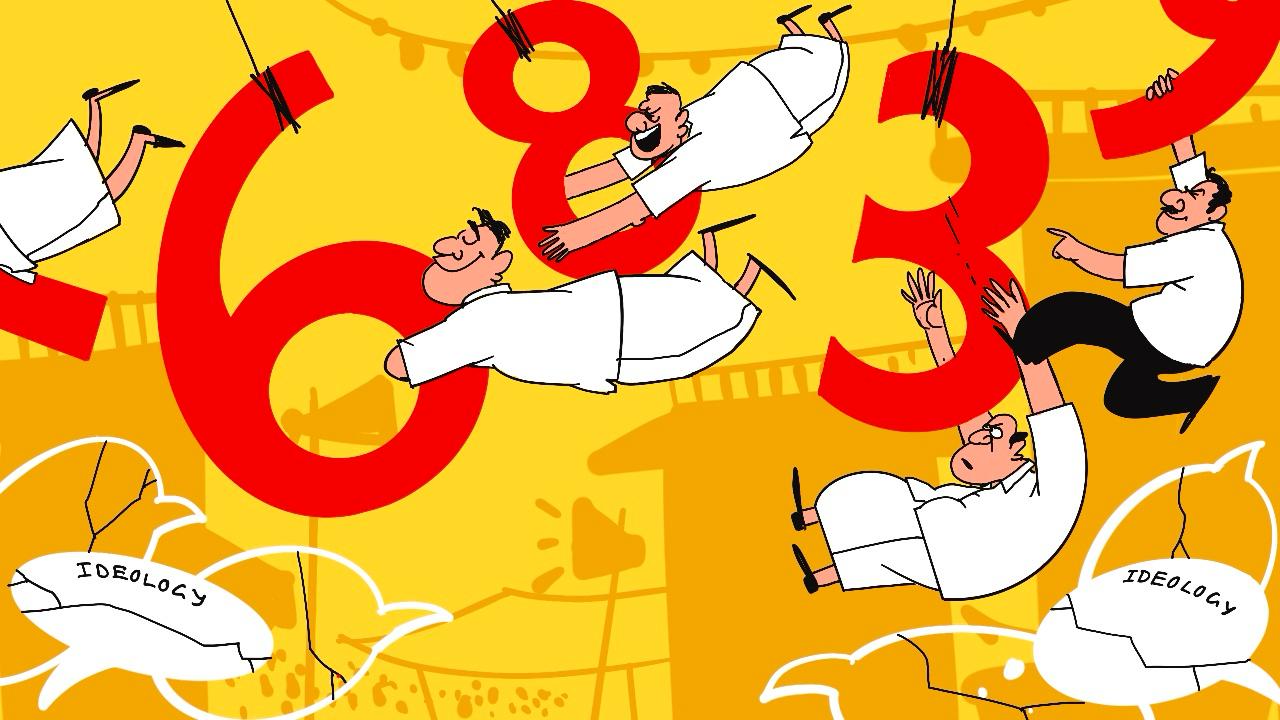
Kerala's shifting political landscape has also unsettled smaller allies.
Synopsis: Kerala’s 2025 local body polls reshaped political fronts ahead of the 2026 Assembly elections. Congress led with 29.17% vote share, CPM followed, while IUML surged past CPI to become the third-largest force. UDF expanded its base, LDF faced internal unease, BJP plateaued. The verdict signaled shifting alliances where numerical strength outweighs ideology, setting the stage for Mission 2026.
The 2025 local body election results have done more than reshuffle seats across Kerala’s civic institutions. They have triggered a deeper churn within political fronts, forcing allies to reassess relevance, leverage, and survival as the road to the 2026 Assembly elections begins to take shape.
While the Congress emerged as the single largest party by vote share, the verdict has exposed fault lines within both the ruling LDF and the Opposition UDF.
Smaller allies, once comfortable in the shadow of larger partners are now recalculating strategies amid changing vote arithmetic, rising social shifts, and expanding ambitions within fronts.
At the heart of this churn lies one unmistakable message from the electorate, organisational strength matters but alliance equations will increasingly be dictated by ground-level vote shares rather than ideological comfort.
According to data released by the State Election Commission on 22 December, Monday, voters cast over 5.49 crore votes across local bodies. The Congress topped the chart with 29.17 percent, followed closely by the CPM at 27.16 percent.
BJP finished third with 14.76 percent, marking a decline from its Lok Sabha performance.
Among allies, the most striking shift came from the Indian Union Muslim League (IUML), which surged to 9.77 percent, overtaking CPI (5.58 percent) and firmly establishing itself as Kerala’s third-largest political force.
Independent candidates, many quietly backed by major fronts together polled 5.77 percent, marginally more than CPI.
District-wise data further underlined the asymmetry within fronts.
Congress crossed the 30 percent mark in eight districts, clocking its highest vote share in Idukki (38.60 percent), followed by Ernakulam and Pathanamthitta. The CPM crossed 30 percent only in Kannur and Palakkad, while registering its lowest share in Kottayam.
For allies, the numbers told uncomfortable truths. While Kerala Congress (M) retained pockets of influence in Kottayam, the CPI found itself slipping both numerically and politically, now trailing IUML statewide—an unprecedented development.
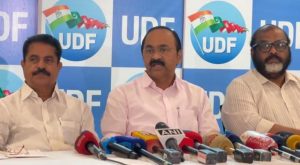
UDF coordination committee meeting, Kochi
Buoyed by its civic poll performance, the Congress-led UDF has moved swiftly to consolidate momentum. The front has formally inducted former Nilambur MLA PV Anvar’s Trinamool Congress and Tribal leader CK Janu’s Democratic Political Party as associate members, marking the first phase of what Opposition Leader VD Satheesan described as an ”aggressive expansion drive”.
”This is part of a conscious effort to widen UDF’s social and political base ahead of the Assembly elections” Satheesan told reporters after the UDF coordination committee meeting in Kochi.
The expansion, however, has sharpened internal bargaining dynamics, especially with IUML’s strengthened position. The League not only performed exceptionally in Malappuram (35.11 percent) but also expanded beyond Malabar, winning 2,844 seats statewide, a jump of 713 seats from 2020.
”We have done well across the state” IUML state secretary Abdurahiman Randathani told South First, pointing to wins in Thiruvananthapuram Corporation, Thrissur district panchayats, and unexpected pockets like Pallarimangalam in Ernakulam.
With this performance, IUML’s leverage within the UDF has visibly increased, both in seat negotiations for assembly elections and strategic decision-making within the front.
At the same time, sensitivities remain unresolved.
Kerala Congress (Joseph) leader PJ Joseph made it clear that Jose K Mani’s return to UDF should not even be discussed, forcing the front into a cautious, wait-and-watch mode despite speculation.
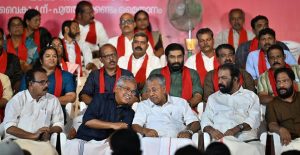
Team LDF
If the UDF is expanding outward, the LDF is grappling inward.
While CPM leadership has maintained public silence, deferring discussion until constituent reviews, CPI has struck a markedly different tone. The party’s State Executive Committee, reviewing the election outcome, acknowledged the emergence of an anti-government wave and warned against unilateral decision-making.
CPI leaders pointed to erosion of minority support, attributing part of it to the Chief Minister’s approach towards SNDP Yogam general secretary Vellappally Natesan.
According to leaders who spoke to South First, the perception that communal remarks went unchecked has alienated sections of the Muslim electorate.
”There have been unilateral decisions that affected the front” CPI leaders observed, stressing the need for course correction ahead of 2026.
CPI state secretary Binoy Viswam, however, ruled out any immediate exit from the LDF.
”We have raised concerns within the front. Public feedback will be handled with utmost care” he told South First, adding that further decisions would follow internal consultations.
Meanwhile, speculation around Kerala Congress (M) switching sides was firmly shut down by Jose K Mani. Citing performance in Pala and Thodupuzha, he insisted the party had retained its base and would continue with the LDF with full strength, even as vote-share data suggested stagnation.
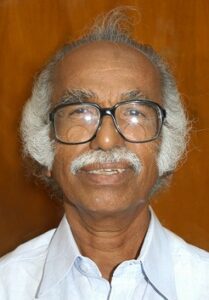
Kadannappally Ramachandran. (Wikimedia Commons)
The shifting landscape has also unsettled smaller allies.
A sharp organisational rupture within Congress (S)—led by Museum Minister Kadannappally Ramachandran has led to the suspension of Kozhikode leader V Gopalan Master, triggering the resignation of nearly 600 members, today.
While the dissident faction told South First that no immediate front-switch had been decided, the development underscores volatility within LDF’s minor partners, particularly in electorally crucial pockets of Kozhikode and Kannur.
For the BJP, the civic verdict was sobering.
Despite capturing the Thiruvananthapuram Corporation, the party’s statewide vote share slipped to 14.76 percent, down sharply from the 19.26 percent it polled in the 2024 Lok Sabha elections.
Union Home Minister Amit Shah’s 25 percent target dream remained distant. Outside southern districts like Thiruvananthapuram, Kollam, and Pathanamthitta, the BJP struggled to expand its base, performing particularly poorly in Malappuram and Idukki.
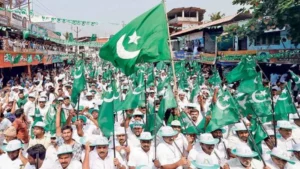
An IUML rally in Malappuram. Photo: Supplied
The local body verdict has reshaped Kerala’s political chessboard, not through dramatic exits, but through subtle shifts in power within alliances.
IUML’s ascent, CPI’s unease, Congress’ renewed organisational confidence, BJP’s stagnation, and the cautious rigidity of Kerala Congress factions together point to a crucial truth- front politics in Kerala is entering a phase where numerical strength will increasingly outweigh ideological loyalty.
UDF has already launched Mission 2026, with seat-sharing to be finalised by mid-January and the manifesto expected in February. LDF, meanwhile, has opted for introspection, with reviews stretching into early January.
An Intelligence assessment has concluded that the controversy surrounding the alleged gold theft at Sabarimala alienated voters from the LDF.
The report, prepared after analysing LDF losses even in CPM strongholds, has been submitted to the DGP.
According to the report, CPM’s failure to act against A Padmakumar and N Vasu triggered strong anti-LDF sentiment and reinforced perceptions of shielding corrupt individuals. This backlash was especially visible among women voters and Ayyappa devotees.
In Pandalam municipality, where the Sabarimala issue was expected to have maximum impact, the LDF scraped through mainly due to public anger against the NDA-led ruling council.
While CPM led protests against Rahul Mamkoottathil helped regain some support, criticism intensified over what was seen as double standards after the government honoured Malayalam rapper Vedan despite his involvement in a similar case.
The report also notes that region-specific issues, such as the death of ADM K Naveen Babu, controversies linked to former Kannur District Panchayat president PP Divya, and discontent over Thiruvananthapuram Mayor Arya Rajendran’s functioning, played a role in shaping local outcomes.
The consolidated intelligence report from districts was submitted to the Intelligence DGP earlier this week.
There’s still time for the Assembly elections, but the local body polls have already delivered a clear preview of who speaks louder within alliances, who negotiates from strength, and who may struggle to stay relevant in a rapidly realigning political Kerala.
The battle for 2026 has begun, not on the streets yet, but unmistakably within the fronts themselves.
(Edited by Amit Vasudev)


