


Published Jan 01, 2026 | 8:00 AM ⚊ Updated Jan 01, 2026 | 8:00 AM

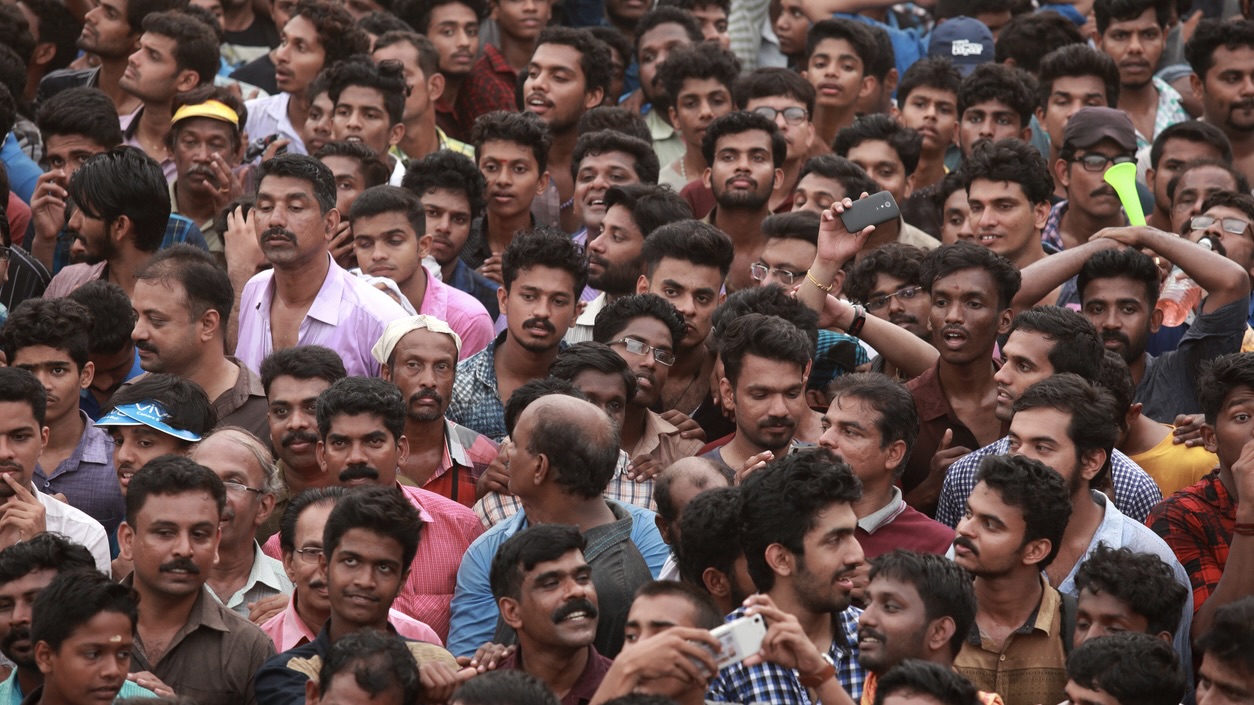
The 2021 census was postponed due to the outbreak of the COVID-19 pandemic.
Synopsis: Kerala has formally begun preparations for the Census of India 2027, alerting district administrations and clearing the appointment of Census officers. The exercise will be conducted in two phases, with houselisting in 2026 and population enumeration in February 2027, and will for the first time be fully digital and include caste enumeration. The government has also warned that census duties are mandatory and that refusal or obstruction could attract fines and imprisonment.
Kerala has begun formal preparations for the Census of India 2027, the first population count in over a decade, following the postponement of the 2021 Census.
Setting the process in motion, the Directorate of Census Operations (DCO), Kerala, on 12 December submitted a detailed proposal to the State government outlining preliminary administrative arrangements and the appointment of Census Officers at multiple levels.
The move marks the beginning of restructuring the State’s administrative and territorial framework to facilitate the forthcoming census operations.
As part of the initial preparations, Kerala has begun reorganising districts, towns, villages and enumeration blocks to support the houselisting exercise scheduled for 2026 and the population enumeration planned for early 2027. The proposal lays out a two-phase census exercise.
The first phase, the Houselisting and Housing Census, is scheduled to be conducted over a one-month period sometime between April and September 2026. This phase will form the groundwork for the second and more critical phase, Population Enumeration, which will be carried out in February 2027.
The reference date for the census has been fixed as 12 am on 1 March 2027.
To ensure accuracy and uniformity in data collection, the State will be divided into a hierarchical pyramid of territorial jurisdictions, beginning with revenue districts and branching into urban and rural areas.
Municipal corporations, municipal towns, cantonment boards and approved census towns will be treated as urban areas. Non-statutory census towns will be enumerated under rural census charges, while outgrowths will be included under urban charges.
At the grassroots level, each town and revenue village will be further subdivided into wards and then into Enumeration Blocks, the smallest units of census operations. These blocks will serve as the basic units for houselisting and population enumeration.
The proposal lays down a comprehensive administrative chain for census operations across Kerala, placing District Collectors at the helm as Principal Census Officers. They will be supported by a multi-layered administrative framework involving senior deputy collectors, district-level officers and sub-divisional authorities.
Tahsildars will serve as Charge Census Officers at the taluk level, while municipal secretaries and administrative heads will shoulder responsibilities in urban local bodies, including major municipal corporations such as Thiruvananthapuram, Kochi, Kollam and Kozhikode.
Special arrangements have also been outlined for areas under defence and paramilitary control, where Special Charge Officers will be appointed in consultation with district authorities. Supervisors and Enumerators for both census phases will be drawn largely from government departments and the teaching community. All will undertake census duties in addition to their regular work.
At the apex, the Director of Census Operations, Kerala, will function as the Chief Principal Census Officer, assisted by a hierarchy of senior census officials. Together, the proposal underscores the scale, complexity and administrative coordination required to conduct India’s most extensive data-gathering exercise at the State level.
At the same time, the State government has given its formal nod to the proposals submitted by the Joint Director of the Directorate of Census Operations, Kerala, clearing the way for the appointment of Census functionaries across the State and underlining the mandatory nature of their duties.
In its order, the government said all officers appointed as Census functionaries must take prompt action to discharge their responsibilities upon receiving instructions from the Director of Census Operations, Kerala, while ensuring that their regular official duties are not adversely affected.
Stressing the legal sanctity of the decennial exercise, the government reminded officials that the Census Act, 1948 provides for stringent penalties for non-compliance.
Under Section 11 of the Act, any Census officer or person lawfully required to assist in census operations who refuses to perform assigned duties, or obstructs others in doing so, is liable to a fine of up to ₹1,000 and, upon conviction, imprisonment that may extend to three years.
The government said separate notifications appointing Census officers, delegating powers to appoint subordinate functionaries, and authorising them to sign statutory declarations under the Act will be issued shortly.
Detailed guidelines on the roles and responsibilities of officers at various stages of census operations will follow in due course, it added.
Governed by the Census Act, 1948 and the Census Rules, 1990, the Census of India is the largest administrative and statistical exercise in the world.
The last census was held in 2011. Census 2021, originally planned in two phases between April 2020 and February 2021, was postponed due to the COVID-19 pandemic, despite preparations having been completed for the first phase.
On 12 December, the Union Cabinet chaired by Prime Minister Narendra Modi approved the proposal for Census 2027 at an estimated cost of ₹11,718.24 crore.
Nearly 30 lakh field functionaries will be deployed to complete this massive national exercise. For the first time, the census will be conducted entirely through digital means, with data collected via mobile applications compatible with both Android and iOS platforms.
A dedicated Census Management and Monitoring System portal will allow real-time supervision, while innovations such as the Houselisting Block Creator web map application will assist charge officers. Citizens will also have the option of self-enumeration.
A significant political decision came on 30 April 2025, when the Cabinet Committee on Political Affairs approved the inclusion of caste enumeration during the second phase, Population Enumeration, reflecting India’s complex social and demographic diversity.
Census 2027 will be the 16th census overall and the eighth after Independence, continuing its role as the most comprehensive source of village, town and ward-level data covering housing, amenities, demography, religion, SC and STs, language, literacy, economic activity, migration and fertility.
As per Census 2011, Kerala recorded a population of 3.34 crore, a sex ratio of 1,084 females per 1,000 males, a population density of 860 per sq km, a literacy rate of 94 percent, and a decadal growth rate of 4.9 percent, benchmarks that Census 2027 will now update.
(Edited by Dese Gowda)


