

Published Jun 27, 2026 | 9:10 AM ⚊ Updated Jun 27, 2026 | 9:10 AM

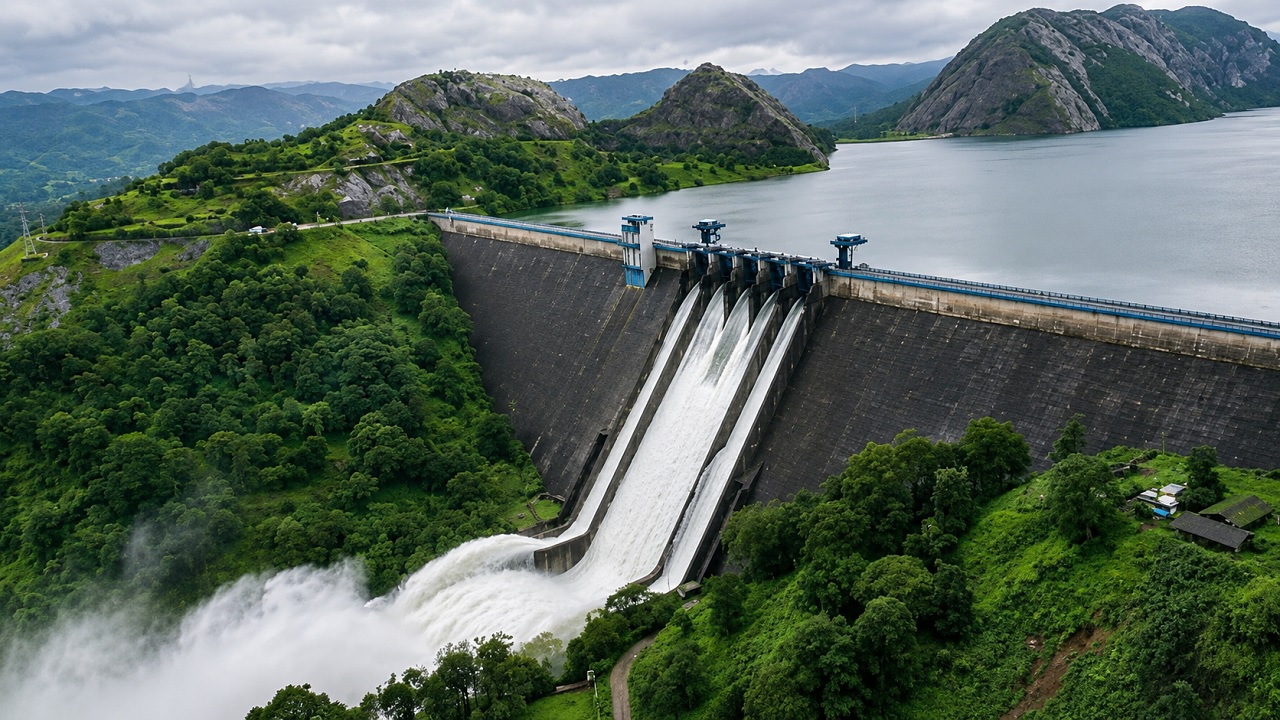
Mullaperiyar dam

Synopsis: Recently, the Union government removed Kerala’s representative, TK Sivarajan, from the five-member Comprehensive Dam Safety Evaluation Committee of the Mullaperiyar Dam. However, it is not merely an issue of representation, but a gradual shift of a matter, once contested primarily between Kerala and Tamil Nadu, into the hands of the Union government.
For more than a century, the Mullaperiyar Dam dispute has been repeatedly surfacing as both a genuine public safety concern and a potent political weapon in Kerala and Tamil Nadu. The issues raised by both states have shaped legal battles, political campaigns and public anxieties.
However, the latest developments around the dam are different. They point to something far more significant than another chapter in an old interstate dispute. A matter once contested primarily between Kerala and Tamil Nadu is gradually moving into the hands of the Union government.
The shift became evident when the Union government removed Kerala’s representative, TK Sivarajan, from the five-member Comprehensive Dam Safety Evaluation Committee and replaced him with IIT Roorkee professor ML Sharma, leaving Kerala without direct representation.
However, following strong protests by Kerala MPs and the intervention of State Water Resources Minister Mons Joseph, the Union government has now asked the Kerala government to nominate a fresh representative to the Independent Panel of Experts conducting the dam’s comprehensive safety assessment.
Whether Kerala’s nominee returns to the panel or not, the larger picture has already begun to change. The dispute is no longer just about which state has a seat at the table.
Control over one of India’s most sensitive interstate water conflicts appears to be steadily shifting away from both Kerala and Tamil Nadu. The growing centralisation of the Mullaperiyar issue goes far beyond politics, carrying long-term implications that could redefine the future of the dispute.
Also Read: Pennycuick Pongal, forced agreements, politics and lives at stake
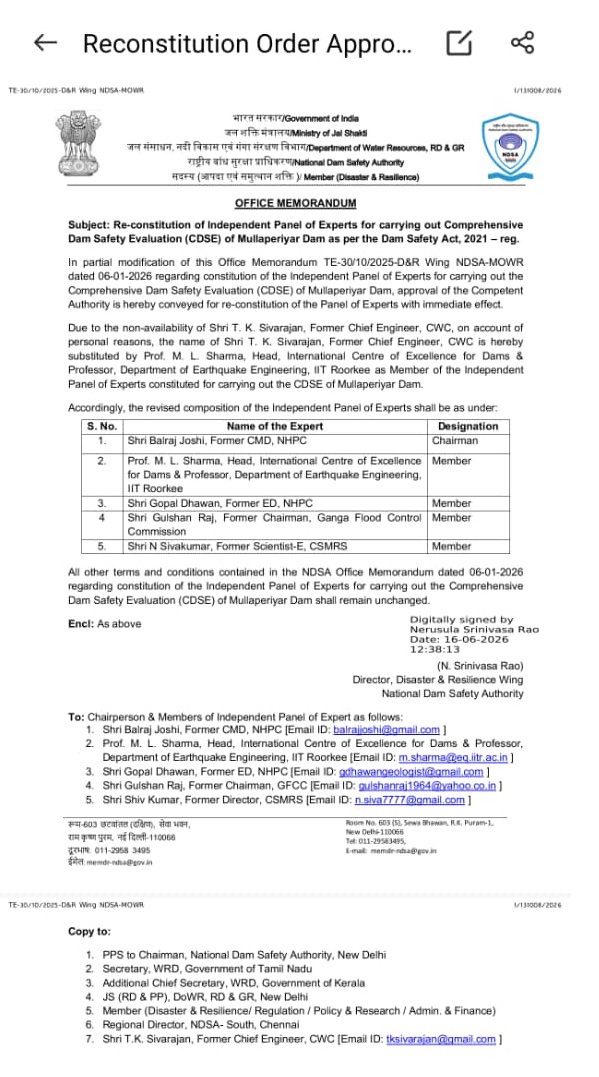
Reconstitution order
The Independent Panel of Experts was constituted by the National Dam Safety Authority (NDSA) on 6 January 2026, following directions of the Supreme Court to carry out the Comprehensive Dam Safety Evaluation (CDSE) of the Mullaperiyar dam under the Dam Safety Act, 2021.
The panel initially included Sivarajan, a former Chief Engineer of the Central Water Commission (CWC), who was Kerala’s nominee.
However, in a revised order, the Union government removed Shivarajan from the panel, citing his unavailability due to personal reasons and replaced him with Sharma. All other members and the panel’s terms of reference remained unchanged.
Kerala objected to the move, alleging that its nominee had been replaced without the state’s consent. Water Resources Minister Mons Joseph wrote to Union Jal Shakti Minister CR Patil, while the state’s Additional Chief Secretary also raised the issue with the Ministry of Jal Shakti.
Kerala MPs also met the Union minister and urged the Union government to restore the state’s representation.
Following these objections, the Union government asked the Kerala government to submit a fresh nomination for its representative on the Independent Panel of Experts.
Mons Joseph told South First that the NDSA had informed the state to nominate a new expert for inclusion in the panel, and that the Kerala government would immediately send the name of a suitable nominee.
Meanwhile, Sharma told South First that the committee meetings are yet to begin. He added that the members of the panel have not been directed to comment on any controversy surrounding the Mullaperiyar issue.
The Independent Panel of Experts constituted by the NDSA does not have a specified expiry date in the constitution order. The panel will continue its work until it completes the CDSE of the Mullaperiyar Dam and submits its report, unless the NDSA decides to reconstitute or discontinue it.
The latest reconstitution order, issued after replacing Kerala’s nominee, states that all other terms and conditions of the original order will remain unchanged.
Speaking to South First, former Chairman of the Kerala Dam Safety Authority, Justice (retired) CN Ramachandran Nair, said that Kerala’s attempt to strengthen dam safety mechanisms had earlier faced opposition from Tamil Nadu, eventually leading to legal proceedings and the Supreme Court’s intervention.
He also pointed out that communication gaps from the Union government have been a recurring issue in decisions related to the Mullaperiyar Dam.
The dispute between Kerala and Tamil Nadu has historically remained within the framework of an interstate agreement, court proceedings and the supervisory mechanisms created specifically for the dam.
However, with the implementation of the Dam Safety Act, 2021, the nature of control over the dam has started changing.
Speaking to South First, Advocate G Prakash, Standing Counsel and Advocate-on-Record (AOR) representing Kerala in the Supreme Court, explained that the Act has created a new central framework for dam safety, reducing the exclusive role previously held by the two states.
“Section 8 of the Dam Safety Act, 2021, mandates the Union government to establish a permanent National Dam Safety Authority. This statutory body is tasked with implementing dam safety policies, resolving interstate issues, and ensuring uniform safety standards across India. After a permanent dam safety authority comes into power, the supervisory committees have no specific role, and the Union government can decide who to include in the dam safety authority. Also, under this Act, the Mullaperiyar Dam is considered a specified dam,” he said.
According to Prakash, the inclusion of Mullaperiyar as a “specified dam” is a significant shift since it brings the dam under the regulatory framework of the Union government.
“Kerala Dam Safety Authority has no control over the Mullaperiyar Dam, and it has power over only other dams, the undisputed ones. The Union government formed the Dam Safety Authority and included the Mullaperiyar Dam under the specified dams, with a clear motive. Earlier, the Union government had no role in the Mullaperiyar Dam; it was purely vested in the hands of Tamil Nadu and Kerala. Now things are different. Now the legal control is vested in the hands of the Union Government,” he said.
He further explained, “The Union government brought Mullaperiyar under the category of a specified dam since earlier, during disputes between States, it did not have such direct authority. By introducing special provisions in the Dam Safety Act and including specified dams, control and supervision have been brought under the Central framework.”
The transition does not mean that Kerala or Tamil Nadu immediately lose all their roles, but it changes the legal structure. With Mullaperiyar falling under the category of specified dams, safety monitoring, inspections and regulatory decisions fall under a central statutory mechanism.
Also Read: Why Kerala MPs KC Venugopal and John Brittas demand the withdrawal of FCRA Rules 2026?
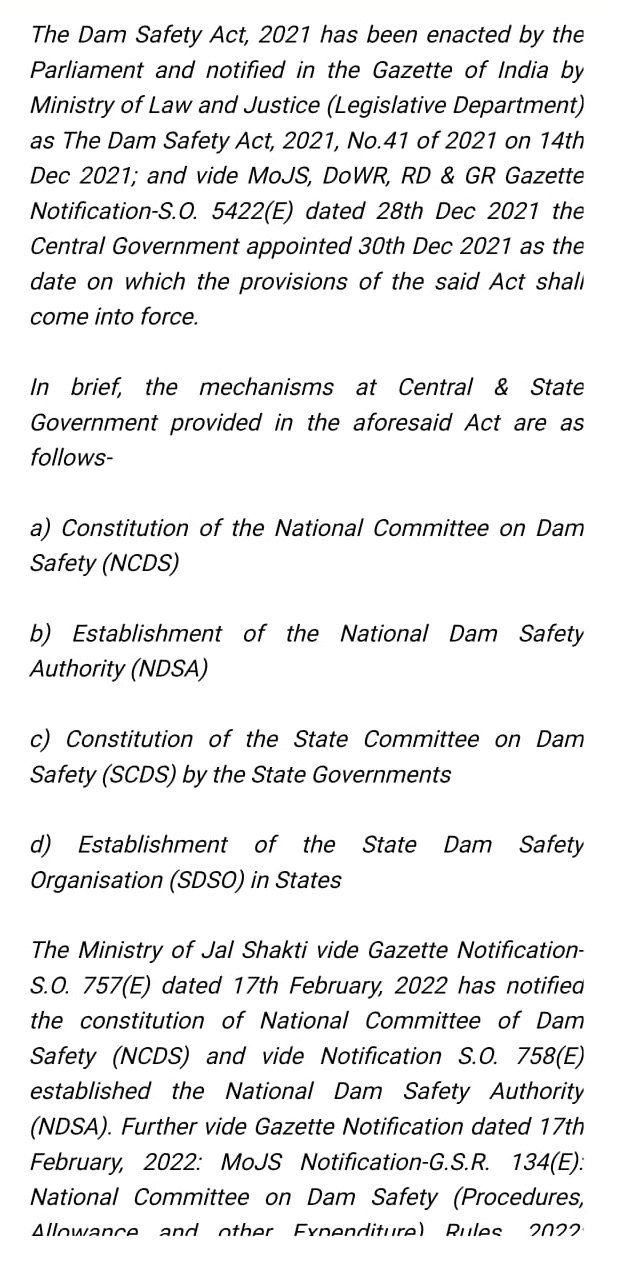
Specifications mentioned by the Central Water Commission.
Under the Dam Safety Act, 2021, a “specified dam” requires enhanced safety regulation due to its size, structural characteristics, risk potential or the consequences of failure. These dams are placed under strict surveillance, inspection, maintenance and safety evaluation requirements.
A dam can be classified as a specified dam based on technical and safety-related criteria.
The primary criteria include:
Apart from these technical factors, dams are also brought under this category when their failure could lead to major consequences, including loss of human lives, large-scale economic damage or serious environmental impact.
According to Prakash, interstate disputes themselves are an important factor. When two states have a dispute over a dam, it can also fall under the category of specified dams, bringing it within the ambit of the central safety framework.
The Mullaperiyar Dam fits into this larger framework not only because of its age and structural concerns but also because it is an interstate dam involving a long-standing dispute between Kerala and Tamil Nadu.
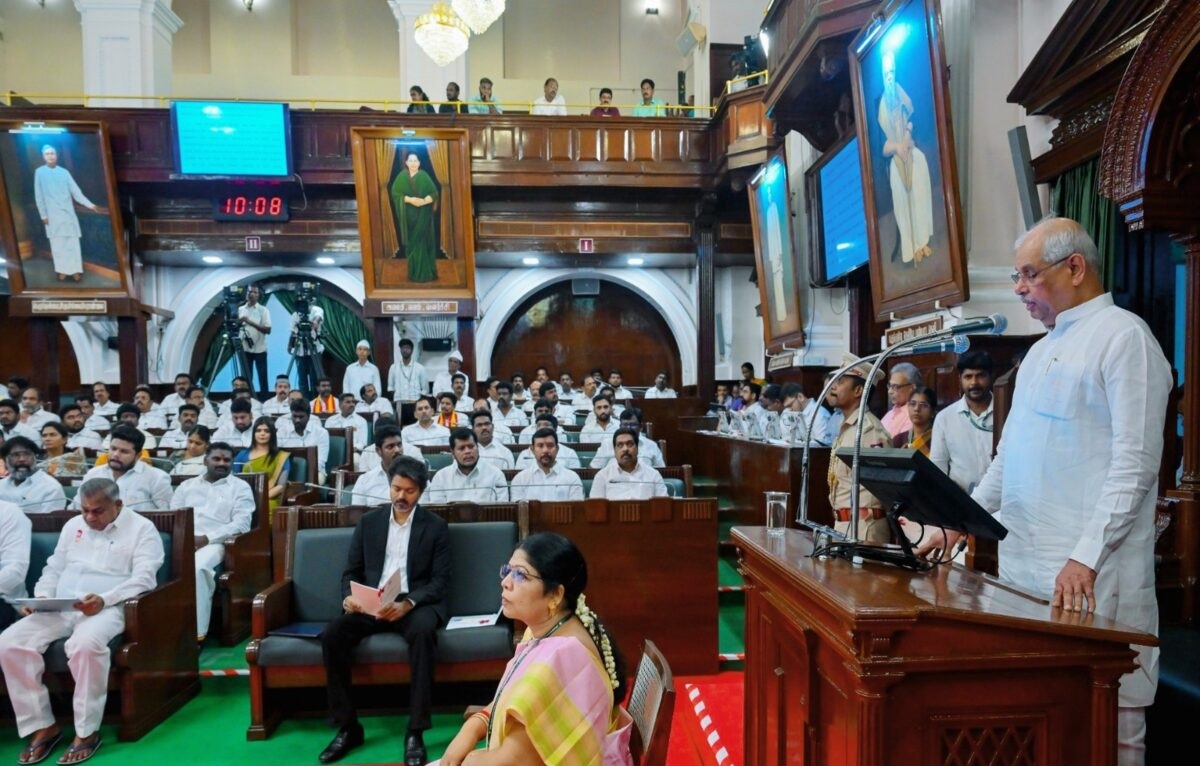
Governor Arlekar delivering the policy address in the Tamil Nadu Assembly.
Although the Dam Safety Act, 2021, creates a four-tier institutional framework — with the National Committee on Dam Safety as the apex body, the National Dam Safety Authority as the central regulatory and implementing agency, and State Committees on Dam Safety and State Dam Safety Organisations handling monitoring, inspections, and compliance at the state level — the situation of the Mullaperiyar Dam stands apart.
All 31 dam-owning states have established State Dam Safety Organisations, but Mullaperiyar’s unique circumstances — its age, structural complexities and long-running interstate dispute have placed it outside the conventional state-level framework and brought it under the category of a specified dam.
The inclusion of Mullaperiyar under this central mechanism represents a significant shift in how the issue is governed.
The recent policy address of Tamil Nadu Governor RV Arlekar, who is also the Governor of Kerala, reflected this wider institutional shift. It stated that Tamil Nadu will take firm measures against any attempt by the Kerala government to construct a new Mullaperiyar dam.
It also accused Kerala of denying permission for maintenance activities and reiterated Tamil Nadu’s demand to raise the water level to 142 feet, with a possible increase to 152 feet after further strengthening, in line with the Supreme Court’s directions.
A dam that affects the lives and safety of people across two states, while also being linked to the interests of power generation and a unique 999-year agreement, is now entering a new phase.
What could once have been decided across the table between Kerala and Tamil Nadu is now slowly moving out of that table. The dispute, which was earlier managed through discussions and legal proceedings between the two states, is now increasingly coming under the control of the Union government, slowly shifting decision-making away from both States.
(Edited by Muhammed Fazil.)



