

Published Jul 06, 2026 | 8:00 AM ⚊ Updated Aug 10, 2026 | 11:16 AM

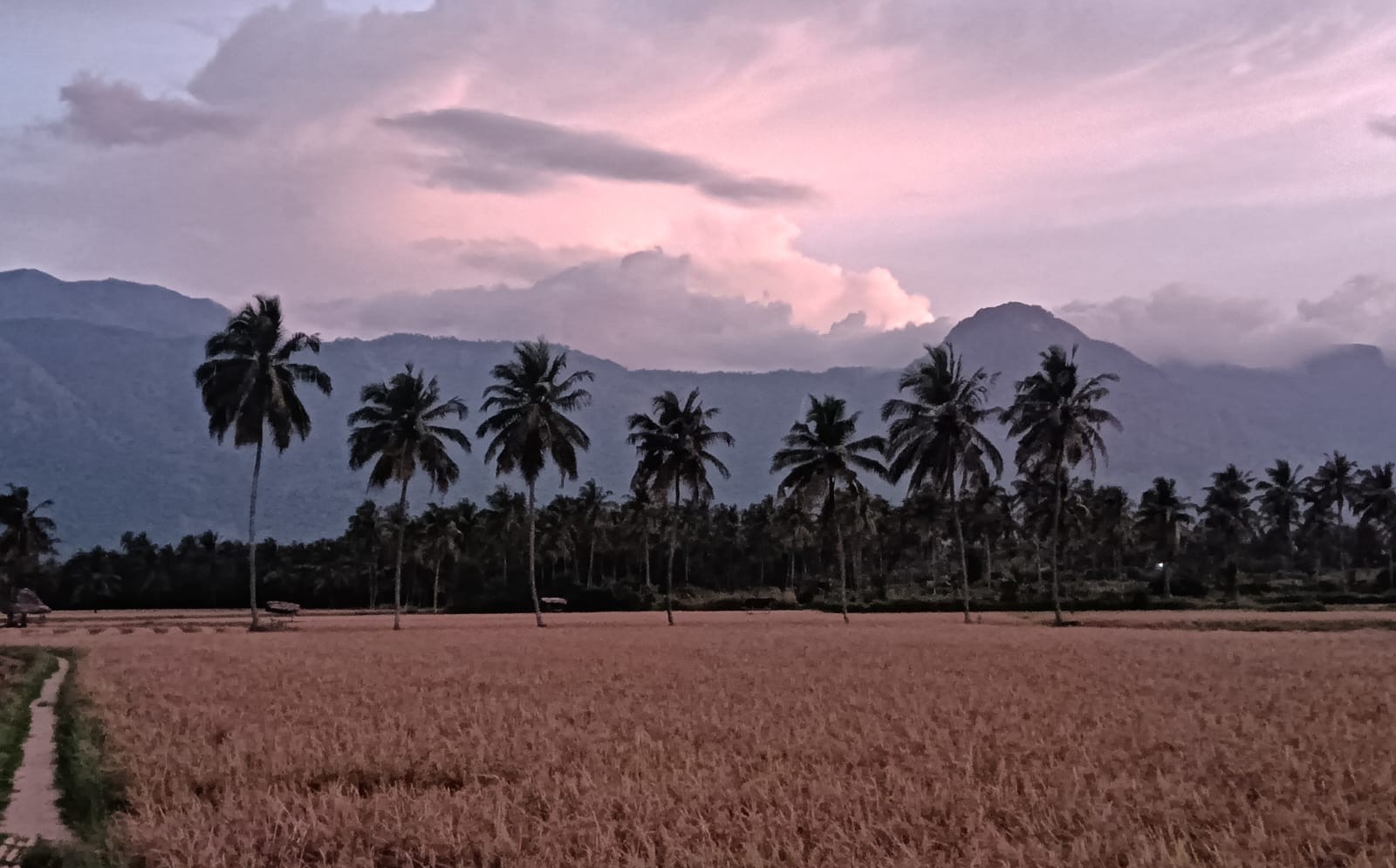
File picture of a harvest-ready paddy field at Kollengode in Palakkad. (South First)

Synopsis: Palakkad, Kerala’s largest paddy-producing district, is facing a severe procurement crisis as thousands of farmers remain unpaid months after handing over their harvest. The crisis has exposed major flaws in the state’s experiment with routing procurement through Primary Agricultural Cooperative Societies. Acknowledging the breakdown, the government has restored the entire procurement and payment process to Supplyco, while also exploring long-term reforms, including direct payments to farmers, to prevent a repeat of the crisis.
Call it irony. Kerala’s granary, Palakkad, recorded the state’s highest increase in rice output over the past two years. But the district’s paddy farmers are a distressed lot.
The harvest has not translated into financial relief for thousands of Palakkad farmers. Instead, they are caught in a procurement logjam, waiting for Procurement Receipt Slip (PRS) payments months after handing over their produce through Primary Agricultural Cooperative Societies (PACS).
The delay has left many farmers unable to repay crop loans, clear dues to agricultural workers, meet household expenses or prepare their fields for the next cultivation cycle.
For many farmers, harvesting the crop turned out to be only half the battle. The real struggle began after the paddy was delivered.
The principal complaint from farmers across the district is that although their paddy has been measured and procured through PACS, the PRS amount has not reached their bank accounts.
Faced with mounting complaints and growing financial distress among farmers, the state government has now decided to overhaul the procurement mechanism in Palakkad.
The cooperative procurement model introduced earlier this year has effectively been rolled back, with the entire responsibility for procurement and PRS payments being restored to the Kerala State Civil Supplies Corporation (Supplyco).
The decision, officials said, is aimed at resolving the payment crisis and restoring confidence among farmers ahead of the next cultivation season.
Also Read: Strange, faulty payment system driving Kerala paddy farmers to suicide
The present crisis has its roots in a major restructuring of Kerala’s paddy procurement system.
For decades, Supplyco had been handling procurement under the Centrally-Sponsored Decentralised Paddy Procurement Scheme.
When Kerala introduced its paddy procurement programme in 2003, the responsibility for purchasing paddy from farmers was entrusted to cooperative societies.
After three procurement seasons, however, five cooperative banks challenged the arrangement by moving the High Court, requesting that the procurement system through cooperative societies be discontinued.
Following the legal challenge, the state government shifted the responsibility for paddy procurement to Supplyco in 2005.
Since then, Supplyco has been the agency overseeing and implementing the procurement process across the state.
This year, however, procurement responsibilities in Palakkad were decentralised by bringing Primary Agricultural Cooperative Societies into the system.
Seventy-four cooperative societies were eventually brought into the procurement network to make procurement more accessible, faster and locally managed.
The Cooperative Department had issued an order in October 2025, proposing the formation of a consortium of Primary Agricultural Cooperative Societies.
In January 2026, the department decided to retain Supplyco as the nodal procurement agency while approving in principle a system under which procurement would be carried out through cooperative societies and nodal cooperative societies.
A committee comprising secretaries of the Finance, Agriculture, Food and Civil Supplies, Local Self-Government and Cooperation departments, under the chairmanship of the chief secretary, was entrusted with preparing the operational framework.
In February, the Agriculture Department’s WTO Cell constituted a chief secretary-level task force for inter-departmental coordination after approving the recommendations of the Paddy Procurement Expert Committee. During the same month, permission was granted for 66 cooperative societies in Palakkad to undertake procurement. Subsequently, the number was revised to 74 societies.
In March, Supplyco was authorised to sign a Memorandum of Understanding with these societies.
Under the new arrangement, cooperative societies were to procure paddy directly from farmers, while Supplyco continued as the state nodal agency. Nodal cooperative societies were expected to coordinate procurement, milling and distribution of rice. The government also announced liquidity support through Kerala Bank, financial incentives for cooperative societies and a simplified fund flow mechanism.
Also Read: In a land of many claims, Kerala seeks one vision
Supplyco procures paddy by paying the Minimum Support Price (MSP) announced by the Union government along with the state government’s incentive bonus and other admissible components.
From 20 October 2025, the procurement price has been ₹30 per kilogram, comprising the Central MSP of ₹2,369 per quintal together with the state incentive bonus and handling charges.
The state has consistently maintained that the MSP fixed by the Centre does not reflect Kerala’s higher cultivation costs and has urged the Union government to revise the support price on a state-specific basis. It has also sought an increase in the procurement price to ₹40 per kilogram.
Since the Centre reimburses procurement expenditure only after the paddy is milled into rice and supplied through the Public Distribution System, there is normally a gap of six to eight months before Supplyco receives reimbursement.
To bridge this gap, Kerala introduced the Procurement Receipt Slip (PRS) loan system.
Under this arrangement, consortium banks release the procurement amount immediately to farmers against a guarantee from Supplyco. The state government bears the interest liability, ensuring that farmers receive payment without having to wait for central reimbursement. Supplyco repays the banks after receiving funds from the Centre and the state.
Also Read: Farmers under paddy procurement scheme not borrowers: Kerala HC
Before procurement was shifted to cooperative societies, PRS loans were routed through a consortium led by the State Bank of India and Canara Bank with an approved lending limit of ₹1,100 crore.
After PACS were brought into the procurement system in Palakkad, the government approved a 50 per cent enhancement in the PRS loan limit, raising it to ₹1,650 crore to facilitate procurement through cooperative societies. PACS began sanctioning PRS loans from 6 April 2026.
Despite the enhanced borrowing limit, farmers continued to complain that PRS amounts were not being credited after procurement.
The issue became more acute during the 2026-27 procurement season, particularly after the increase in the procurement price.
Recognising the growing problem, Supplyco’s managing director recommended additional financial arrangements in line with the revised PRS limit so that consortium banks could continue financing procurement carried out through PACS.
The recommendation also noted that if cooperative societies were removed from directly extending PRS loans, consortium banks would require a corresponding enhancement in their lending capacity to prevent disruption in payments.
“We harvested on time, transported the paddy and handed it over exactly as instructed. After that, everything came to a standstill. The money hasn’t come, but the people we owe are asking for their dues every day. Every day we hear that the money will come soon. Farmers cannot run agriculture on assurances,” Krishnan, a paddy farmer from Chittur in Palakkad, said.
Also Read: Transforming Kerala’s agriculture through technology
Amid increasing protests from farmers and concerns over delayed payments, the government reviewed the procurement mechanism.
The restructuring was finalised at a high-level meeting chaired by Chief Minister VD Satheesan in June 2026. The meeting examined the difficulties experienced during the current procurement season, particularly in Palakkad, and concluded that immediate corrective measures were required.
Following the meeting, the government froze all orders relating to paddy procurement in Palakkad issued after 5 January 2026.
With this decision, every stage of procurement in the district, including allocation and disbursement of PRS amounts, will once again be handled entirely by Supplyco.
One of the most significant changes is the removal of Primary Agricultural Cooperative Societies from the PRS loan mechanism. Instead of routing procurement finance through cooperative societies, the government has restored the State Bank of India-Canara Bank consortium as the sole source of PRS finance.
At the same time, Supplyco’s borrowing capacity has been increased. The PRS loan limit has now been fixed at ₹1,600 crore to ensure uninterrupted procurement operations and timely payment to farmers.
The earlier order permitting a 50 per cent enhancement in the ₹1,100-crore PRS loan limit for procurement through cooperative societies has been withdrawn.
The government has also directed Supplyco to reimburse all amounts already sanctioned by Primary Agricultural Cooperative Societies towards paddy procurement. The repayment will include interest accrued up to the date on which the agreement is executed with the SBI-Canara Bank consortium for the enhanced borrowing arrangement.
The order noted that the decision was taken after examining the recommendation submitted by the managing director of Supplyco and the discussions held at the chief minister’s review meeting.
Officials said the immediate priority is to clear the bottleneck that left farmers waiting for payment even after delivering their paddy. By restoring procurement entirely under Supplyco and strengthening its financial arrangements, the government expects to ensure that procurement proceeds reach farmers without further delay during the coming procurement seasons.
Also Read: Why is there no stubble burning in South India?
The state government is also weighing further changes in the paddy procurement sector, including a possible shift away from the existing PRS loan mechanism used to pay farmers.
Replying to a question in the Assembly in June 2026, Civil Supplies Minister Anoop Jacob said the government had identified shortcomings in the PRS loan system through which paddy farmers currently receive payments.
“The shortcomings in the method of providing paddy price through PRS loans have been identified, and steps are being taken to address them,” the minister said.
At present, there is no mechanism to credit the procurement price directly to farmers’ bank accounts without routing it through the PRS loan system. However, Jacob said the government would examine the feasibility of introducing a revolving fund system, which could pave the way for direct payments in the future.
Earlier, in 2025, an expert committee headed by retired IAS officer Dr VK Baby was constituted to study persistent issues in paddy procurement and suggest long-term reforms.
Officials indicated that more changes in the paddy procurement system are likely as the government presses ahead with reforms aimed at streamlining procurement and ensuring faster, hassle-free payments to farmers.
(Edited by Majnu Babu)



