

Published Feb 28, 2026 | 8:00 AM ⚊ Updated Feb 28, 2026 | 8:00 AM

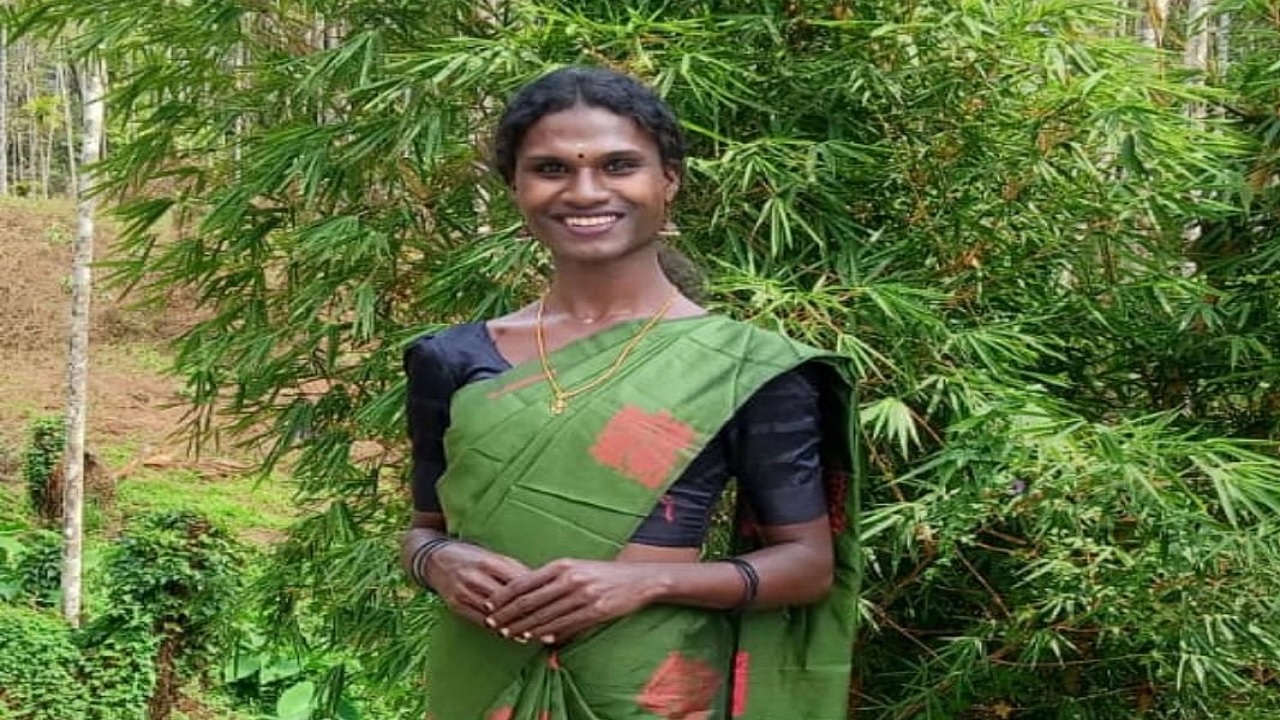
Prakrithi N.V
Synopsis: AAP has nominated Prakrithi NV, a transwoman from the Paniya tribe, as its candidate for Sulthan Bathery in Kerala’s upcoming Assembly elections. Her candidacy challenges decades of underrepresentation of Paniya tribals, who form nearly half of Wayanad’s indigenous population. A poet and teacher, Prakrithi prioritises basic survival needs, equality among tribes, and visibility for transgender voices in politics.
The Aam Aadmi Party (AAP), which has had a relatively modest presence in Kerala’s political landscape, is set to make a notable move in the upcoming Assembly elections by nominating Prakrithi NV, a transwoman from the Paniya tribe, as its candidate for the Sulthan Bathery constituency.
Belonging to one of Wayanad’s most marginalised tribal communities, Prakrithi’s candidature reflects AAP’s focus on inclusive politics and its effort to amplify voices from underrepresented sections of society.
Wayanad, a largely mountainous and forested district in north-eastern Kerala, has the highest proportion of indigenous people in the state. Two of its three Assembly seats, Mananthavady and Sulthan Bathery, are reserved for Scheduled Tribes and are home to communities such as the Paniya, Adiya, Kattunayakan, Kuruma (Vettukuruman), Kurichiya and Oorali (Urali).
Political representation, however, has not reached them equally. Since 1967, LDF, UDF and NDA have together nominated 28 candidates in the two reserved constituencies. Of these, only four were from the Adiya community, while 24 were from either the Kurichiya or Kuruma communities.
South First has already reported on the issue of unfair political representation in ST seats in Wayanad, home to many indigenous tribal communities, where the Kurichiya and Kuruma tribes dominate political power.
Prakrithi’s very candidacy is, in itself, a political statement. In a conversation with South First, Prakrithi, a poet and teacher spoke about her political debut.
Q: You are among the few from the Paniya community to have received formal education. Can you share what that journey was like?
A: It was far from easy—not just as a member of the Paniya tribal community, but also as a trans woman. Like many transgender people, I faced several unfortunate incidents, and my tribal identity often made me a target of mockery. Yet there were always some kind-hearted people who supported me.
I completed my BA in History at Government Arts College, Thripunithura, in Kochi and pursued a D.El.Ed course and am now working as a teacher at Government Lower Primary School, Chettiyalathur, in Wayanad.
Q: The Paniya make up almost 46 percent of the tribal population in Wayanad, highest among communities. Finally, they get a voice in the political space. Are you confident of community support?
A: Yes. Many of them were surprised because they had never heard of someone from their own community contesting an election before. They were often treated just as a vote bank by others. This time, however, many villages have offered their support to me.
Even political fronts are in disbelief—they never imagined a Paniya candidate would enter the race, as this has traditionally been their stronghold.
Sulthan Bathery has a near-equal dominance of Congress and CPI(M). I am aware of that. But in the past, elections were won using my community’s votes, and nothing was given back in return. This time, I hope my community will stand with their own candidate, regardless of political flag.
Q: Kurichiya tribes controversial Brahmanical practices often led to unhealthy divisions among tribals, like untouchability. How can this be corrected?
A: The core issue lies in social hierarchies within tribal communities. Tribes like Kurichiya and Kuruma, though classified as Scheduled Tribes along with Paniya, Adiya, Vettukuruma, and Oorali, often dominate power positions.
Leaders from this community tend to prioritise the welfare of their own Kurichiya and Kuruma groups while neglecting other tribal communities. This practice of favoritism must end to ensure equality and unity among all tribes.
Q: Marginalised tribal communities in Wayanad have faced long-standing issues such as lack of proper rehabilitation and insecure land ownership. Do you have a plan to address these problems?
A: People often highlight issues like land rights, rehabilitation, and education—and yes, these matters are important. But my immediate priority is to ensure basic survival.
In Wayanad, many tribal families don’t even have ration cards and are excluded from government welfare programs. Some families struggle to have three proper meals a day, and girls often lack access to sanitary napkins.
Even though Kerala declared itself the first Indian state to eradicate extreme poverty on 1 November, 2025, the reality for tribals in Wayanad is very different. PR campaigns can’t hide this truth forever. First, I must make sure my people receive at least free ration and basic necessities, only then can we focus on larger issues like land and rehabilitation.
You may have seen videos on social media showing victims of the Mundakki- Chooralmal landslide receiving keys to new homes. However, most of these houses remain unfinished. The government seems to be organising such programs more as a political show than as genuine relief.
Even homes under the Life Mission scheme are incomplete, and the emotions of these vulnerable families are being exploited for political gain.
Q: You are the first transgender candidate to receive a ticket for the Assembly elections. Anannyah Kumari Alex had received a ticket in 2021 but stepped back due to discrimination and later tragically committed suicide. How has the transgender community responded to your candidacy?
A: The transgender community has been very supportive and happy about this. In Wayanad, only two transgender individuals are officially listed as voters, but the actual number is much higher.
Many are hesitant to update their gender in identity cards or reveal their transgender identity publicly. I started the legal process to change my gender three years ago. The change was officially published in the Gazette recently.
Our issues can only be truly addressed when someone from our community holds a position of power.


