


After the Enforcement Directorate (ED) issued show-cause notices to Kerala Chief Minister Pinarayi Vijayan, Dr Isaac, and the Chief Minister’s Chief Principal Secretary KM Abraham, opposition parties have seized on the issue as a tool to mount fresh attacks against the LDF.

Published Dec 02, 2025 | 9:00 AM ⚊ Updated Dec 02, 2025 | 9:00 AM

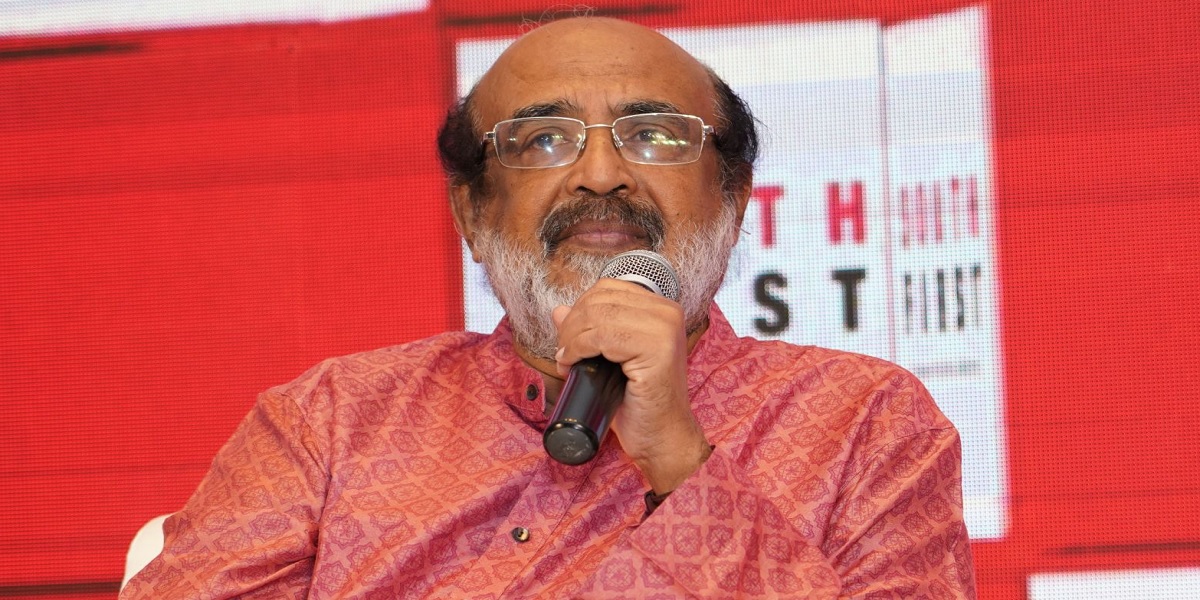
Former Finance Minister Dr. T.M Thomas Isaac
Synopsis: As fresh ED notices in relation to KIIFB’s masala bond case stir a political storm in Kerala, former Finance Minister Dr TM Thomas Isaac says the charges are legally weak and politically motivated as the state heads to the local body polls. In a conversation with South First, the CPI(M) veteran further asserted that the Left government’s emphasis on infrastructure and welfare will continue to resonate with voters.
As the local body polls heat up in Kerala, former Finance Minister Dr TM Thomas Isaac is at the forefront of campaigning for the Communist Party of India (Marxist) [CPI(M)] candidates.
Yet, just as the political machinery is in full swing, alleged Foreign Exchange Management Act (FEMA) violations linked to the masala bond issued by the Kerala Infrastructure Investment Fund Board (KIIFB) have complicated matters for the ruling party.
After the Enforcement Directorate (ED) issued show-cause notices to Kerala Chief Minister Pinarayi Vijayan, Dr Isaac, and the Chief Minister’s Chief Principal Secretary KM Abraham, opposition parties have seized on the issue as a tool to mount fresh attacks against the LDF.
In a conversation with South First, Dr Isaac responded to the allegations amid the high-stakes election atmosphere.
Edited excerpts follow.
Q: How do you respond to critics concerned about FEMA violations in the Masala Bond case?
A: The ED has been investigating the masala bond for years, peeling away at it like layers of an onion. After all this time, the only allegation they have put forward is that a part of the bond proceeds was used for land purchase, which they say violates FEMA regulations.
They claim that ₹466 crore from the funds was spent on purchasing land. On this basis, the Adjudicating Authority of the ED has issued show-cause notices to the Chief Minister, the KIIFB CEO and myself.
But this allegation is fundamentally flawed.
KIIFB did not purchase land, it acquired land for public infrastructure projects. These are legally different things, governed by entirely different sets of laws. The ED is conveniently interpreting land acquisition as land purchase.
Q: Is purchasing land for infrastructure projects treated differently from regular real estate transactions under law?
A: Certainly. Land purchase is a regular commercial transaction under the Transfer of Property Act. You can resell that land, even speculate on it. That is exactly why FEMA restricts the use of foreign-sourced funds for land purchase, to prevent real estate speculation.
Land acquisition is governed by the Right to Fair Compensation and Transparency in Land Acquisition, Rehabilitation and Resettlement Act. This process is entirely for public purposes.
Acquired land cannot be diverted for speculation. It has to be used strictly for the project it was acquired for, such as roads, schools, bridges, water supply systems and so on.
KIIFB’s spending falls squarely under this category.
So the ED’s argument that development-related land acquisition equals speculative land purchase is baseless.
Q: How exactly was the Masala Bond money spent?
A: The masala bond raised ₹2,150 crore in March 2019, and every rupee was used for infrastructure development across the state. The bondholders have already been fully repaid.
In total, the funds were utilised for 339 projects spread across 18 different sectors.
Major allocations included ₹761 crore for Public Works, ₹507 crore for General Education, ₹319 crore for the Energy sector, ₹204 crore for Water Supply, ₹50 crore for Sports and ₹22 crore for Health.
Smaller amounts were also directed to tourism, IT, transport, agriculture and several other departments.
Of the total fund, ₹466 crore was spent specifically on land acquisition for various public projects. All expenditures are fully documented and transparently reported.
Q: Did the Reserve Bank of India (RBI) raise any objections regarding the utilisation of KIIFB’s masala bond funds, and how valid is the ED’s reliance on the 2016 RBI framework in this context?
A: Not a single one. KIIFB submitted expenditure reports to the RBI every month. The RBI has filed an affidavit in the High Court clearly stating that they regularly received these reports. At no point did they object or raise any compliance issue.
If the RBI, the authority that regulates masala bonds, found no violations, the ED’s newfound concern is questionable.
The 2016 framework, which restricted land purchase, lost its validity on 16 January 2019. On that day, the RBI issued a revised framework and updated Master Directions.
Under the revised framework, the purchase of land is no longer included in the negative list, and only real estate activities remain restricted. The rules also make it clear that land acquisition for industrial parks is specifically permitted.
Moreover, infrastructure projects are guided by the Central Government’s Harmonised Master List, which covers almost all KIIFB projects, including roads, bridges, schools, ports and other similar developments.
KIIFB utilised the funds after the new framework came into effect. The ED is simply relying on outdated guidelines.
Q: You had earlier challenged the ED summons in the High Court. Now that the ED has reportedly closed the investigation and moved the matter to adjudication, what does this mean for the process going forward?
A: Initially, the ED demanded that I, along with even my family members, appear with our personal bank statements. This was a clear intrusion into privacy. When I approached the High Court, the court asked the ED to justify why such documents were needed. They reduced the list but insisted I still appear.
When I returned to court, the Bench asked the ED a direct question, why are you questioning him. The ED did not have an answer then, and they still do not have an answer.
That is because there is no FEMA violation involved.
They have filed the case before the Special Director (Adjudication) in New Delhi and issued the show-cause notice. We are not required to appear in person. The explanation can be submitted through legal counsel or a chartered accountant.
We received the notice four days ago and informed no one. Still, true to pattern, it was leaked to the media immediately, triggering breaking news frenzies.
But this is an old script. People are no longer impressed by such political theatrics.
Q: Where does KIIFB stand today, and what message do you want to convey, especially in light of the timing of these notices?
A: It is hard to ignore the pattern. ED notices first appeared during the 2020 local body elections. Then during the Assembly elections. Then during the last Lok Sabha elections. Now Kerala is once again entering an election season, and the ED has returned to the masala bond issue.
This repeated pattern cannot be dismissed as coincidence.
KIIFB followed every rule, RBI approved frameworks, monthly submissions and strict utilisation controls. There has not been a single actual violation. The ED’s insistence on misinterpreting land acquisition as land purchase only reveals the political motives behind the case.
To the ED I say, stop these baseless intimidations. Kerala will continue building its infrastructure. The promise of Nava Kerala will continue. We will not retreat because of politically driven investigations.
Q: As someone actively involved in the campaign, what are your expectations for the LDF in the upcoming local body polls?
A: We are fully confident of maintaining our dominance in the upcoming local body polls, just as we have in the past. The reason is simple, over the years, we have consistently implemented strong and meaningful welfare schemes that directly benefit the people.
These efforts have created a lasting positive impression, earning their trust and support. Because of this sustained focus on welfare, we are very confident about our prospects.
(Edited by Dese Gowda)


